Special lease clauses in rental agreements are powerful provisions that modify or add to standard tenant law rules. This article explains the content and handling strategies for common special clauses that tenants often sign without understanding—such as cleaning costs, restoration to original condition obligations, and early termination penalties.
Reviewed by: Nobuyuki MoriPresident, M-Assets Co., Ltd. / Licensed Real Estate Transaction Specialist (Miyagi #018212)
When moving out of a rental property, failing to follow proper procedures can result in penalty fees or additional rent charges. This guide explains everything you need to know about early lease termination, from cancellation notice periods and how to write notification documents to security deposit settlement.
This guide explains typical special clauses added to rental contracts (early termination penalties, restoration-to-original-condition clauses, non-renewal provisions, pet-keeping penalties, etc.), including their meaning, legal validity, and room for negotiation, from a practical perspective.
A comprehensive guide to the procedures and precautions for installing or replacing air conditioning units in rental properties. Learn how to request permission from your landlord, understand your restoration to original condition obligations upon move-out, and know your rights when built-in equipment breaks down.
The content listed as "special lease clauses" at the end or in appendices to rental agreements modifies or supplements the principles of civil law and the Tenant Lease Law. Once a special clause is validly established, its terms take precedence over the principles of law.
According to the Ministry of Land, Infrastructure, Transport and Tourism's "Guidelines on Disputes and Restoration to Original Condition," three requirements must be met for a special clause to be considered valid.
Once you sign, you become legally bound, so the most important thing is not to sign without understanding the content.
The most common special clause states: "Cleaning costs at move-out (¥○○) shall be borne by the tenant."
Normally, cleaning costs are only the tenant's responsibility if the damage results from intentional or negligent action. For normal wear and tear, the landlord typically bears the cost (according to the Guidelines). However, with this special clause, tenants become obligated to share the burden.
Points to Check:
Examples include special clauses such as: "Tenants are responsible for removing cigarette stains and odor" and "Tenants are responsible for key replacement costs."
While the Guidelines indicate that key replacement is typically the landlord's responsibility, many special clauses shift this to the tenant. Confirm that a cost ceiling (typically ¥15,000–30,000) is clearly stated.
Regarding smoking, the Guidelines do specify that "tenants are responsible for wall discoloration and odor caused by smoking." Regardless of special clauses, smoking is a major cost factor.
This special clause states: "If you terminate the lease within ○ months of move-in, you must pay a penalty of ○ months' rent." This often pairs with a free-rent period (rent-free term), with penalties typically set at 2–3 months' rent.
Even if you save on upfront costs with free rent, moving within a year could result in unexpected fees. If you think you might relocate, always confirm the term and penalty amount.
This special clause states: "Pay one month's rent as a renewal fee when renewing the lease." This is more common in the Kanto region and less common in the Kansai region. Since costs are incurred with each renewal, factor them into your calculations for long-term stays.
This special clause states: "The landlord bears no responsibility for repairs if the air conditioner (existing equipment) breaks." This is common for air conditioners left by previous tenants. Repair costs become your responsibility, so check the condition of old equipment during your viewing.
It is your right to ask: "What is the basis for this clause?" and "What is the maximum cost?" Real estate agents are legally obligated to disclose important details, and tenants can request explanations.
You can negotiate to remove or modify special clauses. Requests like "Please specify a ¥○○ ceiling for cleaning costs" or "Please reduce the penalty period to six months" are more likely to be granted, especially during slow seasons (June–August and November–January) when vacant units are plentiful.
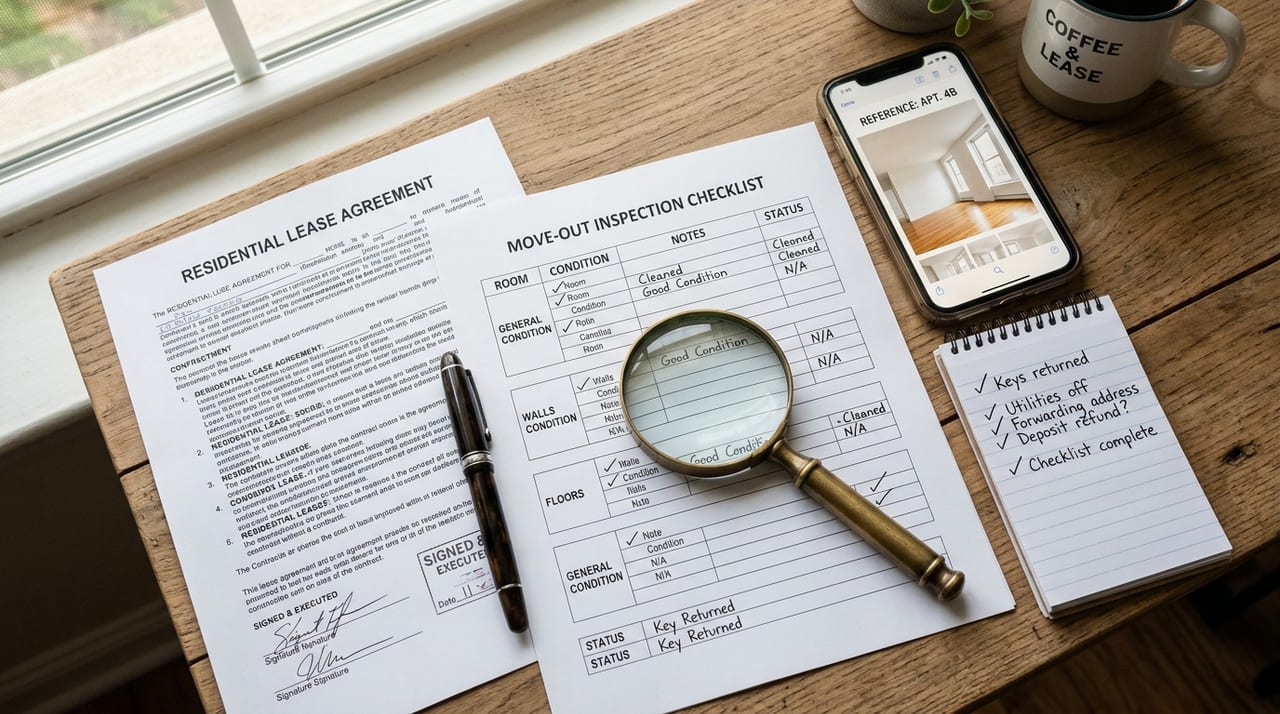
Document the property's condition with photos and videos at move-in to counter unfair charges at move-out. Take dated photos of any damage or stains and store them in the cloud.
Special lease clauses become legally binding the moment you sign. When receiving the disclosure of important terms, confirm each special clause and always ask about anything you don't understand. Signing out of trust ("the landlord said it's fine") or pressure ("I was rushed") risks unexpected bills of tens of thousands to hundreds of thousands of yen at move-out. Reaching an agreement you're comfortable with is the foundation of a smooth rental experience.
不動産ネットワーク
投資物件・賃貸住宅・テナント・運営会社をつなぐ不動産4サイト連携。
Since the Housing Accommodation Business Law took effect, over 70% of rental properties prohibit short-term rentals. This guide thoroughly explains the real risks of eviction and liability claims from contract violations, and the conditions for legally operating short-term rentals.
床スラブ厚と上階の足音問題——賃貸で「ドン」という衝撃音が響く構造的な理由と物件選びのポイント
前橋・群馬の賃貸エリアガイド【2026年版】——主要エリア別家賃相場と住みやすさを徹底比較
Making the Most of Protruding Beams and Columns in Rental Apartments — Smart Furniture Placement Strategies
Mito & Ibaraki Rental Area Guide [2026] — Comprehensive Explanation of Rental Rates and Livability by Major Area
Uncovering Property Issues by Asking Previous Tenants About Their Departure—Questions to Ask During Viewings and How to Interpret Answers
