This guide explains typical special clauses added to rental contracts (early termination penalties, restoration-to-original-condition clauses, non-renewal provisions, pet-keeping penalties, etc.), including their meaning, legal validity, and room for negotiation, from a practical perspective.
Reviewed by: Nobuyuki MoriPresident, M-Assets Co., Ltd. / Licensed Real Estate Transaction Specialist (Miyagi #018212)
A guide for foreign nationals, returnees, and non-Japanese citizens unfamiliar with Japanese, covering how to find English-friendly real estate companies, how to use multilingual rental portals, and key terminology and precautions when signing contracts.
A detailed explanation of the screening process for foreigners renting properties in Japan, required documents, and tips for passing screening. We also introduce precautions by visa status and helpful support programs.
For foreign nationals searching for rental properties in Japan. We provide practical guidance on selecting English-speaking real estate agencies and important points to watch for when signing a lease.
Explains the role of "guarantors" required in Japanese rental contracts and practical alternatives available to foreign residents without Japanese guarantors (guarantor companies, UR rental housing, and properties welcoming foreign residents).
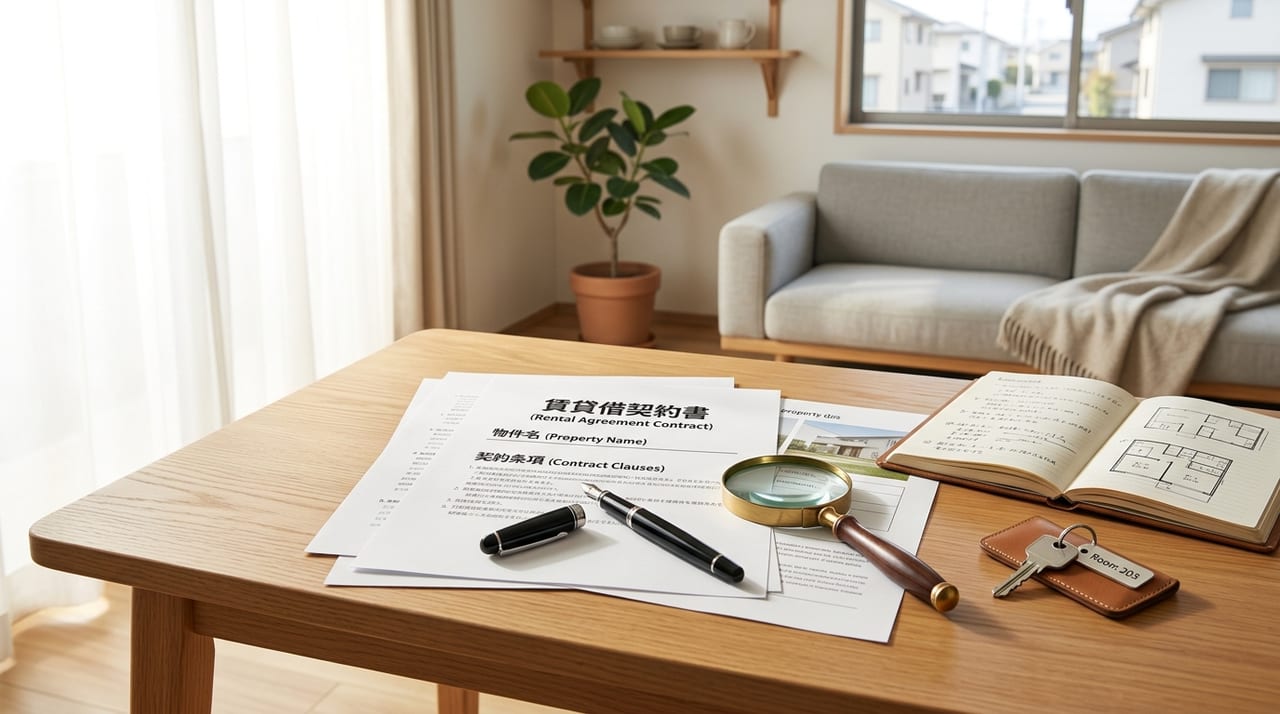
Rental contracts typically include "special clauses" (特約) or "special terms" that landlords or property management companies add individually, in addition to standard clauses based on civil law, the Lease and House Act, and consumer protection laws. While special clauses can be valid within certain limits based on the principle of contractual freedom if agreed upon by both parties, consumer protection laws restrict how unreasonable their content can be.
For foreign residents, special clauses are the most critical section of a contract to read carefully. Content varies significantly by property and landlord, and often includes obligations, penalties, and restrictions that go beyond standard rental agreements. Signing without carefully reviewing special clauses risks receiving unexpected high bills at move-out or facing restrictions on daily life activities.
Special clauses are typically attached at the end of the contract or as a separate appendix, with headings such as "Article ○ Special Terms," "Special Clauses," or "Additional Agreement Items." They are usually presented in a more concise style than standard clauses, with specific rules listed in bullet-point format, such as "In case of ○○, the tenant shall pay △△ yen" or "○○ is prohibited."
One of the most common special clauses is the "early termination penalty clause." This obligates tenants to pay the landlord a penalty of one to two months' rent if they terminate the lease within 1-2 years of moving in.
Early termination penalties are designed to cover landlords' costs for finding new tenants (advertising fees, agency fees, restoration expenses), and are often found in lower-rent properties or those with zero move-in costs. Typical penalty amounts are one to two months' rent—for a property with ¥80,000/month rent, this means an additional ¥80,000-¥160,000 at termination.
Foreign residents should be especially cautious about unexpected early termination due to job transfer, returning home, or visa status changes. If a special clause imposes a penalty for termination within one year and you must vacate after six months, the total cost (penalty + prorated rent + restoration expenses + key replacement fees) could easily reach several hundred thousand yen.
Early termination penalty clauses may fall under Article 10 of the Consumer Contract Act, and courts have ruled that excessive penalty amounts (such as three months' rent or more) are legally invalid. It is strongly recommended that before signing, you confirm the reasonableness of the penalty amount with your agent and discuss how early termination due to job transfer or returning home would be handled.
Although the April 2020 civil code amendment clarified the scope of restoration obligations, special clauses for restoration remain common in contracts. Typical examples include "tenant bears the cost of professional cleaning at move-out," "tenant bears the cost of wallpaper replacement," and "tenant bears the cost of tatami mat replacement."
Cleaning clauses are widely adopted in the rental industry. They require tenants to pay for professional cleaning at move-out (typically ¥20,000-¥40,000 for a studio, ¥50,000-¥100,000 for a family apartment). When such clauses clearly state the amount or calculation method and the tenant has clearly understood and agreed beforehand, courts tend to uphold them as valid.
However, caution is warranted for restoration clauses beyond cleaning (wallpaper, tatami, flooring replacement, etc.). These items typically fall under normal wear and tear and should normally be the landlord's responsibility. Shifting these costs to the tenant through a special clause risks being ruled invalid under consumer protection law as unreasonably one-sided.
Foreign residents should check whether "the amount or calculation method is clearly stated" and whether "the content goes beyond normal wear and tear." If a clause seems unreasonable, attempt to negotiate for its removal. If your agent refuses, remember that even after signing, if excessive charges are imposed at move-out, you can seek relief by contacting the Consumer Hotline (188), your municipal consumer protection center, or legal aid offices.
Another typical special clause imposes penalties for keeping pets in no-pet buildings. Penalties typically range from ¥100,000 to ¥300,000 and may be deducted from security deposits.
A common issue for foreign residents is keeping small dogs or cats because pet ownership is normal in their home countries. Violating a no-pet clause can result not only in penalty payment but also in contract termination and forced eviction.
Even in pet-friendly properties, you'll often find detailed special clauses specifying permitted animal types (dogs up to medium size, maximum of two cats, reptiles prohibited, etc.), additional security deposits, tenant responsibility for repair of pet damage at move-out, and obligations to prevent nuisance to neighbors (noise control, no animals in common areas, etc.). If you plan to move in with a pet, review the special clauses very carefully.
Under the Lease and House Act, except for fixed-term leases, landlords cannot refuse to renew or terminate a lease without "just cause." Tenants, however, can terminate with 1-3 months' notice in most cases.
Special clauses may add notice requirements such as "landlord must give six months' notice for termination," "tenant must give two months' notice for termination," or "if the tenant does not express intent to renew by three months before contract expiration, the contract terminates." The clause "if the tenant does not express intent to renew by three months before contract expiration, the contract terminates" poses a particular risk: if the tenant is unaware, they may face forced eviction.
Foreign residents should especially watch for fixed-term leases. A fixed-term lease automatically terminates at the end of the contract period with no automatic renewal—it continues only if the landlord agrees to a new contract. These leases offer lower monthly rent but higher renewal risk, and are often used for newly arrived foreign residents and international students.
Fixed-term leases require the landlord to notify the tenant of termination "between one year and six months before the contract expiration date." Without this notice, the contract effectively continues. Your contract will clearly state "Fixed-Term Lease" or "Standard (Indefinite) Lease" in the title or opening section—always verify this before signing.
Prohibited conduct clauses restrict specific activities within the unit or common areas. Common examples include time restrictions on musical instruments (no playing after 9 PM), smoking prohibition on balconies, no hanging laundry outside windows, no growing plants on balconies, no leaving items in common areas, and restrictions on guests staying long-term (staying three consecutive days or more may be treated as unauthorized co-habitation).
For foreign residents, particularly impactful restrictions include "no long-term guests," "no roommates," and "no cohabitation." If family or friends from your home country plan to visit for an extended stay, these clauses may apply, and in the worst case could trigger contract termination.
If you plan roomsharing or cohabitation, inform your agent and landlord honestly before signing and negotiate solutions such as additional rent, security deposits, or name changes on the lease. Reaching agreement in advance is far more effective than dealing with problems after discovery.
There are three key standards for evaluating whether a special clause is legally valid.
First, is the clause clearly disclosed in the contract or important particulars notice? If the text is extremely small, buried in an appendix where it's easily overlooked, or explained only verbally, the court may find that agreement was never established.
Second, is the content stated reasonably and specifically? Vague clauses such as "in case of ○○, the tenant shall pay a reasonable amount" may be ruled invalid under consumer protection law. The amount must be explicitly stated, such as "the tenant shall pay ¥100,000."
Third, does the clause unreasonably favor the landlord at the tenant's expense? Courts have ruled that excessive penalties (such as three months' rent or more), full tenant responsibility for all wear and tear including normal aging, and extended notice periods (six months before move-out) can be invalid under Article 10 of the Consumer Contract Act.
If you have concerns about a clause's validity, consult for free with the Consumer Hotline (188), your municipal consumer protection center, or a legal aid office before signing. Even after signing, if disputes arise over charges at move-out, these offices can help you seek compensation.
While rental contracts are civil agreements formed by mutual consent, consumer protection laws impose limits on what clauses can bind you. Not all unreasonable clauses will be enforceable. By understanding the typical special clause patterns introduced in this guide and reviewing every detail of your contract, you can establish a solid foundation for a secure rental life in Japan.
不動産ネットワーク
投資物件・賃貸住宅・テナント・運営会社をつなぐ不動産4サイト連携。
床スラブ厚と上階の足音問題——賃貸で「ドン」という衝撃音が響く構造的な理由と物件選びのポイント
前橋・群馬の賃貸エリアガイド【2026年版】——主要エリア別家賃相場と住みやすさを徹底比較
Making the Most of Protruding Beams and Columns in Rental Apartments — Smart Furniture Placement Strategies
Mito & Ibaraki Rental Area Guide [2026] — Comprehensive Explanation of Rental Rates and Livability by Major Area
Uncovering Property Issues by Asking Previous Tenants About Their Departure—Questions to Ask During Viewings and How to Interpret Answers
