Learn how to complete a move-in checklist (room condition inspection form) with practical examples. Discover what to check, how to document damage and stains properly, and prevent move-out disputes over restoration costs—plus key verification steps before submission.
Reviewed by: Nobuyuki MoriPresident, M-Assets Co., Ltd. / Licensed Real Estate Transaction Specialist (Miyagi #018212)
A detailed explanation of how to accurately fill out the "rental application form" you submit when applying for a rental property, plus tips for moving your screening process forward smoothly. Understand everything from preparation to what happens after submission so that filling errors or incomplete information won't delay your screening.
Special lease clauses in rental agreements are powerful provisions that modify or add to standard tenant law rules. This article explains the content and handling strategies for common special clauses that tenants often sign without understanding—such as cleaning costs, restoration to original condition obligations, and early termination penalties.
A comprehensive guide to the procedures and precautions for installing or replacing air conditioning units in rental properties. Learn how to request permission from your landlord, understand your restoration to original condition obligations upon move-out, and know your rights when built-in equipment breaks down.
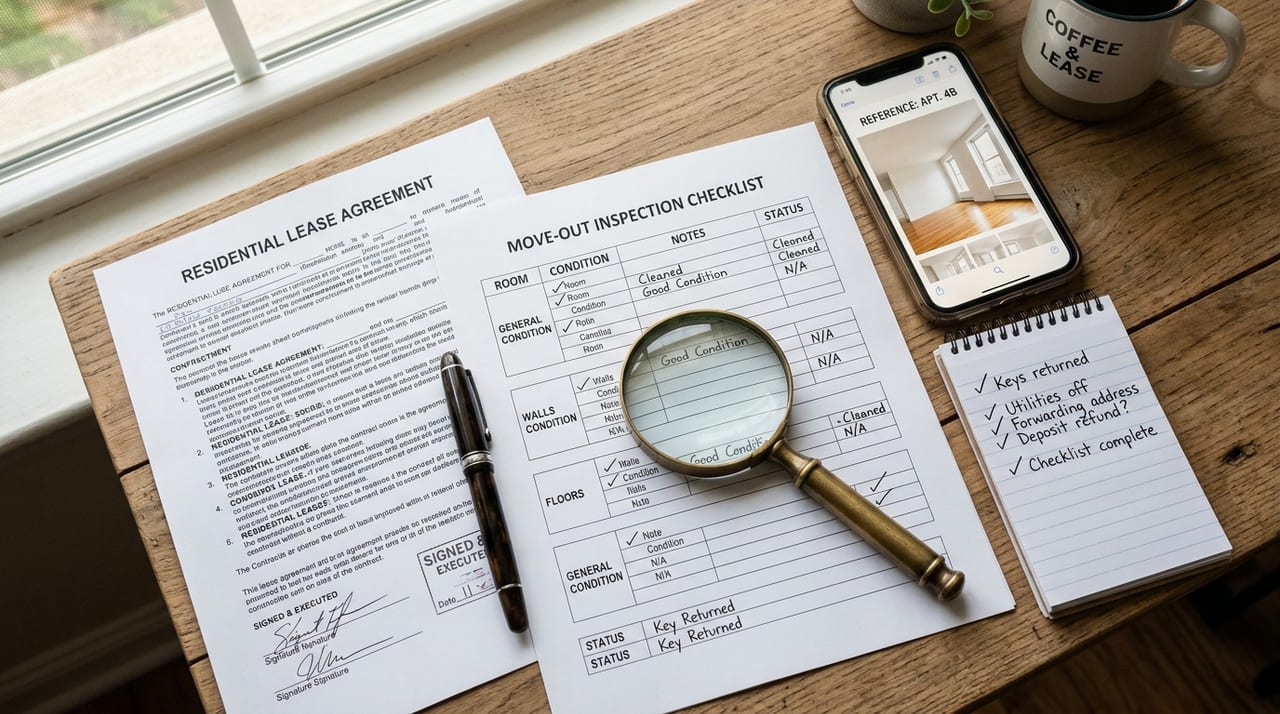
When moving into a rental property, carefully recording conditions in a document often called the "move-in inspection sheet" or "room condition report" is critically important. By filling out this form correctly, you can clearly distinguish between "damage and stains that existed before move-in" and "damage and stains that occurred during occupancy," protecting yourself from unreasonable restoration charges at move-out. This article covers practical steps from understanding why pre-move-in inspections matter through recording methods and ongoing management after submission.
The most common move-out dispute involves disagreements over restoration costs. According to guidelines from Japan's Ministry of Land, Infrastructure, Transport, and Tourism, "normal wear and tear and age-related deterioration" are the landlord's responsibility, while "damage from intentional acts or negligence" are the tenant's responsibility. In practice, however, cases where damage that existed before move-in gets charged to the tenant at move-out remain common.
Legal Significance of the Move-In Inspection Sheet
Many property management companies and real estate agents provide a "move-in confirmation form" at key handover, but they often don't encourage completion, or the form may be insufficiently detailed. Having your own checklist prepared in advance is the best approach.
1. Floors, Flooring, and Tatami
2. Walls and Wallpaper
3. Ceiling
4. Windows, Frames, and Screens
5. Water Areas (Kitchen, Bathroom, Toilet, Sink)
6. Building Components (Doors, Closet Doors, Sliding Doors)
7. Equipment and Appliances
If you're unsure how to write, simply adapt these examples. The key is writing location, condition, and size as one package.
| Location | Condition | Sample Entry |
|---|---|---|
| Floor (hardwood) | Dent | Dent approximately 2cm in diameter in the center of the living room (pre-existing) |
| Floor (hardwood) | Scratch | Linear scratch approximately 10cm long from the entrance along the route to the kitchen |
| Wall/Wallpaper | Tack holes | Three tack holes on the north-facing wall, approximately 150cm above the floor |
| Wall/Wallpaper | Discoloration | Yellow tinting from sun exposure on the wall near the window (approximately 30cm wide) |
| Ceiling | Stain | Brown stain approximately 5cm in diameter in the northeast corner of the bedroom ceiling |
| Door | Poor operation | Creaking sound when opening and closing the closet door; doesn't fully close |
| Water area | Mold and water stains | Black mold on the bathroom door gasket; scale-like water deposits on the mirror |
| Equipment | Malfunction | Air conditioner makes clicking noise during cooling operation |
| Screen | Tear | Approximately 3cm tear in the lower right of the balcony screen door |
| Kitchen | Stains and rust | Water damage marks in the cabinet under the sink; burned residue on the stove top |
| Toilet | Scratches and stains | Approximately 1cm crack on the right side of the toilet seat; discoloration on the floor mat |
| Sink | Crack | Hairline crack near the drain of the washbasin |
| Entrance | Dent | Dent approximately 3cm in diameter on the lower exterior of the entrance door; scuff marks on the shoe cabinet door |
| Balcony | Stains and rust | Multiple rust spots on the railing; paint peeling on the floor (approximately 10cm square) |
Adding "See Photo No. 5" and similar references to your documented photos makes move-out verification much easier.
If you don't have the management company's standard form, or their form seems insufficient, simply copy and paste the template below into a notes app or email. Fill in the blanks, print and handwrite if preferred, and you have a professional checklist.
■ Move-In Room Condition Checklist Property Name/Unit Number: ______ Move-In Date: __Year __Month __Day / Date Completed: __Year __Month __Day Completed By: ______ [Entrance] Door, Shoe Cabinet, Floor: ______ (Photo No. __) [Bedroom Floor] Scratches, Dents, Discoloration: ______ (Photo No. __) [Bedroom Walls/Wallpaper] Tears, Tack Holes, Stains: ______ (Photo No. __) [Bedroom Ceiling] Water Stains, Mold, Lighting: ______ (Photo No. __) [Windows, Frames, Screens] Scratches, Operation, Tears: ______ (Photo No. __) [Storage Interior] Shelves, Doors, Mold: ______ (Photo No. __) [Kitchen] Sink, Stove, Ventilation, Under-Sink Area: ______ (Photo No. __) [Bathroom, Sink, Toilet] Mold, Water Stains, Cracks, Drainage: ______ (Photo No. __) [Equipment Operation] Air Conditioner Cooling/Heating / Water Heater / Interphone: Normal / Abnormal (__) [Balcony/Other] Railings, Floor, Rust: ______ (Photo No. __) I confirm that I have inspected the room condition at move-in as described above. Signature of Completer: ____ / Management Company Verification (Signature/Seal): ____
If you're unsure what to write, simply adapt the sample entries above. If no damage exists in a particular area, writing "No items of note" is sufficient. After completing, keep one copy for yourself and store it with your photo files. Ideally, complete this inspection on move-in day itself in the empty room, before any belongings are brought in. See Move-In Day Checklist and Key Handover Guide for the full day's logistics.
If you hesitate over whether damage is worth noting, write it down—that's the safe approach. Here's why:
A single-studio unit often yields 20–30 documented items; family-sized units commonly run 40 or more. In fact, submitting with many blank spaces carries higher risk.
Recording only on paper carries risk that later someone claims "there was no such damage." Combining with photography is essential.
Photography Tips
Checklist Entry Pointers
Submit the completed checklist to the property management company or landlord, and keep a copy for yourself.
Submission Pointers
Post-Submission Management
On move-in day, ideally complete the checklist while the room is empty, before bringing in belongings. For the full day's logistics, see Move-Out Procedures, Restoration Costs, and Security Deposit Recovery Guide.
While you can hand-deliver the checklist, emailing it creates an automatic timestamped record that becomes strong evidence in move-out disputes. Photograph the completed form, attach the images, write key points in the message body, and send. If you later realize you forgot to submit initially, this format documents when you actually reported conditions.
Sample Email to Management Company – Move-In Condition Report
Subject: Move-In Room Condition Report – ○○ Mansion, Unit ○○
Dear ○○ Real Estate,
Thank you for your support. I am [Your Name], and I moved into Unit ○○ at ○○ Mansion on [date].
I am submitting the room condition at move-in as detailed below. Please find attached the photographs I took (○ images) and the move-in checklist. I would appreciate your review and retention of these as documentation of the pre-move-in condition.
Notable Pre-Existing Damage and Stains
I would be grateful if these could be recorded as pre-existing conditions. Please confirm receipt at your earliest convenience.
[Your Name] / [Unit Number] / [Phone/Email]
This email itself proves "I reported the condition at move-in." Even without written confirmation from the management company, your sent email remains as documentation that can function as evidence during move-out negotiations for Move-Out Procedures, Restoration Costs, and Security Deposit Recovery.
Major property management companies like Daiwa Living, Daito Kentaku, Leopalace 21, and Sekisui House subsidiaries typically include their own forms—such as "Move-In Room Condition Report" or "Move-In Walkthrough Confirmation"—with your initial move-in paperwork. Forms vary in the following ways:
Regardless of format, the writing principle remains the same as this article's examples: "Location, condition, size, plus photo number." If a company's form seems too limited, write detailed information on a separate attachment, note "details follow the attached sheet," and submit together. For app or web submission, always take a screenshot of what you submit.
Rarely, a management company says "we don't use inspection sheets." You can still handle this independently.
Workarounds
When choosing a checklist format, using official templates ensures you're on solid ground.
When a company's form is too brief, attaching the Ministry's checklist and noting "detailed information follows the attached sheet" is an effective submission strategy. Without a printer, creating a list in your phone's notes app organized as "Location / Condition / Size / Photo Number" and converting it to PDF for email achieves the same practical result.
During the move-out walkthrough, compare your pre-move-in checklist to the current condition. Pre-existing damage becomes the landlord's responsibility, and your sheet serves as supporting evidence.
Move-Out Walkthrough Pointers
Q. When is the submission deadline?
The contract or move-in guide typically specifies this, usually within 1–2 weeks of move-in. Submission grows weaker as evidence if it's delayed, so ideally submit from move-in day through one week afterward.
Q. What if I forgot to submit?
You're not immediately disadvantaged, but proving "pre-existing damage" becomes harder. If you realize late, email the management company with dated photos. Even late submission carries some evidentiary weight.
Q. I didn't receive a checklist or I've lost it—what should I do?
First, confirm it's not in your contract documents. If it's truly absent, email the management company requesting "a copy of the move-in room condition report." If they say they don't provide one, use the Ministry's template or create your own, then email it to create a timestamped record. Not having received the form isn't inherently a disadvantage; what matters is "whether you documented conditions immediately after arrival."
Q. Is taking photos alone enough without the written form?
Timestamped photos are your most critical evidence, so "photos alone" provides basic protection. However, photos alone don't communicate clearly to a third party "what" is pictured or "where" it is. When combined with written descriptions identifying location and condition, your evidence becomes significantly stronger. When you have many photos, connecting them to a numbered reference list is especially valuable.
Q. Can I write differently than the samples?
Absolutely. What matters is that "location, condition, and size are understandable to a neutral third party" and "everything is linked to dates and photos."
Q. The management company won't give me written confirmation or a signature?
Emailing to create a timestamp still functions as a record. The "fact that you reported the condition at move-in" itself becomes evidence.
The move-in checklist isn't "a document you invest time creating"—it's "insurance that strengthens your negotiating power at move-out." Thirty minutes of work becomes a shield protecting against improper charges of tens of thousands of yen or more. Make this your essential first-day task.
不動産ネットワーク
投資物件・賃貸住宅・テナント・運営会社をつなぐ不動産4サイト連携。
Since the Housing Accommodation Business Law took effect, over 70% of rental properties prohibit short-term rentals. This guide thoroughly explains the real risks of eviction and liability claims from contract violations, and the conditions for legally operating short-term rentals.
床スラブ厚と上階の足音問題——賃貸で「ドン」という衝撃音が響く構造的な理由と物件選びのポイント
前橋・群馬の賃貸エリアガイド【2026年版】——主要エリア別家賃相場と住みやすさを徹底比較
Making the Most of Protruding Beams and Columns in Rental Apartments — Smart Furniture Placement Strategies
Mito & Ibaraki Rental Area Guide [2026] — Comprehensive Explanation of Rental Rates and Livability by Major Area
Uncovering Property Issues by Asking Previous Tenants About Their Departure—Questions to Ask During Viewings and How to Interpret Answers