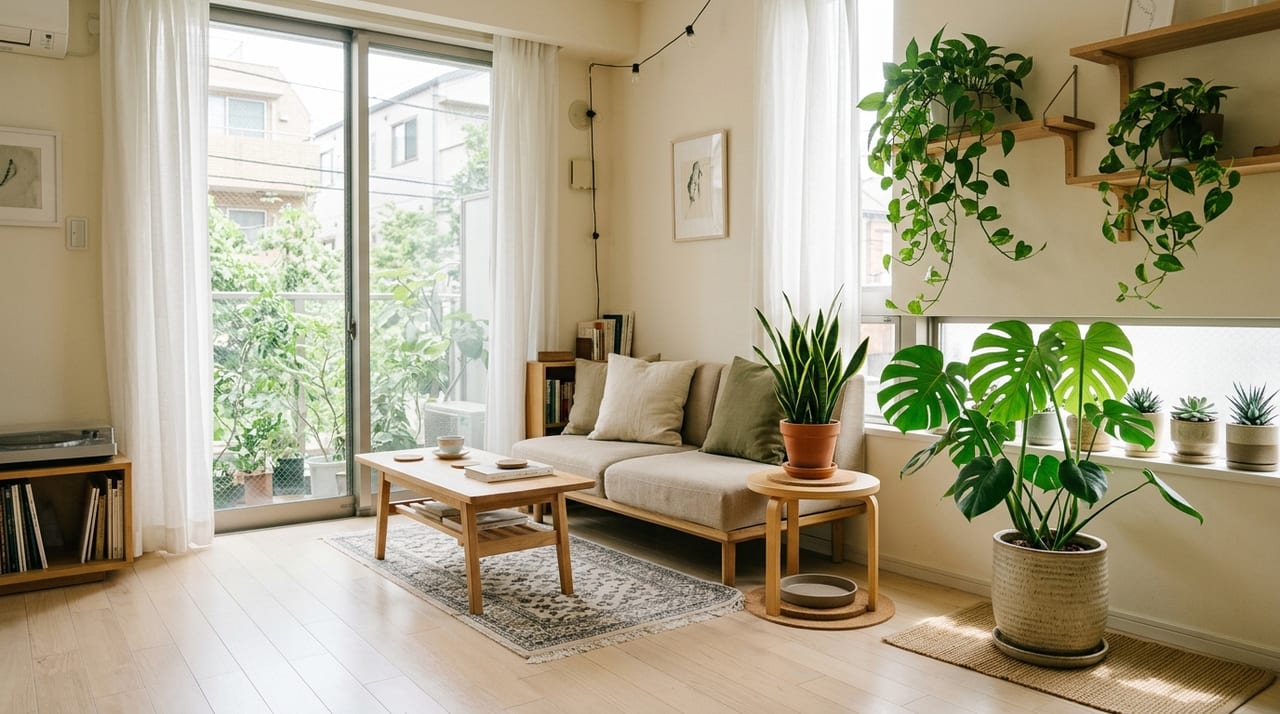
Houseplants and Gardening in Rental Apartments—Enjoying Greenery in Your Space and Important Considerations Before Move-Out
A practical guide to enjoying houseplants and gardening in rental properties. Learn how to select plants for indoor spaces, prevent damage to floors and walls, understand balcony gardening rules, and handle restoration to original condition to avoid issues when moving out.
Are you assuming that gardening is impossible in a rental apartment? In reality, with some creativity, you can enjoy a life with plants in rental housing—everything from houseplants to a full-scale indoor vegetable garden.
Demand for houseplants as interior décor has surged in recent years, and awareness of their air-purifying properties and psychological healing effects (biophilic design) is growing. This article introduces practical methods for enjoying plants while respecting the constraints of rental living.
Choosing Houseplants Suited to Rental Living
Selecting plants that suit your rental's living environment (window direction, room size, and humidity) is key to success.
Plants for Low-Light Rooms (North-Facing or Limited Natural Light)
•Pothos: Thrives in shade and can be creatively displayed through hanging or shelf placement
•Sansevieria (snake plant): Highly shade-tolerant and drought-resistant. Excellent air-purifying properties
•Ficus pumila (creeping fig): Grows in semi-shade. Beautiful when trailing over the edge of a shelf
•Syngonium podophyllum (arrowhead vine): A vining plant that grows well in low light
Plants for Well-Lit Rooms (South-Facing or East-Facing)
•Ficus benjamina (rubber fig): A striking large houseplant that is quite drought-tolerant
•Monstera: Prefers bright spaces. Its large leaves create distinctive interior décor
•Cacti and succulents: Require infrequent watering, ideal for busy single dwellers
•Herbs (basil, rosemary): Grow well on a kitchen window sill and can be used in cooking
Plants for Small Spaces
Compact plants are ideal for the limited space of studio apartments or 1K units.
•Desk-sized cacti and air plants
•Hydroponic cultivation in glass containers (hyacinths, sweet potato vine, etc.)
•Hanging air plant displays using wall-mounted frames
Practical Tips to Protect Your Floors and Walls
The biggest concern with houseplants is damage to floors and walls. Follow these precautions to avoid being charged for restoration to original condition when moving out.
Preventing Water Leaks on Floors
•Always use a saucer: Place a saucer under the pot to prevent water spillage during watering
•Double saucers (catch trays): Stack an additional tray under the first saucer to distribute the risk
•Flooring protection mat: For large plants (8-inch pot size or larger), place a waterproof mat underneath
•Plant pot covers: Place soil pots inside decorative pot covers to reduce water leak risk
Preventing Stains and Damage to Walls
•Don't let plants touch walls directly: Leaves and branches rubbing against walls can cause discoloration
•Choose "non-damaging" wall hooks: Use special small-hole hooks designed for drywall (easy to remove at move-out)
•Use tension rods like Labrico or Diawalls when installing shelves by windows: These floor-to-ceiling tension systems don't require drilling holes in walls
Mold and Humidity Prevention
Mold can develop from plant watering and water sitting in saucers.
•Empty saucers regularly (this also prevents root rot)
•Avoid placing plants in high-humidity areas (near closets or storage spaces)
•After watering, open windows or run exhaust fans to manage indoor humidity
Rules for Balcony and Terrace Gardening
If you want to enjoy gardening on a balcony or terrace, you should check a few rules first.
Check Your Building Rules and Lease Terms
Most apartment buildings have rules about balcony and terrace use.
•Weight limits: Large potted plants and soil can exceed the weight limit of your balcony (typical limit: 180kg/㎡ or less)
•Emergency exit access: Balconies serve as emergency escape routes between units, so blocking pathways is prohibited
•Soil restrictions: Some buildings prohibit using soil-based gardening
•Falling pot prevention: High winds can cause pots to fall, which is dangerous. Check building rules before securing pots to railings
Tips for Balcony Gardening
•Use lightweight growing medium: Choose lightweight specialty soil instead of regular soil (hydro-culture soil or commercial lightweight varieties)
•Use small and shallow planters: Opt for shallow rather than deep pots to keep weight down
•Watch for water loss: Balconies get direct sun and dry out quickly, so daily watering may be necessary in summer
•Use liquid fertilizer: Liquid fertilizer is cleaner and easier to manage than solid fertilizer
How to Avoid Plant-Related Charges at Move-Out
Plants can cause the following types of move-out charges:
•Water stains and damage to floors
•Mold marks and stains on walls
•Wall damage from hooks or shelves
•Clogged balcony drainage from soil
Follow these practices while living in your apartment to prevent these issues.
Document your move-in state: Take photos with your smartphone of floor and wall conditions before moving in and before placing plants, to document the original state.
Regular inspections: Check the condition of floors and walls around your plants every three months or so to watch for stains or discoloration.
Pre-move-out cleaning: After removing plants, wipe down floors and clean any wall stains. Check and clean balcony drains to ensure they're not clogged with soil.
Confirm permission when moving in: For large plants or balcony gardening, briefly confirm with your building management when you move in. This helps prevent move-out disputes.
Layout Tips for Making Your Room Look Stylish with Plants
Houseplants function as part of your interior décor. Keep the following points in mind to create a more refined space in your rental.
•Create height variation: Combine floor placement, shelf placement, and hanging displays for a three-dimensional feel
•Coordinate pot designs: Matching pot colors (white, black, terracotta, etc.) unifies the room's appearance
•Use room corners: Placing a single large plant in a room corner can dramatically change the room's impression
•Window greenery: Placing plants in the window light creates a bright impression as natural light plays off the leaves
Summary: Basic Rules for Enjoying Plants in Rental Apartments
Strictly use saucers and waterproof mats to prevent water leaks on floors
Use damage-free hooks for wall mounting and never let plants touch walls directly
Before using balcony space, confirm building rules, weight limits, and emergency exit requirements
Document conditions before move-in and before move-out with photos
Manage ventilation and watering appropriately to prevent mold and moisture problems
Plants purify your room's air and provide visual comfort. Once you understand the constraints of rental living, you can incorporate plants skillfully into your home and enjoy a richer lifestyle.
You can make your rental apartment's flooring stylish through DIY. However, because you're obligated to restore the floor to its original condition upon move-out, choosing methods that leave no traces is essential. Experts explain renovation techniques using removable floor tiles, wood carpet, and puzzle mats, as well as key points to avoid unexpected costs at move-out.