For those who want to enjoy plants and gardening on rental apartment balconies and indoors, this guide provides practical advice on checking building regulations, selecting suitable plants, managing drainage, addressing weight concerns, and taking precautions before move-out. We also introduce hydroponic cultivation and herb gardening that require no soil.
Reviewed by: Nobuyuki MoriPresident, M-Assets Co., Ltd. / Licensed Real Estate Transaction Specialist (Miyagi #018212)
A guide for those wanting to grow plants on their rental apartment balcony, covering prohibited cases, how to get permission, floor protection during watering, and restoration strategies at move-out to help you enjoy gardening trouble-free.
A comprehensive guide covering everything from rule-checking to practical techniques for enjoying gardening and home vegetable growing on rental balconies. Learn how to prevent drainage clogs and restoration-to-original-condition risks while growing seasonal plants and vegetables.
A practical guide to enjoying houseplants and gardening in rental properties. Learn how to select plants for indoor spaces, prevent damage to floors and walls, understand balcony gardening rules, and handle restoration to original condition to avoid issues when moving out.
If you want to have a barbecue or yakiniku on the balcony or common areas of a rental property, checking the building management rules is essential. This guide explains the rules regarding open flames, smoke, and odor, consideration for neighbors, how to confirm whether open flames are permitted in apartment buildings, and how to use hot plates and smokeless roasters as alternative methods.
Plants can transform a room's atmosphere and are said to have stress-reducing effects. However, many renters worry about questions like "Can I place large planters on the balcony?" "Is it okay to bring soil inside?" and "Will cleanup when I move out be a problem?"
This article explains practical methods for enjoying plants and gardening while adhering to rental building regulations.
In most cases, a balcony is a "common area with exclusive use rights." Building regulations may impose the following restrictions:
Check your lease agreement or building management regulations, and inquire in writing about any unclear points.
Placing many planters on the balcony may block evacuation routes to neighboring units (partition or kick-through panels). This can violate fire and building codes, and management may demand their removal. Be careful not to place large pots near evacuation routes.
It's important to keep weight to a minimum to avoid exceeding the balcony's weight limit.
Excess water flowing on the floor can clog drains and cause water leaks to lower units.
Solutions:
Suitable plants vary depending on balcony orientation.
| Balcony Orientation | Suitable Plant Examples |
|---|---|
| South-facing (excellent sunlight) | Tomatoes, basil, geraniums, lavender |
| North-facing (limited sunlight) | Ferns, mint, coriander, foliage plants |
| East-facing / West-facing | Shade-tolerant herbs, petunias |
In high-rise units or windy environments, use weights or securing fixtures to prevent planters from blowing away.
Indoor gardening is ideal if your balcony has restrictions or you prefer to avoid insects.
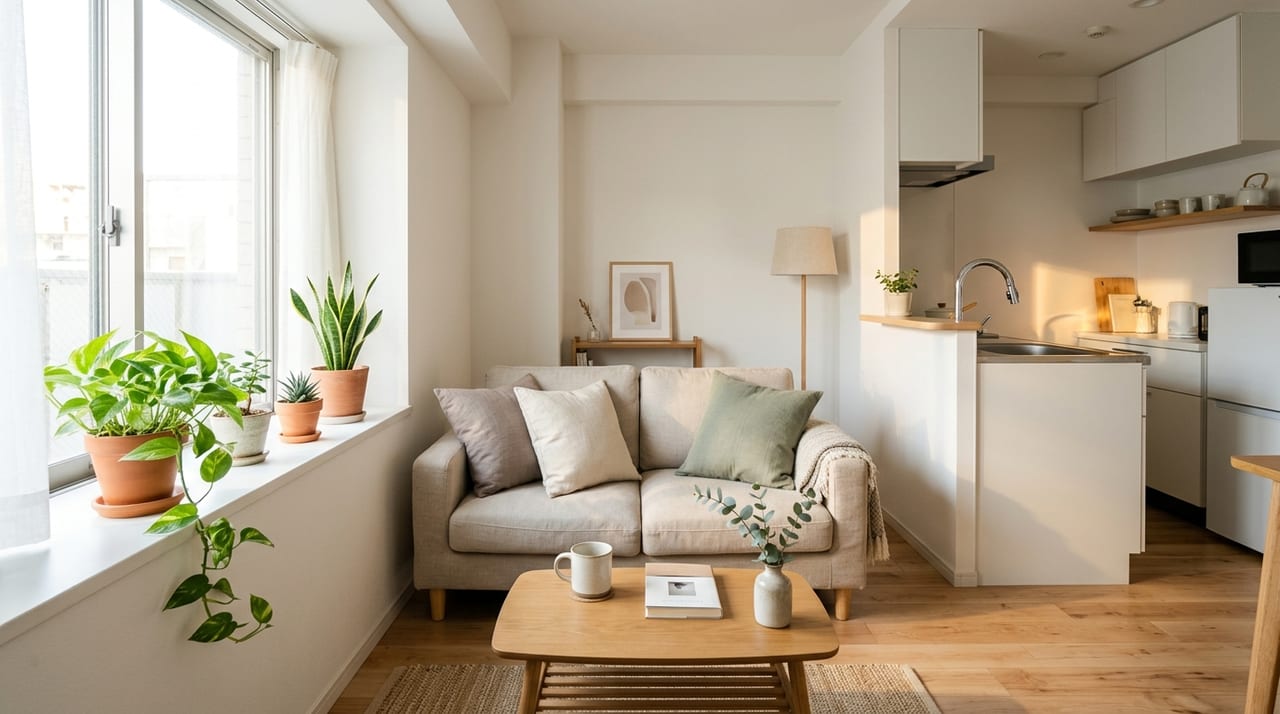
Foliage plants are unlikely to violate building regulations and can be enjoyed simply by placing them indoors.
Easy-to-care-for recommended varieties:
Hydroponic cultivation, which uses no soil, is a hygienic way to enjoy gardening in a rental.
Hydroponic kits are available at garden centers, 100-yen shops, and online retailers, keeping initial costs low.
Growing herbs on kitchen windowsills requires minimal soil and is easy to do in a rental. Basil, rosemary, and thyme can also be used in cooking, making it doubly rewarding.
Be aware of common restoration-to-original-condition issues that occur when growing plants and how to prevent them.
Soil stains on floors and balconies may be subject to restoration costs.
Solutions:
Walls stained from fallen leaves, soil, or water splashes may also affect move-out costs.
Solutions:
High indoor humidity from many plants or excessive watering can cause mold. Prevent this by ventilating regularly and adjusting watering amounts.
You can fully enjoy gardening in a rental by checking building regulations and taking appropriate precautions.
Enhance your daily rental living with plants and bring more richness to your life.
床スラブ厚と上階の足音問題——賃貸で「ドン」という衝撃音が響く構造的な理由と物件選びのポイント
前橋・群馬の賃貸エリアガイド【2026年版】——主要エリア別家賃相場と住みやすさを徹底比較
Making the Most of Protruding Beams and Columns in Rental Apartments — Smart Furniture Placement Strategies
Mito & Ibaraki Rental Area Guide [2026] — Comprehensive Explanation of Rental Rates and Livability by Major Area
Uncovering Property Issues by Asking Previous Tenants About Their Departure—Questions to Ask During Viewings and How to Interpret Answers
