For those considering a move in autumn to avoid the March rush: A complete guide to autumn rental market characteristics, rent negotiation opportunities, and apartment hunting tips.
Reviewed by: Nobuyuki MoriPresident, M-Assets Co., Ltd. / Licensed Real Estate Transaction Specialist (Miyagi #018212)
The rental market has distinct peak and off-peak seasons, and choosing the right time can significantly impact your rent and upfront costs. An industry expert with over 20 years in real estate explains the benefits of each season—peak season (January to March) and off-peak season (April to August)—along with optimal negotiation strategies for each.
The rental market has periods of high activity and periods of low activity. Peak seasons see concentrated inventory but fierce competition, while off-seasons offer fewer choices but greater room for negotiation. Understanding each season's characteristics allows you to secure better terms with the same budget.
Many people are unsure where to start when searching for an apartment to rent. This guide walks you through each step of the process: property search, viewings, applications, screening, contract signing, and moving day.
When people think of moving season for rental properties, the busy spring season (March–April) usually comes to mind first. However, autumn (September–November) is also an important season when the rental market becomes active. More people move in autumn for various reasons—new jobs, company transfers, graduate school enrollment, and career changes—and compared to the busy season, it's also a better time to negotiate rent. This article explains key strategies for smart autumn apartment hunting.
While the number of available properties decreases in autumn compared to the busy spring season, long-vacant properties sometimes become available as hidden gems. It's not uncommon to find properties that didn't get rented in March–April now offered at lower prices or with free-rent incentives.
In autumn, the real estate agency's busy season has ended, and staff have more time available. Property owners are also eager to fill vacancies quickly, making rent reductions and free-rent negotiations more likely to succeed during this season. When viewing a property, mention that you're considering several options, then discuss reducing the key money or arranging for the first month's rent to be free.
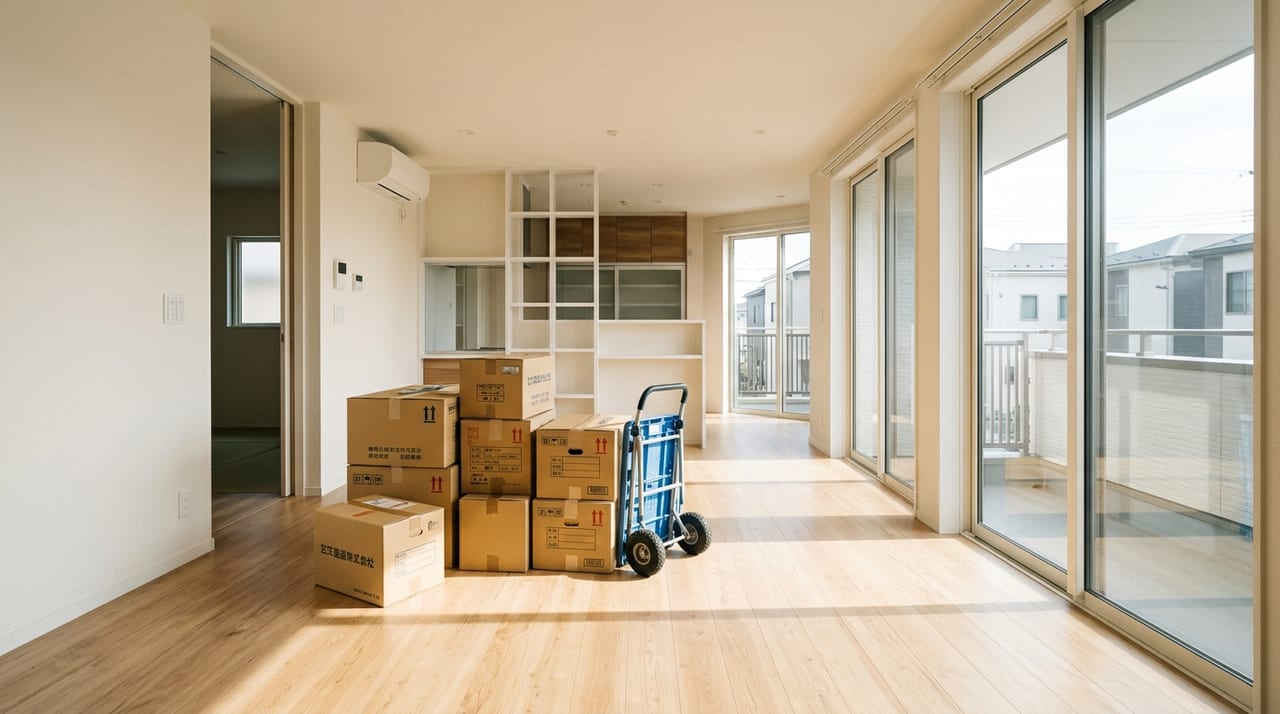
March's busy season sees the highest moving company rates, and bookings are hard to secure. Autumn (especially September–October), by contrast, approaches the slow season, and the same distance and volume of belongings can cost ¥30,000–¥50,000 less. Obtaining multiple quotes and negotiating further can reduce costs even more.
Many people move in autumn after receiving notice of personnel transfers in June–July for April's changes. Large companies in the Kanto and Tokai regions especially often have a second round of reassignments in October, generating moving demand.
A significant number of international students and working students move to coincide with graduate school enrollment in the second semester (September–October). Most foreign students entering Japanese graduate programs from overseas universities start in autumn.
When relocating to a new workplace through autumn hiring or mid-career recruitment, a change of residence sometimes accompanies the move.
To aim for move-in by the end of October or November, we recommend starting your property search in early September. Gather information before inquiries to real estate agencies spike, and narrow your candidates to 2–3 properties to allow for comfortable negotiations.
In autumn, anticipating March's tenant exodus, landlords sometimes recruit replacement tenants early. Properties listed as "Currently occupied, scheduled vacancy in [month]" face less competition, and advance viewings make condition negotiation easier.
Viewing properties in autumn, when solar altitude begins to decrease, offers an excellent opportunity to verify winter sunlight in advance. Even for south-facing units, check the times of day when nearby buildings cast shade, and confirm in real conditions whether sunlight enters even in winter. Opening windows to feel the outdoor air also lets you assess soundproofing.
When moving in autumn, always verify the air conditioning unit's heating capacity and whether floor heating is available. You'll need heating from November–December onward, immediately after move-in. For properties in the Tohoku region, Hokkaido, and along the Japan Sea coast, checking window insulation (whether dual-pane windows exist) and water heater capacity is especially important.
September–October is autumn pollen season (ragweed and similar plants). Thinking long-term and accounting for spring cedar and cypress pollen, you should prioritize properties with 24-hour ventilation systems or pollen filter features.
The autumn rental market is characterized by fewer properties but easier negotiation and lower moving costs. For those wanting to avoid the busy season's crowding and secure quality properties at reasonable prices, autumn apartment hunting is an extremely advantageous option. Start moving in September and proceed with property searching, negotiation, and contract signing at a comfortable pace.
A comprehensive guide to how the direction and sunlight of rental properties impact your daily life. Features of south-facing, east-facing, west-facing, and north-facing apartments and their effects on utility costs, how to check natural light during property viewings, and sunlight conditions in Sendai and other Tohoku regions.
床スラブ厚と上階の足音問題——賃貸で「ドン」という衝撃音が響く構造的な理由と物件選びのポイント
前橋・群馬の賃貸エリアガイド【2026年版】——主要エリア別家賃相場と住みやすさを徹底比較
Making the Most of Protruding Beams and Columns in Rental Apartments — Smart Furniture Placement Strategies
Mito & Ibaraki Rental Area Guide [2026] — Comprehensive Explanation of Rental Rates and Livability by Major Area
Uncovering Property Issues by Asking Previous Tenants About Their Departure—Questions to Ask During Viewings and How to Interpret Answers