As typhoon season approaches, this guide explains the safety measures rental tenants should take in advance, along with detailed steps for damage assessment and reporting after a typhoon passes. We also cover the insurance claim process.
Reviewed by: Nobuyuki MoriPresident, M-Assets Co., Ltd. / Licensed Real Estate Transaction Specialist (Miyagi #018212)
A practical guide to protecting your rental home from flooding caused by typhoons and heavy rain. We cover advance preparation, evacuation decision-making, what to do when damage occurs, and insurance claims—all essential knowledge for residents of lower floors and flood-risk areas.
Gas leaks and carbon monoxide poisoning pose a life-threatening risk that can develop without your awareness. This expert guide covers practical safety measures renters should know: how to check alarm systems, the proper steps to take when you discover a gas leak, and how to safely use heating equipment in winter.
Water damage to rental housing from typhoons and heavy rain. This guide explains the insurance claim process, how repair costs are split between landlords and tenants, and key points for requesting repairs—all in chronological order from the moment damage occurs.
Japan experiences multiple typhoons landing each year, and particularly during the typhoon season from summer through autumn, rental tenants face a critical period for safety precautions. While "responsibility for building repairs falls principally on the landlord (property owner or management company)," tenants also have certain obligations regarding daily safety management and measures to prevent typhoon damage.
Additionally, by familiarizing yourself in advance with the contact procedures and insurance processes in case of typhoon damage, you can minimize damage and ensure swift recovery.
□ Move potted plants and greenery from balconies indoors
If potted plants blow away in high winds, they can damage neighboring units or break windows. Even heavy planters may not withstand winds exceeding 100 km/h.
□ Store clothes drying rods indoors or secure them firmly
Clothes drying rods are among the most dangerous airborne objects during typhoons. Either remove and store them indoors or in a hallway closet, or secure them with typhoon-rated straps.
□ Check and clean balcony drains
If drains become clogged with leaves and debris, heavy rains can cause balconies to flood. Clear any blockages beforehand.
□ Verify AC unit securing fixtures are intact
If an air conditioning unit falls in strong winds, refrigerant lines can break, resulting in repair costs of hundreds of thousands of yen. Check that securing belts and covers are not deteriorated.
□ Close all windows and storm shutters
Leaving windows slightly open for ventilation is dangerous during high winds. Ensure all windows and shutters are completely closed and locked.
□ Apply window safety film to glass (if in a typhoon-prone area)
Safety film prevents glass fragments from scattering even if a window breaks. For rental units, use removable-type film.
□ Waterproof entryway (if flooding is a risk)
If your unit is on the ground floor and at flooding risk, place sandbags (or water-filled plastic bags as a substitute) in front of the entryway.
□ Flashlights, candles, and rechargeable lights
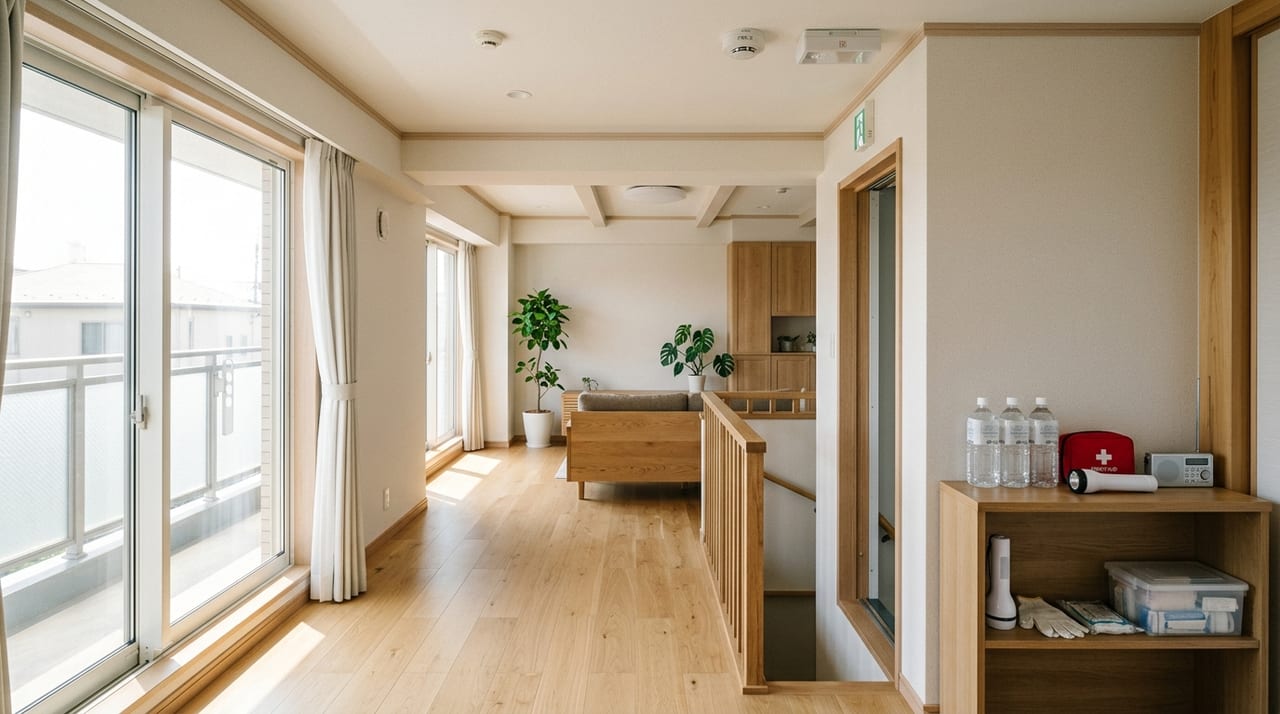
Blackouts are the most common utility failure during typhoons. Check flashlight batteries and prepare spares.
□ Charge smartphones to 100%
Fully charge your smartphone and mobile battery the day before typhoon arrival. These are essential for gathering information and communicating during outages.
□ Stock emergency drinking water and food
Ensure you have at least 3 days' worth of drinking water (3 liters per person per day) and food. Canned and ready-to-eat meals are ideal since they don't require cooking.
□ Fill the bathtub with water
The night before typhoon landfall, fill the bathtub with water to prepare for potential water outages. This water can be used to flush toilets.
□ Confirm fire insurance (personal property coverage) details
Check whether your fire insurance or personal property coverage (obtained when you moved in) includes wind and water damage coverage. Some plans exclude wind and water damage, so review your contract.
□ Keep management company and emergency contact numbers on hand
In case of power or communication disruptions, keep the management company's emergency contact number written on paper nearby.
Even after a typhoon passes, do not venture outdoors immediately. Wait for weather reports to confirm the typhoon has completely passed before checking outside.
□ Visually inspect roof and exterior walls (from outside)
Check for fallen roof tiles, exterior cracks, and gutter damage. Do not climb on the roof due to fall risk; use binoculars from the ground or report to your management company and let professionals handle it.
□ Check for indoor water leaks
Look for water stains on ceilings, discoloration on walls, and wet floors. Also check for water seeping through window frames and door gaps.
□ Check for broken windows
Do not touch broken glass with bare hands; contact your management company immediately. As a temporary fix, cover the area with cardboard and tape to prevent rain and insects from entering.
□ Verify electricity, gas, and water are functioning
Check that circuit breakers have not tripped. Gas may be temporarily shut off due to automatic safety valves (follow your gas company's instructions to restore service). Flush water lines thoroughly when water service resumes.
□ Check AC unit operation
Do not run your AC if water has entered the outdoor unit, as this may cause failure. If the unit is damaged, consult the manufacturer before using it.
If the building or equipment is damaged, contact your management company (or landlord) first. Briefly explain what was damaged, the current situation (such as water intrusion), and the urgency level. Repairs should be arranged through the management company as a matter of principle.
Document damage with photos and video for repair cost assessment and insurance claims. Pre-repair condition is critical evidence, so photograph everything before work begins.
If personal property (appliances, furniture, clothing, etc.) is damaged by the typhoon, contact your personal property insurance provider. Most insurers offer 24-hour accident reporting.
Insurance claims typically require:
Typhoon preparedness requires more than just knowing what to do—you must actually take action. Before a typhoon arrives, clear outdoor items, lock windows, and prepare emergency supplies. After it passes, inspect your building and utilities, and document any damage. For rental housing, swift contact with your management company is the key to recovery. Use this checklist before typhoon season to ensure you are properly prepared.
A guide to handling rental properties damaged by typhoons or heavy rain. Learn how to report water leaks, broken windows, flooding and other damage, how to file fire insurance (household contents insurance) claims and verify coverage, and how to negotiate cost-sharing arrangements with your landlord and property management company.
床スラブ厚と上階の足音問題——賃貸で「ドン」という衝撃音が響く構造的な理由と物件選びのポイント
前橋・群馬の賃貸エリアガイド【2026年版】——主要エリア別家賃相場と住みやすさを徹底比較
Making the Most of Protruding Beams and Columns in Rental Apartments — Smart Furniture Placement Strategies
Mito & Ibaraki Rental Area Guide [2026] — Comprehensive Explanation of Rental Rates and Livability by Major Area
Uncovering Property Issues by Asking Previous Tenants About Their Departure—Questions to Ask During Viewings and How to Interpret Answers
