Gas leaks and carbon monoxide poisoning pose a life-threatening risk that can develop without your awareness. This expert guide covers practical safety measures renters should know: how to check alarm systems, the proper steps to take when you discover a gas leak, and how to safely use heating equipment in winter.
Reviewed by: Nobuyuki MoriPresident, M-Assets Co., Ltd. / Licensed Real Estate Transaction Specialist (Miyagi #018212)
As typhoon season approaches, this guide explains the safety measures rental tenants should take in advance, along with detailed steps for damage assessment and reporting after a typhoon passes. We also cover the insurance claim process.
Buildings with Building Permits before June 1981 followed the "old seismic standard," while those after follow the "new seismic standard"—the two differ fundamentally in earthquake resistance. Learn how experts recommend evaluating a rental property's age and seismic classification.
This guide explains flood and inundation risks to verify when selecting rental properties and how to read hazard maps. We cover everything from accessing the Ministry of Land, Infrastructure, Transport and Tourism's Hazard Map Portal and understanding flood risk disclosures in property transaction documents, to decision-making criteria for 1st and 2nd floor units and flood insurance considerations—a complete roadmap to safe rental selection.
While it's easy to think "it can't happen in my apartment," rental properties face particular risk in certain situations. Understanding the main causes is the first step in prevention.
Poor Connections Around Gas Stoves The gas hose connecting the stove to the gas valve deteriorates over time, developing cracks and loose connections. Be especially cautious if you connected the stove yourself after moving in, or if the hose has been in use for many years. Gas hoses typically need replacement every 5–6 years, and any visible cracks or deformation require immediate replacement.
Deteriorated Gas Pipes and Equipment In apartments and older rental properties, the gas pipes within the building itself may be deteriorating. In properties over 30 years old, gas pipes within walls or under floors may be corroded. It's advisable to ask the management company to confirm the inspection history of gas equipment before moving in.
Checks After an Earthquake When an earthquake of magnitude 5 or stronger occurs, the gas meter's automatic shutoff system activates. While a reset operation is necessary, first always check whether there is any gas odor inside the apartment. Since there is a possibility the gas pipe may have cracked, if you detect an unusual smell, do not attempt to reset the meter—contact your gas company instead.
Carbon monoxide (CO) is a colorless, odorless gas that cannot be detected by human senses—even when present. This is its greatest danger.
Carbon monoxide is produced when gas or heating oil undergoes incomplete combustion. Concentrations rise when you use a stove in a sealed room for extended periods, or when you use gas equipment without adequate ventilation.
Stages of Carbon Monoxide Poisoning Symptoms
Symptoms often worsen undetected during sleep, making ventilation before bed and alarm installation essential. Pets and young children develop symptoms faster than adults, so households with family members should be particularly cautious.
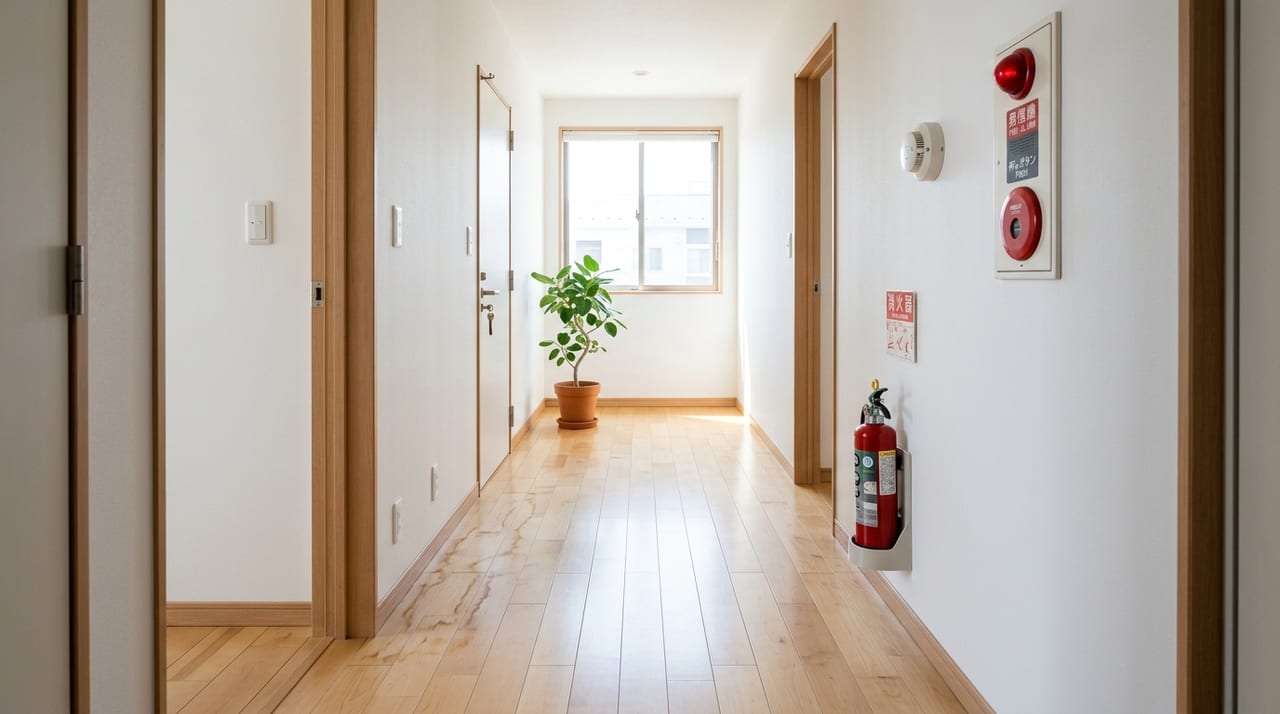
Certain alarms are legally mandated for rental properties by law or local ordinance. Always verify their existence and condition upon move-in.
Residential Fire Alarms The Fire Services Act mandates their installation in all residences. They must be installed in bedrooms and on staircases in the floor where bedrooms are located. In rental properties, landlords typically bear the installation responsibility, though this varies by region and property. For battery-powered models, batteries last approximately 10 years; the entire unit must be replaced when batteries expire.
Gas Alarms Gas companies and local authorities recommend these alarms. They are most effective when installed near the gas stove or hot water heater. City gas is lighter than air, so install near the ceiling; LP gas is heavier than air, so install near the floor. The effective lifespan varies by product, but 5 years is the typical guideline.
Carbon Monoxide Alarms Combination gas and CO alarm units are available commercially. They are especially effective in rooms with oil stoves or oil heaters. When installed alone, they are most effective when placed near your sleeping area and near oil appliances.
When moving into a new rental property, check the following items before your belongings are moved in. If problems are discovered later, responsibility becomes unclear once you've moved in.
Checking Alarms
Checking Gas Equipment
Document Issues Before Move-In If you discover any problems, photograph them and report to the management company in writing or email, requesting confirmation. Verbal-only reports may lead to disputes later.
If you smell gas, panic and incorrect actions can cause fire or explosion. Stay calm and follow these steps carefully.
Many rental properties prohibit oil stoves, but if yours permits them, proper management is essential. Carbon monoxide poisoning accidents are concentrated during winter months.
Ventilate 1–2 Times Per Hour While an oil stove is in use, open a window for a few minutes every hour. Using it for extended periods in a sealed room, even when it's cold outside, causes CO concentrations to spike rapidly.
Always Extinguish Before Sleep and When Leaving Home Never sleep or leave home with an oil stove running. For models without timers, build a pre-sleep routine that includes turning off the stove to prevent forgetting.
Storage and Quality of Heating Oil Using degraded heating oil (discolored or contaminated) promotes incomplete combustion. Do not use leftover heating oil from previous seasons; use your local gas station's used oil disposal service instead.
Install a Carbon Monoxide Alarm I strongly recommend installing a carbon monoxide alarm in rooms with oil stoves. They cost around ¥3,000–¥6,000 and are a worthwhile investment for protecting your life.
If there are problems with gas equipment or alarms, tenants should not attempt repairs on their own. Report to the management company or landlord and request repairs.
What to Include in Your Report
Keep Written Records via Email or Letter Avoid reporting by phone alone; use email or messaging apps that create a written record. In cases of delayed response, you may use certified mail, but first try making your request through sincere, repeated communication.
In Cases of High Urgency If there is a risk of gas leaks or carbon monoxide poisoning, contact the gas company directly in parallel with notifying the management company. In life-threatening emergencies, do not wait for management company approval.
A safe home is built on the awareness and actions of residents themselves. Daily habits like checking alarms and proper ventilation prevent major accidents. Take the time to review your home's safety during moving season or seasonal changes.
With recent increases in heavy rainfall and typhoon damage, assessing flood risk has become essential when choosing a rental property. This guide explains practical methods used by real estate professionals—from reading hazard maps to on-site verification tips and what to do in the event of damage.
床スラブ厚と上階の足音問題——賃貸で「ドン」という衝撃音が響く構造的な理由と物件選びのポイント
前橋・群馬の賃貸エリアガイド【2026年版】——主要エリア別家賃相場と住みやすさを徹底比較
Making the Most of Protruding Beams and Columns in Rental Apartments — Smart Furniture Placement Strategies
Mito & Ibaraki Rental Area Guide [2026] — Comprehensive Explanation of Rental Rates and Livability by Major Area
Uncovering Property Issues by Asking Previous Tenants About Their Departure—Questions to Ask During Viewings and How to Interpret Answers
