Japanese Traditional Culture and Home Hunting: A Guide to Japanese-Style Living for Foreigners
We introduce the appeal of traditional Japanese living spaces—such as tatami, sliding doors, and alcoves—along with tips for experiencing history and culture while living in Sendai, tailored for foreign residents.
Many foreigners who choose to live in Japan have a strong interest in Japanese traditional culture. Japanese housing culture is a fusion of aesthetic sensibility and practicality cultivated over long history, with a charm that can only be truly appreciated through actually living within it. In this article, we introduce the characteristics of traditional Japanese living spaces and key points for experiencing history and culture while living in Sendai.
Living in a Japanese Room: The Appeal of Tatami, Sliding Doors, and Alcoves
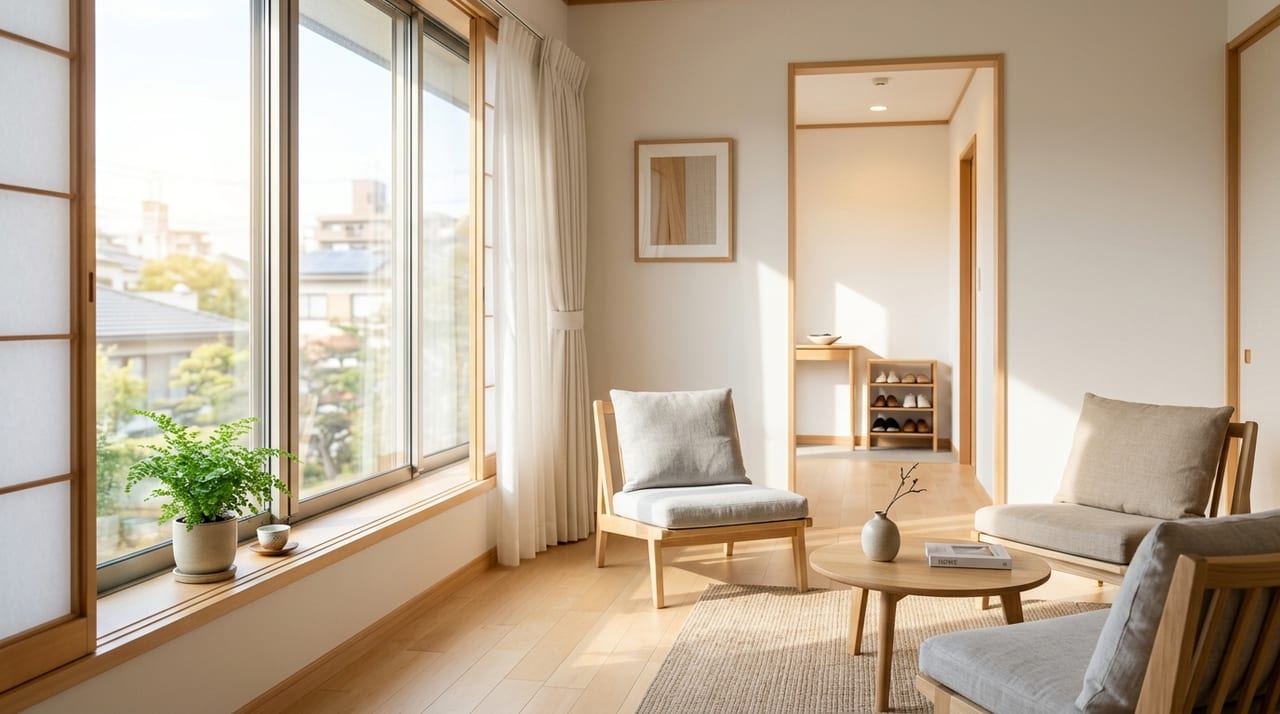
The "Japanese room" (washitsu), symbolic of traditional Japanese homes, is composed of unique elements: tatami flooring, sliding doors (fusuma), and an alcove (tokonoma).
Tatami is a distinctive Japanese flooring material made from woven rush grass. It is characterized by its soft, pleasant feel underfoot and the natural fragrance of the rush grass. It has excellent moisture-regulating properties suited to Japan's humid climate. In a tatami room, shoes are removed, and you spend time barefoot or in slippers. This "shoe-removing" culture is a universal rule throughout Japanese homes, and reflects the wisdom of maintaining a clean living environment.
Sliding doors (fusuma) are a style of door made with a wooden frame and covered with Japanese paper or fabric, serving to partition rooms. When needed, they can be opened fully to create one large space, demonstrating the Japanese ingenuity of flexibly using limited space.
The alcove (tokonoma) is a decorative niche in a corner of the Japanese room, traditionally used to display hanging scrolls or flowers. For Japanese people, it symbolizes "the spirit of hospitality," and is considered the most formal space in which to welcome guests.
Tips for Choosing a Japanese Room in a Rental Property
Throughout Sendai, there are many rental properties featuring Japanese rooms. They are particularly common in older buildings, and often offer reasonable rental rates. Here are some important points to keep in mind when choosing a property with a Japanese room.
Tatami requires regular maintenance and replacement. Check the condition of the tatami when moving in, and if it shows significant wear, consult with the property management company. Replacement costs may be charged upon move-out, so carefully review the restoration-to-original-condition clause in your lease agreement.
If you plan to place a bed in a tatami room, we recommend using protective covers or mats under the legs to avoid damaging the tatami. The traditional style of placing a futon directly on the tatami for sleeping is a unique experience that Japanese rooms offer.
Japanese rooms tend to be cool in summer and somewhat cold in winter. During winter months, using a kotatsu (an electric heating table) is a traditional way to stay warm. Living in a Japanese room allows you to feel Japan's four seasons directly.
Historic Areas and Living Environment in Sendai
Sendai, known as the "City of Trees," is the largest city in the Tohoku region, but it is also a castle town with approximately 400 years of history. The history of the Sendai Domain, founded by Date Masamune, is vividly preserved in today's cityscape.
The area around Sendai Castle ruins (Aoba Castle site) in Aoba-ku is situated on green, rolling hills and offers a distinctly historic atmosphere. Nearby is Tohoku University, which brings student-town vitality to the area. Osaki Hachiman Shrine, designated as a National Treasure, features Momoyama-period architecture and attracts many visitors as a shrine closely associated with Date Masamune.
Wakabayashi-ku retains traces of the craftsmen's towns that Date Masamune established as part of his development of the castle town. Historic place names such as "Kaji-cho" (Blacksmith District) and "Someishi-cho" (Dyers' District) still remain, evoking the artisan culture of old. By living near such historic areas, you can experience Japanese history and culture in your daily life.
Differences Between Japanese and Western Housing Culture
Japanese housing culture has unique customs and rules that differ from the West. Understanding these will make your life in Japan smoother.
The most important is the habit of removing shoes. All Japanese homes have an "entrance" (genkan), a designated space for removing shoes before entering the living area. The same rule applies to guests—entering a home with shoes on is considered extremely impolite.
Sound consideration is also very important. In Japanese apartment complexes, people are very sensitive to everyday noise—footsteps, voices, television volume, and other household sounds. Particularly after 22:00 at night, maintaining quiet is an unspoken rule. The use of carpets or sound-dampening mats and wearing slippers are expected to show consideration for neighbors below.
Garbage separation is another uniquely Japanese practice. Waste is carefully sorted into categories such as combustible, non-combustible, recyclable, and plastic, and must be put out on designated days. Since separation rules vary by municipality, check with your property management company or neighbors when you move in.
Greeting neighbors is also valued in Japanese housing culture. It is customary to greet residents in adjacent rooms and above and below your unit when moving in, often bringing a small gift. This initial greeting is the first step toward building good neighbor relations.
Deepening Your Understanding of Japanese Traditional Culture
For those wishing to experience Japanese traditional culture more deeply while living in Sendai, several opportunities exist.
Throughout Sendai there are many martial arts halls where you can experience kendo, judo, archery, and other martial arts. University martial arts clubs and community education programs at Tohoku University offer programs that are accessible to foreigners. Engaging in martial arts deepens your understanding of the spiritual culture of Japan and helps you better appreciate housing culture.
Sendai also has numerous schools offering traditional arts such as tea ceremony, flower arrangement, and calligraphy. These cultural experiences provide valuable opportunities to understand the aesthetic sensibilities and sense of space (ma) that are fundamental to Japanese culture.
Living in Sendai: Where Tradition and Convenience Harmonize
Sendai is a city where historic character and modern urban convenience are beautifully balanced. Beyond excellent accessibility—approximately 1 hour 30 minutes to Tokyo by Shinkansen and about 17 minutes from Sendai Airport to the city center—you can enjoy abundant nature and the changing beauty of Japan's four seasons.
For foreigners interested in Japanese traditional culture, Sendai is an ideal place to live. Experiencing Japanese housing culture in a room with tatami, strolling through historic neighborhoods, and immersing yourself in martial arts and traditional arts—through these daily experiences, you will come to appreciate the depth of Japanese culture. Find your own "Japanese-style living" in Sendai, where tradition and convenience harmonize.
Fire Insurance for Rental Apartments in Japan: Is It Required? Understanding Coverage and How to Choose
Fire insurance is required when signing a rental contract in Japan. This guide explains what's covered, typical costs, and how to choose your own policy—all in clear language for foreign residents.