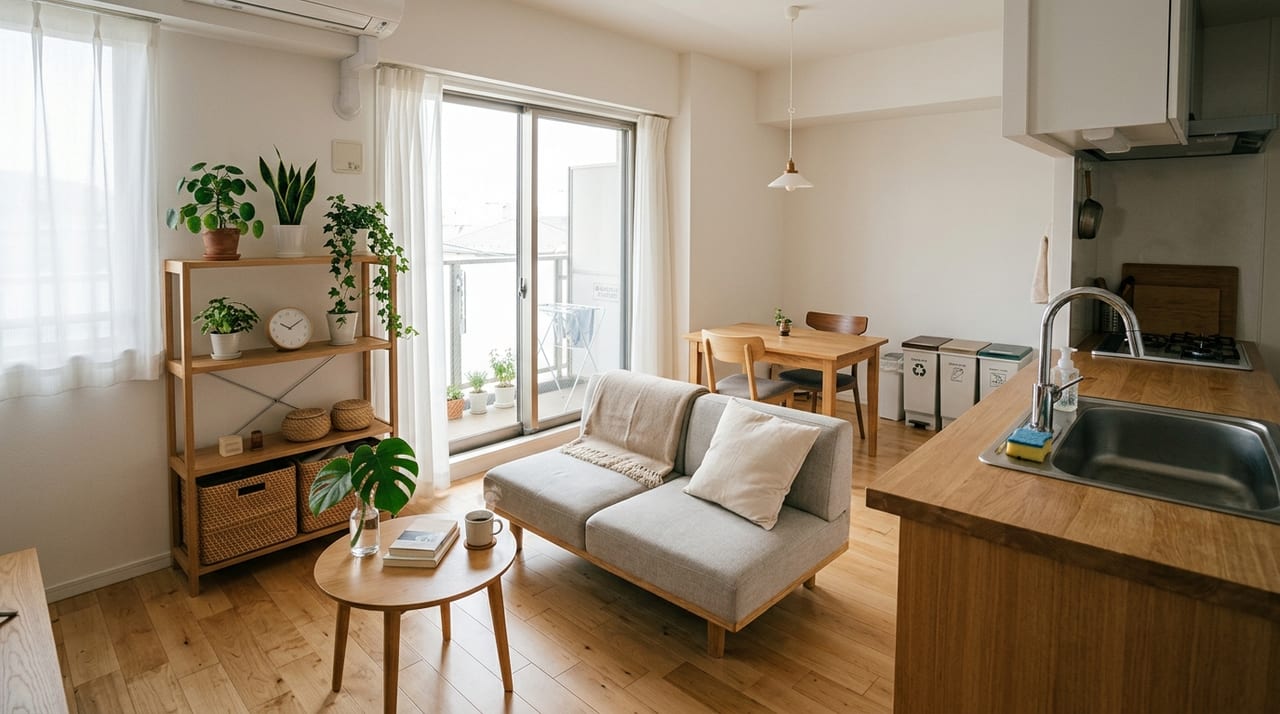
Japan's Garbage Sorting Guide—Complete Explanation of Common Pitfalls for Foreigners
Garbage sorting rules vary by municipality, and it's one of the first major challenges for foreigners. From combustible waste to large items, we explain how to dispose of them correctly and the etiquette to prevent neighborhood disputes.
One of the first things that confuses many people living in Japan is "garbage sorting." You must separate combustible waste, non-combustible waste, recyclables, and large items by type, and put them in designated locations on specified days and times—rules that vary by municipality, and failure to follow them can result in neighborhood disputes. In this article, we explain the basics of Japan's garbage sorting system in detail, from fundamental principles to the points where foreigners commonly stumble.
Why Japan's Garbage Sorting Rules Are So Strict
Japan has limited land area, which restricts where large-scale waste processing facilities can be built. Detailed sorting is promoted to increase recycling rates and reduce landfill waste. Additionally, there is a strong civic consciousness about maintaining a clean environment through residents' cooperation, and garbage disposal etiquette is an important part of good neighborly relations.
Combustible waste has the highest frequency, with collection typically occurring about twice a week. This includes food scraps (leftover food and vegetable waste), soiled paper items (delivery pizza boxes, tissues), and plastics (which may vary by municipality).
Non-combustible waste includes glass, ceramics, small electrical appliances, and metal items, with collection typically occurring once or twice a month. Broken glass and ceramics should be wrapped in newspaper as "hazardous materials" and labeled with "Danger" to be considerate.
Recyclables include newspapers, cardboard boxes, magazines, aluminum cans, steel cans, plastic bottles, and glass bottles (which may be separated by color). For plastic bottles, remove the cap, peel off the label, rinse the bottle, and then dispose of it.
The handling of plastics varies significantly by municipality. Some municipalities collect plastic containers and packaging marked with the plastic symbol as recyclables, while others require them to be put out as combustible waste. Be sure to check the rules for your new area.
Large items include bulky furniture, large appliances, and bicycles, and require advance application and purchase of a paid disposal sticker. Contact your municipality's large-item waste reception desk (by phone or online) to confirm the collection date and cost. Leaving unpermitted large items at waste collection points may violate local ordinances, so exercise caution.
Garbage Disposal Rules
The basic rule is to put garbage in designated locations (waste collection points) by 8 a.m. on collection day. Many areas prohibit putting garbage out the night before, and some areas cover the collection points with nets to prevent scattering by crows and wild animals.
In some municipalities (such as Sendai), garbage bags must be municipality-designated paid bags. Since some municipalities prohibit disposal in bags other than designated ones, confirm the rules at the time of move-in. These bags can be purchased at convenience stores and supermarkets.
Common Mistakes and Important Points to Note
Batteries and fluorescent lights: Rechargeable batteries, dry-cell batteries, and fluorescent lights are collected separately from regular non-combustible waste. It is common to use dedicated collection boxes installed at supermarkets and convenience stores.
Electrical appliances (televisions, refrigerators, washing machines, air conditioners): Large electrical appliances are subject to the Home Appliance Recycling Law and cannot be disposed of as large-item waste. You must arrange pickup through an electrical retailer or disposal service, or use the take-back service at the store where you purchased them.
Draining food scraps: Thoroughly drain food scraps before disposal to prevent odor and liquid leakage. Especially during summer, make a habit of disposing of them promptly.
Multilingual garbage guides: Many municipalities distribute garbage sorting guide books in multiple languages. You can obtain them from municipal offices or waste collection departments after moving in, or download them from the municipality's website. Most offer English, Chinese, Korean, and other languages.
The Case of Sendai
If you live in Sendai, you must put combustible waste in "household garbage designated bags." These bags come in sizes S, M, and L and can be purchased at supermarkets and convenience stores. Empty cans, plastic bottles, glass bottles, and other recyclables are collected separately on designated days. For details, check the official Sendai city website or the distributed garbage collection calendar.
While garbage disposal rules may appear complex at first, they become routine habits with practice. To prevent neighborhood disputes, make sure to verify the rules thoroughly right after moving in. For an overview of the moving process to your new home, also see our Complete Moving Checklist.
Japanese Traditional Culture and Home Hunting: A Guide to Japanese-Style Living for Foreigners
We introduce the appeal of traditional Japanese living spaces—such as tatami, sliding doors, and alcoves—along with tips for experiencing history and culture while living in Sendai, tailored for foreign residents.