A thorough explanation of the move-out inspection (interior check) process when leaving a rental property. A real estate expert explains everything from pre-move preparation to checklist points on the day, judging appropriate restoration costs, negotiation tactics against unfair charges, and how to handle requests for signatures.
Reviewed by: Nobuyuki MoriPresident, M-Assets Co., Ltd. / Licensed Real Estate Transaction Specialist (Miyagi #018212)
A thorough explanation of procedures necessary for rental move-out — cancellation notice deadlines and methods, rules for restoration to original condition scope and cost responsibility, security deposit refund procedures, and key points to note during move-out inspection. A rental real estate professional introduces all the steps.
Most security deposit troubles at move-out can be prevented through proper knowledge and advance planning. Understanding the tenant and landlord responsibility breakdown according to Ministry of Land, Infrastructure, Transport and Tourism guidelines, and taking appropriate action from move-in through move-out, is the key to recovering your security deposit.
Explores the practical implementation of restoration to original condition rules codified in the Civil Code amendment that took effect in April 2020. Thoroughly covers the relationship with MLIT guidelines, cost categories commonly disputed in case law, and best practices for using move-in inspection checklists.
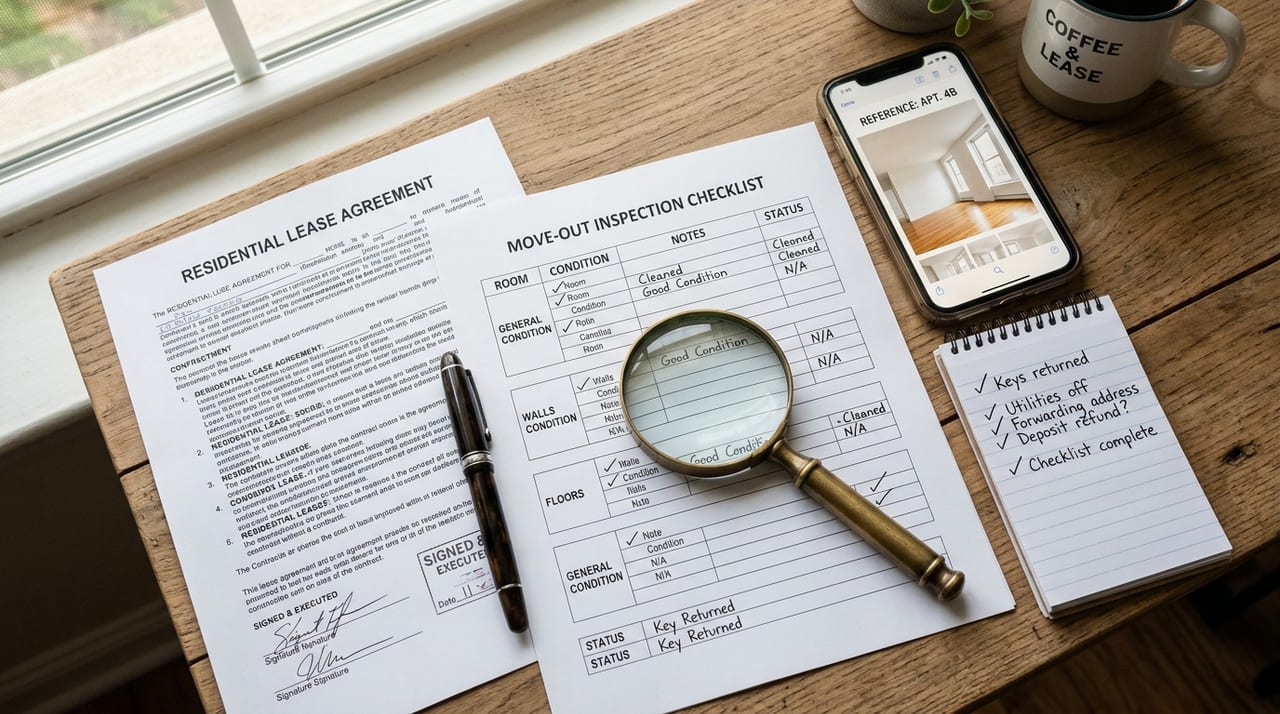
When vacating a rental property, a "move-out inspection" is the procedure where the tenant (renter) and a representative from the property management company or landlord inspect the condition of the interior together.
This inspection typically takes place after the move is completed, around the time when you return the keys. The duration varies depending on the size of the property, but for a 1K to 2LDK unit, expect 30 to 60 minutes.
The purpose of the inspection is to "confirm the current condition of the interior and agree on restoration costs." The findings from this inspection become the basis for final security deposit settlement and any additional charges, making it a critical moment for tenants.
To ensure a favorable move-out inspection, preparation is 90% of the work.
Compare photos you took on move-in day (or your move-in checklist, if you don't have photos) with the current state of the room. Clearly distinguish between damage and stains you caused and those that existed before you moved in.
If you don't have your move-in checklist, you can request a copy from the property management company by saying, "Please provide a copy of the move-in inspection report."
The Ministry of Land, Infrastructure, Transport and Tourism publishes "Guidelines on Restoration to Original Condition and Related Disputes," which clarifies how to determine cost responsibility for restoration.
Landlord Responsibility (Normal Wear and Tear)
Tenant Responsibility (Intentional Damage, Negligence, or Breach of Duty to Maintain)
Before the move-out inspection, clean the interior yourself to the extent you can.
Simply having evidence that you've cleaned the space yourself demonstrates that you've fulfilled your "duty to maintain" (the tenant's obligation to manage the property properly), making it easier to avoid full cleaning charges.
Exchange business cards with the inspection representative and confirm their name and affiliation. Also ask, "Can you send me a written report of the inspection findings later?" This helps prevent disputes down the road.
Walk through each room with the representative. As a golden rule, take photos of everything with your smartphone as you go.
Inspection Checklist
If the representative points out something like "There's damage here," confirm the following:
After the inspection, you may be asked to sign a "move-out confirmation form" or "restoration confirmation form."
You have the option not to sign on the spot.
It's difficult to fully review the document's contents on the spot, and you risk later being told, "You signed, so you agreed to these charges."
You can either say, "I'd like to take the document home, review it, and return it signed," or sign with a note stating, "I will contact you if I have concerns about any items."
Here are the key points to identify unfair charges in the security deposit settlement statement you receive after the inspection.
The Ministry of Land, Infrastructure, Transport and Tourism guidelines establish the useful life of appliances and interior materials. Items beyond their useful life are not the tenant's responsibility.
| Appliance/Interior | Useful Life (approx.) |
|---|---|
| Wall coverings | 6 years (residual value ~¥1) |
| Carpet | 6 years |
| Flooring | Calculated by years elapsed × unit price |
| Tatami (surface replacement) | 6 years |
| Appliances (air conditioning, water heater) | 6–13 years |
For example, wall coverings have a useful life of 6 years. Even if you're charged for complete wall covering replacement after 10 years of residency, the tenant's share is essentially zero in residual value.
If wall coverings have partial damage, repair costs should be limited to only the damaged area. Even if you're charged for replacing the coverings in the entire room, you can argue that you're only responsible for the damaged area.
If your contract includes a provision stating "Cleaning costs at move-out are the tenant's responsibility," it is generally considered valid (though some court rulings have found this invalid under consumer protection law, these are rare). However, the scope should be limited to dirt resulting from failure to perform normal cleaning—costs cannot be charged if you have performed regular cleaning.
Here are solutions if you don't get your security deposit back or face unfair additional charges.
The move-out inspection may feel like an unfavorable situation for tenants, but with the right knowledge, you can negotiate as equals. Prepare thoroughly and aim for a satisfactory settlement.
Security deposit disputes at move-out are among the most common rental issues. This guide explains the scope of tenant liability for restoration to original condition, how to identify improper charges by management companies, and the concrete steps for filing objections.
床スラブ厚と上階の足音問題——賃貸で「ドン」という衝撃音が響く構造的な理由と物件選びのポイント
前橋・群馬の賃貸エリアガイド【2026年版】——主要エリア別家賃相場と住みやすさを徹底比較
Making the Most of Protruding Beams and Columns in Rental Apartments — Smart Furniture Placement Strategies
Mito & Ibaraki Rental Area Guide [2026] — Comprehensive Explanation of Rental Rates and Livability by Major Area
Uncovering Property Issues by Asking Previous Tenants About Their Departure—Questions to Ask During Viewings and How to Interpret Answers