When you start living together with a partner while already having children, apartment selection requires a different perspective from a typical couple arrangement. This article explains key points for choosing a rental that considers your child's age, school district, and daily routines.
Reviewed by: Nobuyuki MoriPresident, M-Assets Co., Ltd. / Licensed Real Estate Transaction Specialist (Miyagi #018212)
For those searching for a rental home to share with a partner for the first time after marriage, we provide a detailed explanation of everything newlyweds need to know—from choosing the right floor plan and budgeting to navigating joint-name contracts.
Online apartment viewings using video calls and VR technology are becoming increasingly common. While you can search for apartments without visiting the property in person, there are certain details that are harder to notice through online viewings. This guide explains how to use these tools effectively and what to watch out for.
A comprehensive guide for students living on their own for the first time upon entering university or vocational school. We explain how to choose a property, estimate your rent budget, and understand guarantor requirements. Here's everything you need to know for a successful apartment hunt.
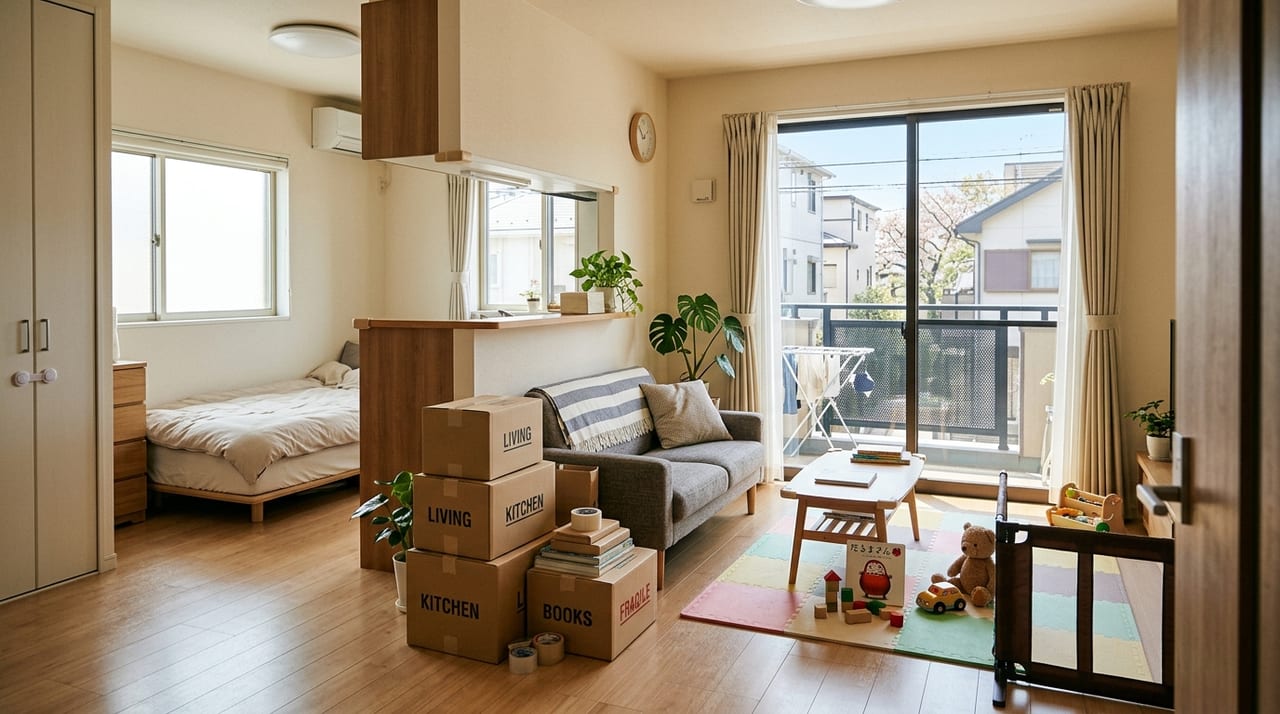
When starting a new life together with a partner while already having children, there are more factors to consider. From the apartment search stage onward, you need to assess multiple aspects comprehensively—including your child's school or daycare commute range, daily routines, and safety concerns.
Three points require particular attention:
Clarifying these points in advance is the first step to an efficient apartment search.
The required floor plan varies depending on your child's age. Here are some general guidelines:
For infants and toddlers (ages 0-3):
For preschool through early elementary school (ages 4-10):
For middle school students and older:
In cohabitation arrangements, residents are typically listed as "cohabiting partner (fiancé/partner)." When a child is involved, you should also declare the relationship between the guardian (custodian) and child.
What matters in approval is whether the tenant's (leaseholder's) income is sufficient to cover the household's total rent. Generally, a guideline is "annual income of at least 36 times the monthly rent." Whether a "joint obligation" contract allowing both partners' incomes to be combined is possible varies by property and management company, so confirm this before viewing.
Additionally, unmarried couples are often treated as having a "common-law relationship," and some management companies may request documents like an engagement certificate. Checking in advance what documents are required will make the process smoother.
If your child is currently attending school or daycare, moving may place them outside the commute range of their current facility. In particular, changing schools is usually necessary for elementary students when changing addresses.
Whether to avoid a school change or transition to a new environment depends on your child's age, grade, and preference. Some municipalities allow "out-of-district enrollment applications" to the local board of education, so it's worth checking in advance.
With daycare and certified childcare centers, there's also the issue of "waiting lists for admission," so it's important to confirm whether your child can enroll at a facility near your new address. Ideally, contact your municipality's childcare office and visit private childcare facilities before finalizing your move.
When viewing apartments with a child, we recommend checking the following safety aspects:
These can be used as a viewing checklist. Especially for families with small children, it's common to regret not noticing these issues during the initial viewing, so be thorough in checking beforehand.
Children's footsteps and voices are among the most common causes of neighbor disputes in apartment buildings. There are ways to reduce this risk during apartment selection.
After moving in, use joint mats or rugs for sound insulation on floors, and be considerate of the timing for baths and laundry, especially in the evening, for added peace of mind.
Moving with children involves many procedures tied to address changes. Here are common items that are often overlooked:
Additionally, how you register your household when cohabiting begins (as one household or as separate households at the same address) may affect calculations for child allowances and childcare fees. It's reassuring to confirm this in advance at your municipal office.
When starting cohabitation with a child, the central criterion isn't just about the two of you—it's about creating "a safe and stable living environment for your child." Organize the four points—floor plan, school district, approval requirements, and safety—and then begin your apartment search.
Bringing your child along during viewings to get a feel for the space also leads to fewer regrets. While confirming property information online, be sure to visit in person for any apartments you're seriously considering.
不動産ネットワーク
投資物件・賃貸住宅・テナント・運営会社をつなぐ不動産4サイト連携。
Clear explanation of the differences between "1K," "1DK," "1LDK," and "2DK," commonly seen in rental listings. Complete comparison of four floor plans by area, average rent, and best-suited household types.
床スラブ厚と上階の足音問題——賃貸で「ドン」という衝撃音が響く構造的な理由と物件選びのポイント
前橋・群馬の賃貸エリアガイド【2026年版】——主要エリア別家賃相場と住みやすさを徹底比較
Making the Most of Protruding Beams and Columns in Rental Apartments — Smart Furniture Placement Strategies
Mito & Ibaraki Rental Area Guide [2026] — Comprehensive Explanation of Rental Rates and Livability by Major Area
Uncovering Property Issues by Asking Previous Tenants About Their Departure—Questions to Ask During Viewings and How to Interpret Answers
