The Complete Guide to Safely Choosing a Rental Home for Single Women — What You Need to Know About Security, Layout, and Location
A comprehensive guide to choosing the right rental property for women living alone for the first time. We cover security equipment checklists, how to identify safe neighborhoods, the pros and cons of women-only properties, and how to ease your concerns during property viewings.
When women move out to live alone for the first time, safety concerns are a common worry. By carefully confirming the security features when selecting a property, you can create a comfortable living environment where you feel secure. This article explains the key points women should know when choosing a rental property, covering security, facilities, and location from a comprehensive perspective.
The Reality of Risks for Women Living Alone
The main concerns for women living alone typically include four types: "suspicious persons and stalkers," "burglary and break-ins," "sexual crime," and "fraud and solicitation." Minimizing these risks at the property selection stage leads to a more secure living situation.
Note that labels such as "women-oriented properties" or "women-only apartments" are not subject to special legal regulations and are simply based on the building's or management company's policies. Rather than relying on the label alone, it's important to personally verify the specific security equipment and management system in place.
Security Equipment Checklist
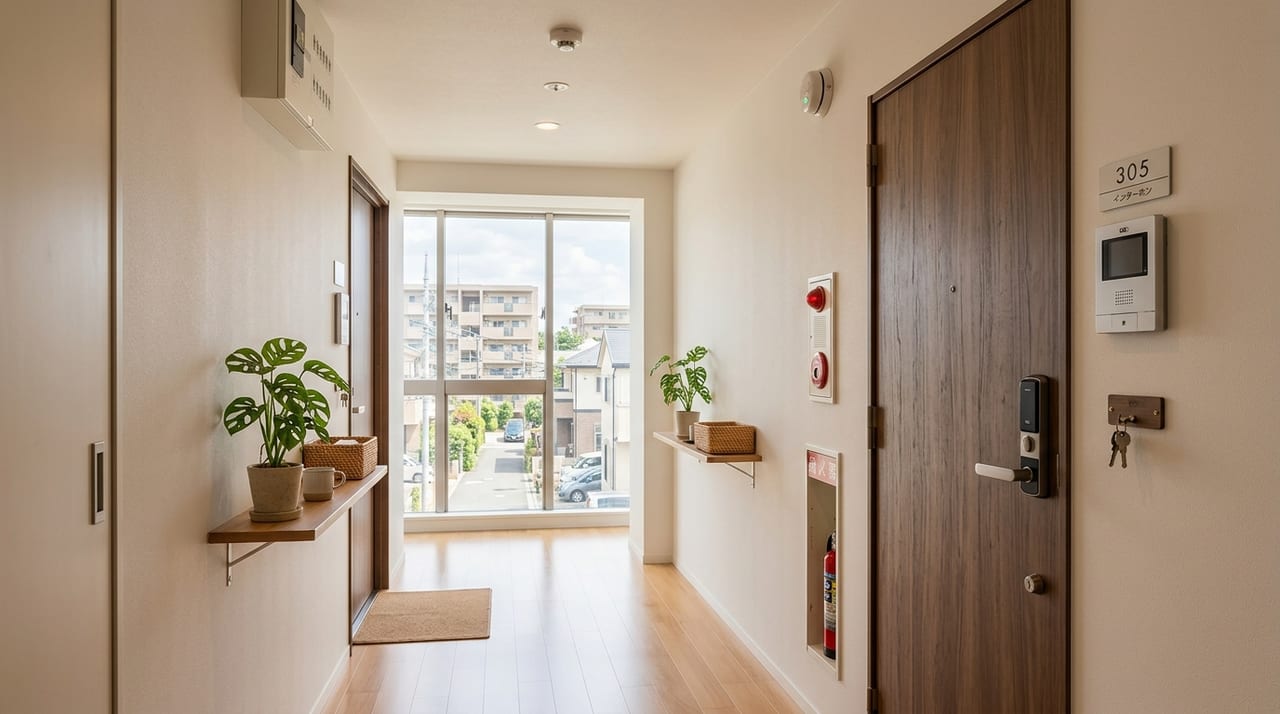
Auto-locking doors are a basic security feature to prevent unauthorized entry. However, you should not become overconfident just because auto-locks are present. To prevent people from following residents in without using their key card ("piggyback entry"), also verify whether security cameras are installed at the entrance and whether there is a management office or monitoring system.
Security cameras — check their placement during your property viewing. The more locations covered — such as the entrance, bicycle parking area, trash room, and elevator — the stronger the overall security.
Video intercoms are essential because you can see a visitor's face before unlocking the door. Models that connect to your smartphone are even better, as you can check your entrance camera even when you're out.
Door locks should ideally use dimple keys or dual locks (two locking points). During your viewing, check whether the cylinder is resistant to lock-picking, or contact the management company to confirm.
Windows and balconies are common entry points for break-ins. For ground and second-floor units, check whether windows have additional locks (beyond crescent locks) or security film. Properties with connecting balconies between units have higher break-in risk.
Choosing Your Layout and Room Type
Floor level — third floor and above are generally considered safer from a break-in perspective. However, even upper floors carry intrusion risk if the auto-lock is bypassed, so combining multiple security features is important.
Separate bathrooms and toilets are recommended for practical reasons. Combined bathroom and toilet units (3-piece fixtures) are not only inconvenient for daily use but can also hide bathroom mold and dirt during viewings.
Package delivery boxes not only allow you to receive packages while you're away, but also reduce unnecessary face-to-face interaction with delivery personnel — a security benefit. Look for properties with package boxes installed, or confirm whether courier locker services are available as an alternative if the building doesn't have one.
How to Identify Safe Neighborhoods
Evening viewings are highly recommended. Areas that look bright during the day may reveal problems at night — poor street lighting and lack of foot traffic. Actually walk from the station to the property at night to check for blind spots, dark alleys, and deserted areas.
Surrounding environment is also critical. Properties near commercial districts or entertainment areas with many bars and adult establishments tend to have more foot traffic at night and lower safety. Be especially cautious about quiet side streets or alleys opposite the station — they may appear bright during the day but are different at night.
Hazard maps should be checked for flood and landslide risks. Safety from natural disasters is just as important as crime prevention when choosing a property.
What to Check During Viewings and How to Ease Your Concerns
When viewing properties, choose a real estate agency with female staff if possible, or bring a trusted family member or friend. If you're uncomfortable viewing alone, let the real estate agency know — they may be able to arrange a female staff member to accompany you.
Use this viewing checklist to confirm the following items: door lock security (check for looseness or gaps), window and balcony auxiliary locks, location of the water heater and gas meter (indoors or outside), presence of security cameras in the elevator, and ease of opening the mailbox (verify it's not easy for outsiders to open).
Balancing Rent and Safety
Properties with strong security features typically command higher rent. However, living in a property with comprehensive security equipment can reduce your spending on additional security products and provide peace of mind — so what appears expensive often delivers strong value overall.
If your budget is limited, use these three features as minimum requirements: "auto-locking doors," "video intercom," and "third floor or higher." This approach helps balance security needs with rental costs.
Safe living in a rental property begins with confirming security equipment when selecting a unit. This article provides expert guidance on everything from what to check when viewing a property, self-defense measures after moving in, specialized security strategies for women living alone, to how to respond if you become a victim.