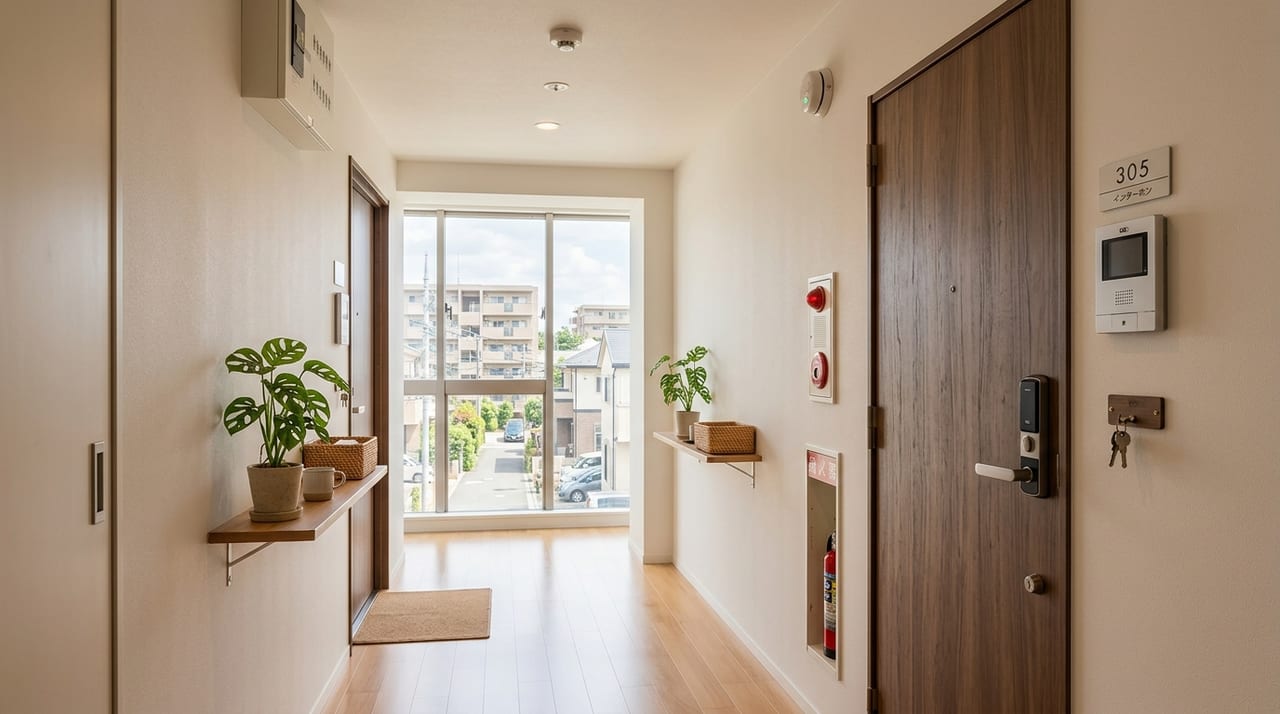
Complete Guide to Security Measures in Rental Housing | From Selection to After Move-In
Security measures for rental properties start before you even choose a property. From key checkpoints when selecting a property, to essential knowledge about lock replacement upon move-in, to cost-effective security product tips—real estate professionals explain with real-world examples.
Making a Difference in Property Selection! Security Checklist Points to Confirm During Property Viewings
The security level of a rental property changes significantly based on your ability to assess it before move-in. Keep in mind the items you must confirm during a property viewing.
Auto-lock Systems: Presence and Specifications
Auto-lock systems are the most effective feature for raising the psychological barrier against intruders. However, a technique called "piggybacking"—where unauthorized people slip in behind residents—exists, so don't rely on it alone. Also confirm whether a management office or surveillance camera is installed at the entrance.
Security Camera Placement and Number
Check not only the entrance, but also the bicycle parking area, parking lot, emergency stairs, and inside elevators for cameras. Properties with many blind spots are more likely to become entry points for criminals. While it's hard to tell by appearance whether a camera is a dummy, it's most reliable to ask the management company directly about recording equipment.
Property Manager: Presence and Shift Type
There are three types: on-site management (full-time presence), day-shift management, and periodic patrol. On-site management offers the highest security level, while patrols typically occur only about once or twice per week. Judge based on the balance between cost and security level.
Surrounding Area Assessment
We recommend viewing the property not just during the day, but also at night if possible. It's crucial to verify the number of street lights, convenience stores and foot traffic, and the presence of potential blind spots with your own eyes. In fact, many prospective tenants have changed their minds after a nighttime visit revealed dark areas they hadn't noticed during the day.
Who Pays for Lock Replacement? Correct Knowledge About Costs and Procedures
Lock replacement upon move-in is an "absolute must" from a security standpoint. It's the only way to eliminate the possibility that the previous tenant still has a spare key.
Cost Responsibility: Determining Factors
According to the Ministry of Land, Infrastructure, Transport and Tourism's guideline on "Disputes and Guidelines Regarding Restoration to Original Condition," it states that lock replacement costs are "appropriately borne by the tenant for security reasons." However, some properties have the landlord bear this cost, and an increasing number of contracts and property disclosure statements explicitly specify this.
Asking your real estate agent at contract signing "Who pays for lock replacement upon move-in?" is the first step in preventing disputes.
Cost Guide
Standard pin tumbler lock replacement: approximately ¥8,000–¥15,000
Dimple key (pick-resistant): approximately ¥15,000–¥30,000
Smart lock conversion: approximately ¥20,000–¥50,000 (landlord permission required for rental properties)
Important Caution: DIY Lock Replacement
Since locks in rental properties are considered "part of the building," replacing or modifying them without landlord permission can cause disputes when you move out. Always consult the management company and landlord in advance and obtain written permission.
Low Cost, High Impact! How to Use Supplementary Locks and Security Products
Lock replacement alone is insufficient. Take advantage of low-cost security products to reinforce the "weak points" of windows and doors.
Supplementary Locks (Doors and Windows)
"One door, two locks" is the basic principle for entry doors. Adding a supplementary lock alongside the existing lock makes unlocking take longer and deters intruders. For windows, in addition to the crescent lock, a rod-shaped supplementary lock (¥500–¥1,500) that slides into the sash rail is convenient and recommended.
Door Chains and Door Guards
Essential for safe interaction with visitors. In addition to a door chain, consider using a "door peephole cover" to prevent outsiders from looking in.
Security Film (Window Glass)
Security film, which makes glass harder to break when applied, is effective against "glass breaking," the most common burglary method. Film costs approximately ¥2,000–¥5,000 per pane and there are products that can be cleanly removed in rental properties.
Motion-Sensor Lights and Personal Alarms
Battery-powered motion-sensor lights placed near the entrance or in hallways illuminate when they detect movement, making intruders feel "discovered." A personal alarm that you can carry is also a great emergency tool.
Five Critical Points for Women Living Alone
Women living alone need protection not just against burglaries, but also against stalking and suspicious individuals. Managing the information you reveal in daily life is key.
① Mailbox Management
Leaving mail with your name or delivery non-delivery notices in your mailbox reveals that you live alone. Choose a property with a package delivery box, or install a lock on your mailbox.
② Skip the Nameplate (or Use Only Your Family Name)
Rental properties have no requirement to display a nameplate. If you must display one, use only your family name or household name (e.g., "Yamada household").
③ Location Sharing and Daily Activity Risks on Social Media
Photos posted on Instagram or X (formerly Twitter) may contain information that reveals your address, such as the view from your window, your nearest station, or a supermarket receipt. Posts like "I leave home at this time every morning" or "Starting my trip today" can make you a target for burglars or suspicious individuals.
④ Don't Dry Laundry Outside
Underwear on the line signals that a woman lives alone. Consider indoor drying or using your bathroom's ventilation fan.
⑤ Responding to Visitors Posing as Delivery Workers
If someone suddenly knocks on your door without leaving a non-delivery notice, they may be suspicious. Verify the company name and purpose through the door, and if anything seems odd, don't open the door—contact your management company or police.
What to Do If You Experience a Crime and the Insurance Claim Process
It's important to understand in advance how to respond if you experience a burglary or encounter a suspicious person.
If You Experience a Burglary
Call 110 immediately and don't move or touch anything. It's crucial not to tidy up the room to preserve evidence like fingerprints and footprints.
Create a list of stolen items. Write down everything missing for your insurance claim and police report.
Contact your management company and landlord. Notify them promptly if window damage or lock replacement is needed.
Insurance Claim Process
Most "fire insurance (contents insurance)" policies that rental tenants purchase include "theft coverage."
File a police report and obtain the "report acceptance number"
Report the incident to your insurance company (usually within 30 days of the incident)
Submit required documents (copy of police report, receipts for stolen items, etc.)
Receive insurance payment after assessment
Coverage varies by policy, but some don't cover theft. Check your insurance certificate from when you signed your rental agreement and understand your coverage limits.
Conclusion: Security is Built on Habit
While there's no "perfect" security, anyone can create an environment that's less attractive to criminals. By considering security from the property selection stage and making lock replacement, supplementary locks, and information management habits after move-in, you can significantly reduce risk.
Especially for those starting to live alone, there are many things you can implement today. Complacency—thinking "it won't happen to me"—is the biggest risk. Build a foundation of small steps to create a safe and secure rental life.
A comprehensive guide to choosing the right rental property for women living alone for the first time. We cover security equipment checklists, how to identify safe neighborhoods, the pros and cons of women-only properties, and how to ease your concerns during property viewings.