Zero security deposit and key money properties ("zero-zero" properties) can significantly reduce initial moving costs, but they come with the risk of higher move-out expenses. We'll explain how they work and what to watch out for.
Reviewed by: Nobuyuki MoriPresident, M-Assets Co., Ltd. / Licensed Real Estate Transaction Specialist (Miyagi #018212)
Zero-deposit, zero-key-money apartments (0/0 properties) can significantly reduce your upfront costs. However, rent might be higher than market rates, and unexpected fees may arise when you move out. We explain the right way to compare and what to watch out for.
Explains the common obstacles seniors face when renting—including approval barriers, guarantor issues, and contractual considerations. Also introduces available programs: the housing safety net system, premium rental housing for seniors, and monitored housing services.
A comprehensive guide to smoking and tobacco rules in rental properties. We explain why non-smoking buildings are increasing, whether balcony smoking is permitted, how tar stains affect move-out costs, and what smokers should know when applying for rental approval.
For those considering company registration at a rental apartment address. We provide a detailed explanation of precautions for registering a company at a rental address, including its relationship with lease agreements and regulations, landlord permission, and comparison with virtual offices.
Those looking to minimize relocation costs often turn first to "zero security deposit and zero key money" (zero-zero) properties. While the initial costs certainly appear lower, there are reports of unexpected move-out expenses and even cases where the property quality itself is problematic. This article explains how zero-zero properties work, their advantages and disadvantages, and how to choose them while avoiding risks.
A security deposit is a deposit that covers rent arrears or room damage caused by a tenant. If there are no outstanding payments or damage when you move out, it is refunded. Typically, security deposits amount to 1-2 months' rent.
Key money is traditionally paid as a "thank you" gift to the landlord and is generally non-refundable. Historically, it was standard to pay 2-3 months' worth, but in recent years, even in the Tokyo metropolitan area, 1 month is common, and in rural areas, zero key money properties are becoming more prevalent.
Against the backdrop of declining birth rates and rising vacancy rates, landlords and real estate companies continue to lower initial costs to secure tenants. Particularly for older properties or those far from stations, zero-zero conditions are often used as a way to differentiate from competitors.
The biggest advantage is a significant reduction in initial costs. With a standard rental, security deposit, key money, agency fee, and advance rent combined typically amount to 5-6 months' rent, but with zero-zero properties, this can be reduced to approximately 3 months.
For example, for a property with monthly rent of ¥70,000, standard initial costs would be ¥350,000 to ¥420,000, but with a zero-zero property, you would need only around ¥200,000. This is an extremely effective option for those with limited available funds or those needing to relocate urgently.
Without a security deposit, tenants must pay the full cost of repairs out of pocket when moving out. Minor repairs that would normally be deducted from the security deposit are billed in full for zero-zero properties.
Additionally, some landlords bill heavily for restoration to original condition to compensate for the lack of a security deposit. Even if a request violates Consumer Affairs Agency guidelines, tenants without knowledge may accept it at face value.
In place of a security deposit as risk mitigation, most properties require enrollment with a guarantor company. An initial guarantee fee of 50-100% of monthly rent is charged, plus approximately ¥10,000-¥20,000 at renewal. This can result in a structure where "initial costs are low, but the total amount paid increases the longer you live there."
Properties that struggle to attract tenants enough to require zero-zero conditions may have issues with location, facilities, or management. During a viewing, carefully check equipment functionality, cleanliness of common areas, and the management company's responsiveness.
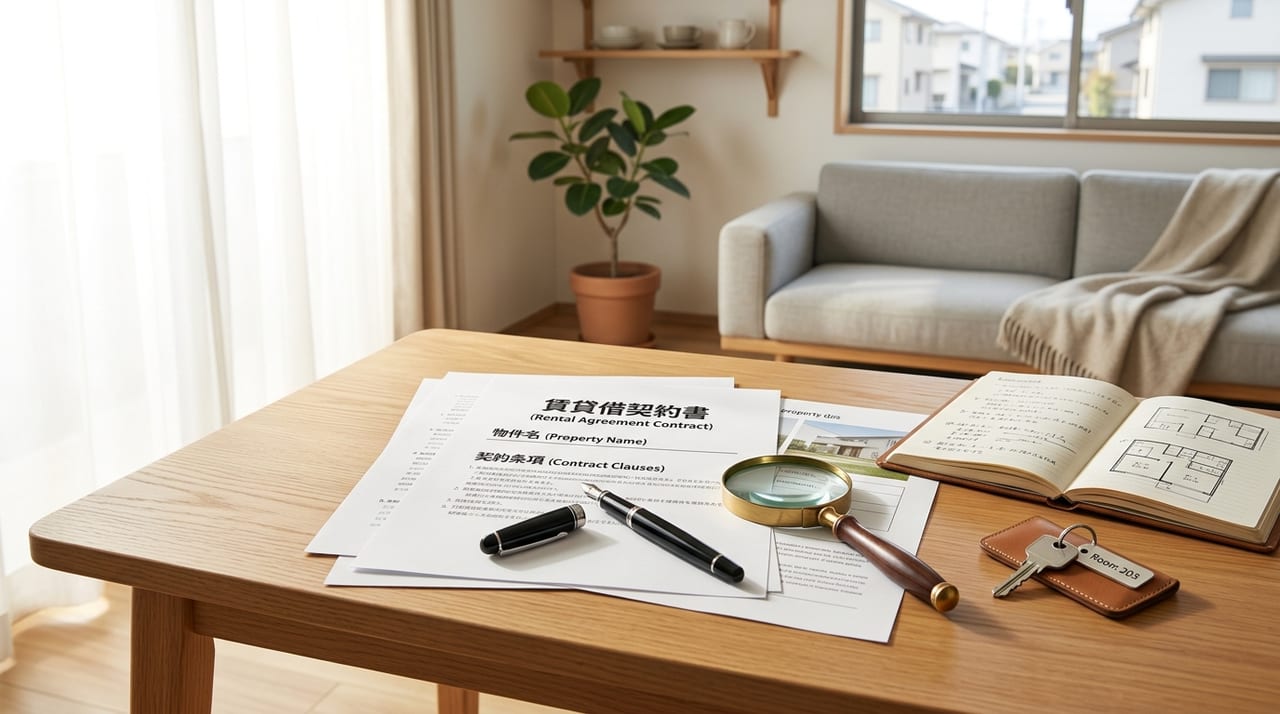
First, always review special contract terms. Check in the lease agreement how "normal wear and tear" is defined for restoration upon move-out. If special terms such as "cleaning costs are tenant responsibility" or "complete flooring replacement is tenant responsibility" are written, they can become sources of trouble later.
Second, photographic and video documentation before moving in is important. Taking dated photos and videos of the entire room immediately after moving in allows you to prove "damage that existed before moving in" at move-out time.
Research the management company's reputation as well. Search for reviews of the management company on Google Maps and social media, and it's wise to avoid companies with many reviews mentioning "problems with move-out costs."
It's also important to compare based on total costs. Compare the "total cost"—including not just initial costs but also guarantor company fees, renewal fees, and estimated move-out costs—with standard properties that have security deposits and key money.
Zero-zero properties are an effective way to reduce initial costs, but it's important to comprehensively assess move-out costs, guarantor company fees, and management company quality. Rather than jumping at the low price alone, by carefully reviewing the contract terms before choosing, you can truly enjoy the cost benefits.
Even for those with limited relocation budgets, it is entirely possible to find a property that keeps initial costs down while offering peace of mind, as long as you wisely review the conditions.
不動産ネットワーク
投資物件・賃貸住宅・テナント・運営会社をつなぐ不動産4サイト連携。
床スラブ厚と上階の足音問題——賃貸で「ドン」という衝撃音が響く構造的な理由と物件選びのポイント
前橋・群馬の賃貸エリアガイド【2026年版】——主要エリア別家賃相場と住みやすさを徹底比較
Making the Most of Protruding Beams and Columns in Rental Apartments — Smart Furniture Placement Strategies
Mito & Ibaraki Rental Area Guide [2026] — Comprehensive Explanation of Rental Rates and Livability by Major Area
Uncovering Property Issues by Asking Previous Tenants About Their Departure—Questions to Ask During Viewings and How to Interpret Answers
