For those considering company registration at a rental apartment address. We provide a detailed explanation of precautions for registering a company at a rental address, including its relationship with lease agreements and regulations, landlord permission, and comparison with virtual offices.
Reviewed by: Nobuyuki MoriPresident, M-Assets Co., Ltd. / Licensed Real Estate Transaction Specialist (Miyagi #018212)
Zero security deposit and key money properties ("zero-zero" properties) can significantly reduce initial moving costs, but they come with the risk of higher move-out expenses. We'll explain how they work and what to watch out for.
Essential rules to know before starting a food delivery side job in rental housing. We cover practical guidance on checking for motorcycle storage, interpreting SOHO clauses, safely managing e-bike charging, and navigating tax filing requirements.
Even if your lease renewal is denied or you receive an eviction notice, tenants have legal protections under Japanese law. This guide explains the legal justification requirements, notification deadlines, eviction compensation standards, and countermeasures you should know about.
Rental contracts in Japan typically require guarantors or guarantor companies. This guide explains the differences between joint guarantors and guarantor companies, how to rent without a guarantor, and which guarantor companies accept foreign nationals.
More and more people are starting businesses from home (rental apartments) as side hustles, freelancers, or startups. Many people wonder whether they can use their current rental address as their registered business address when establishing a company (corporate registration).
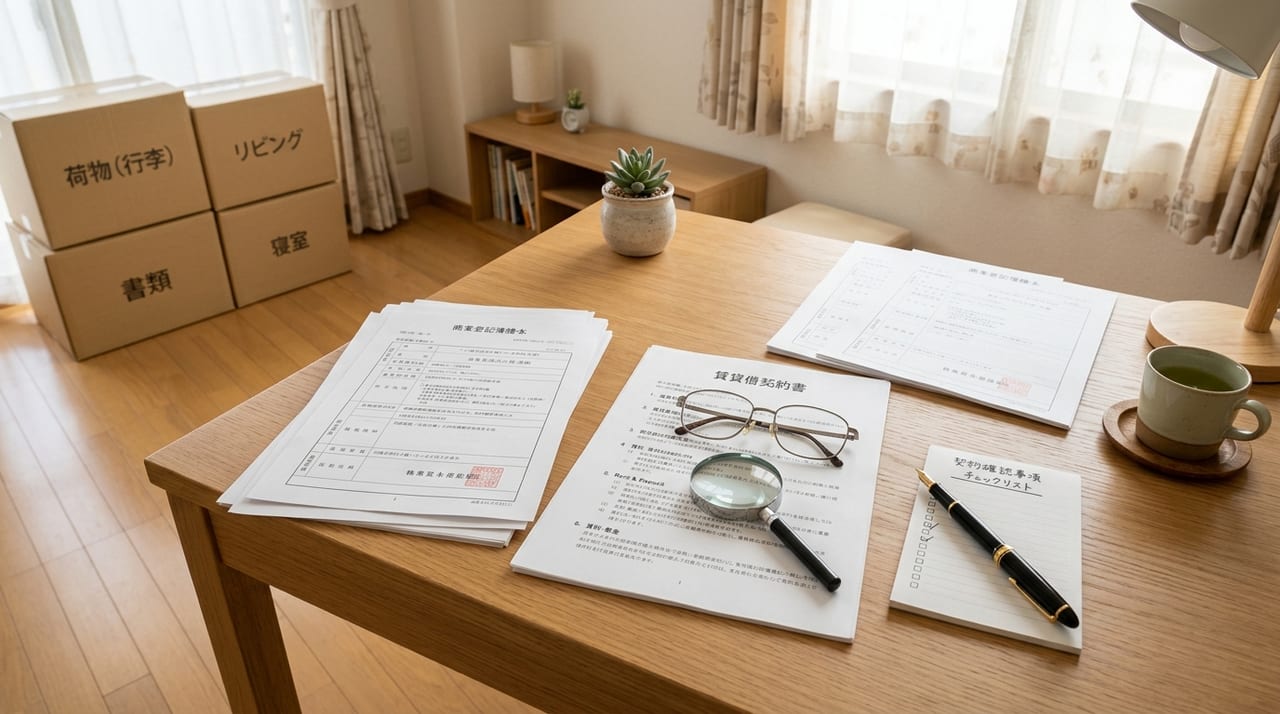
To put it plainly, while company registration at a rental address is legally possible, issues can arise under your rental agreement. Before registering unknowingly and running into trouble, it's important to understand the risks and precautions involved.
From the perspective of corporate law and commercial registration law, there is no regulation prohibiting the registration of a rental property address as a principal place of business. In fact, there are cases where sole proprietors and freelancers use their residential apartments as registered addresses for corporate registration.
However, the issue arises from provisions in your lease agreement and building regulations. Many residential rental apartments include clauses in their lease or condominium association rules stating "residential use only" or "prohibition of conversion to business purposes."
If you register a company at a "residential use only" property (and use it as an office), you may be in violation of the permitted use clause in your lease. If discovered, you could face demands for correction from your landlord, or in the worst case, termination of your lease.
In particular, once you register the company, the registration certificate becomes public information, so there is a risk that your landlord or management company could discover this by checking records.
In multi-unit residential buildings like condominiums, the condominium association rules may require approval from the association if you use your exclusive area as an office. Violation of these rules could result in demands for compliance from the association.
If you move or terminate your lease after registering the company, you will need to file a change of principal place of business (cost: approximately 30,000 yen). This is especially important to note if you anticipate frequent moves.
The principal place of business for a company is listed in the registration record and becomes public information that anyone can obtain for a fee. If you register with your home address, business partners and third parties will know your home location, and your address may also be republished on corporate information websites online. Keep in mind that your address will remain public as long as you operate the business, and make your decision accordingly.
Check whether your lease contains clauses such as "residential use only" or "prohibition of use for office or business purposes." If such clauses are present, you will need to obtain prior permission from your landlord or management company.
Even if your lease doesn't have explicit prohibitions, we strongly recommend consulting with your landlord or management company in advance. If your actual situation is working from home with minimal visitors and no signage, permission may be granted. If you do obtain permission, be sure to document it in writing (in a memo).
If you're looking for a property, the best option is to choose one explicitly listed as "SOHO permitted" or "business use permitted" in the property information. Since such properties already allow business use from the start, you'll have far fewer concerns regarding registration.
When consulting with your landlord or management company, explaining your actual business situation concretely is the fastest path to obtaining permission. Generally, the more of the following conditions you meet, the more likely you are to receive approval:
Conversely, business types that attract numerous visitors (such as classrooms or salons) or businesses with frequent shipping activity (such as retail operations) are more likely to be rejected due to the impact on other residents. Clarify which category your business falls into, gather evidence that you can explain how "the building's use remains residential," and consult with your landlord or management company with this information in hand.
If you have concerns about registering a company at a rental address, consider using a virtual office.
A virtual office is a service that allows you to rent a business address for a monthly fee of several thousand yen. You can use it as your registered business address, and it also provides privacy protection by keeping your home address private. Many plans include mail receipt and forwarding services, and virtual offices are widely used by people who want to work from home while having their company registered at a different address.
While company registration at a rental address is legally possible, verifying consistency with your lease agreement and building regulations is essential. To avoid trouble, follow these steps:
To ensure that launching your company gets off to a smooth start without trouble, don't skip the preliminary checks.
不動産ネットワーク
投資物件・賃貸住宅・テナント・運営会社をつなぐ不動産4サイト連携。
床スラブ厚と上階の足音問題——賃貸で「ドン」という衝撃音が響く構造的な理由と物件選びのポイント
前橋・群馬の賃貸エリアガイド【2026年版】——主要エリア別家賃相場と住みやすさを徹底比較
Making the Most of Protruding Beams and Columns in Rental Apartments — Smart Furniture Placement Strategies
Mito & Ibaraki Rental Area Guide [2026] — Comprehensive Explanation of Rental Rates and Livability by Major Area
Uncovering Property Issues by Asking Previous Tenants About Their Departure—Questions to Ask During Viewings and How to Interpret Answers