Skip to content
SUMUIEスムイエ
PropertiesMoving GuideQuiz
Articles
ColumnsContracts & ProceduresMoving InDaily LifeArea & EnvironmentCosts & FinancesSafety & Disaster Prevention
AboutContact Us
JAEN
SUMUIEスムイエ

Search and compare rental properties across Japan.

Navigation

  • Home
  • Properties
  • Moving Guide
  • Move-in cost calculator
  • About
  • Articles
  • Contact Us
  • FAQ

Member menu

  • My page
  • Member sign-up (free)

Company menu

  • List your properties
  • Company admin
  • Company sign-up (free)

Articles

  • Contracts & Procedures
  • Moving In
  • Daily Life
  • Area & Environment
  • Costs & Finances
  • Safety & Disaster Prevention

About us

  • Company
  • Privacy policy
  • Terms of use

Search by area

HokkaidoTohokuKantoChubuKansaiChugokuShikokuKyushu & Okinawa

Popular prefectures

TokyoKanagawaOsakaAichiFukuokaHokkaidoMiyagiHyogoView all areas →

Sister sites

Shueki JPInvestment properties & yield insightsSenkyakuCommercial & retail tenant brokerage

© 2026 SUMUIE. All rights reserved.

HomePropertiesFavoritesContact Us
  1. Home
  2. Columns
  3. Costs & Finances
  4. Complete Guide to Living Alone: Average Utility Costs and Money-Saving Tips
Costs & Finances

Complete Guide to Living Alone: Average Utility Costs and Money-Saving Tips

2026-04-16

This guide explains average electricity, gas, and water charges for solo living, seasonal variations, and concrete money-saving techniques you can use in rental apartments. We also cover how to switch to new energy providers and the key points for bundled electricity and gas plans.
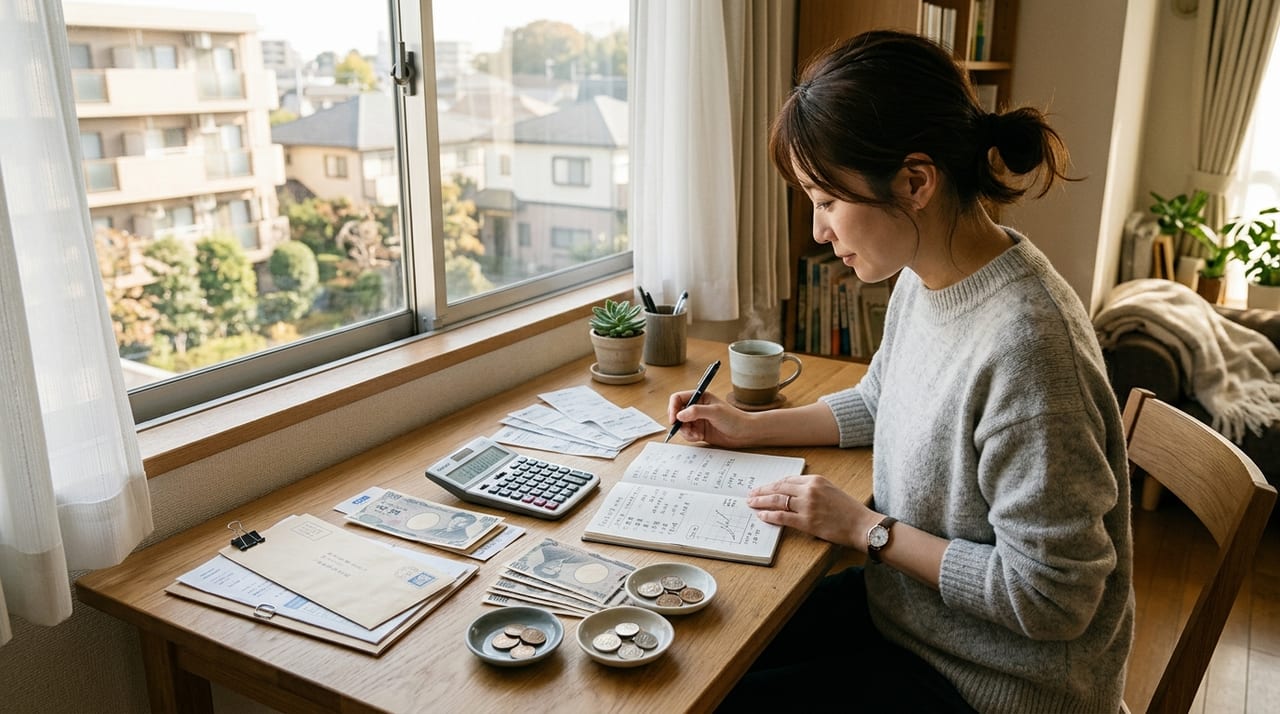
Complete Guide to Living Alone: Average Utility Costs and Money-Saving Tips
#Utilities#Electricity Bill#Gas Utility#Water Bills#Cost Savings
森

Reviewed by: Nobuyuki MoriPresident, M-Assets Co., Ltd. / Licensed Real Estate Transaction Specialist (Miyagi #018212)

Table of contents

  1. 01How Much Do Utility Bills Cost When Living Alone Per Month?
  2. 02Summer and Winter: Watch Out for Seasonal Electricity Bill Fluctuations
  3. 03Summer Electricity Bills During summer when air conditioning usage increases, electricity bills can become 1.5–2 times higher than in spring and fall. It's said that raising the thermostat by just 1°C can reduce power consumption by about 10%, so using **28°C as the standard setting** while combining it with a fan is effective.
  4. 04Winter Electricity Bills Winter also sees spikes in electricity bills due to heating appliances like space heaters, electric blankets, and kotatsu. For air conditioning heating, aim for a setting of around **20°C**, and circulating the air with a circulation fan increases efficiency. Additionally, electric heaters consume high amounts of power, so avoiding long-term use is wise.
Related

Other columns

Practical Guide to Cutting Utility Costs by ¥30,000 Annually in Your Rental Home

Electricity, gas, and water costs are among the most manageable fixed expenses in rental living. By switching to alternative energy providers and making simple lifestyle adjustments, you can save over ¥10,000 annually as a single resident, or exceed ¥30,000 as a family. This article provides practical utility-saving strategies tailored to different household types, from the rental housing perspective.

Average Utility Costs for Living Alone in Sendai [2026 Edition]

For those living alone in Sendai, we've compiled the latest 2026 data on average utility costs (electricity, gas, and water), seasonal fluctuations, and money-saving tips.

Are Bundled Electricity and Gas Contracts Really Worth It? A Comprehensive Guide for Rental Residents

Bundled "set discount" contracts for electricity and gas are drawing attention as a utility cost-saving strategy for rental residents. However, the effectiveness can be limited depending on the property type and household size. This article provides a detailed explanation of how these plans work, the application process, and important considerations.

Cut Your Utility Bills in Half! Complete Guide to Saving on Electricity, Gas, and Water in Rental Apartments

From leveraging deregulated power and gas markets to daily usage habits, we comprehensively explain practical utility-saving strategies for rental apartments. From living alone to couples, we deliver "immediately actionable tips" with concrete figures and step-by-step instructions.

Back to columns
  • 05Seasonal Fluctuations in Gas Bills Winter sees increased shower and hot water usage, which also raises gas bills. Simply shortening your shower time by 1 minute can save approximately ¥100–¥200 per month.
  • 06Saving Money with Bundled Electricity and Gas Plans
  • 07Electricity, Gas, and Water Savings You Can Practice in Rental Apartments
  • 08Electricity-Saving Tips - **Cut standby power**: Unplug unused appliances from outlets or use power-saving strips. Standby power is said to account for approximately 5–6% of annual electricity bills. - **Use LED lighting**: If incandescent bulbs are used upon move-in, replacing them with LED bulbs can reduce power consumption by approximately 80%. Switching back at move-out poses no issues with restoration to original condition. - **Refrigerator placement and settings**: Place the refrigerator with proper spacing from the wall (5–10 cm on the sides and back), and avoid overfilling it. Set the temperature to "medium" as standard. - **Batch laundry**: Running the washing machine multiple times in small loads is less efficient than washing a full load once. This saves on both electricity and water.
  • 09Gas-Saving Tips - **Take consecutive baths**: If the bath is filled once, bathing without gaps between people reduces the number of times you need to reheat the water. For those living alone, increasing days when you shower instead helps reduce costs. - **Use a lid while cooking**: Simply using a lid improves thermal efficiency, and some estimates suggest it can reduce gas costs by about 30%. - **Use water-saving mode on your shower**: Recent water heaters often come equipped with a water-saving mode. Check what functions your water heater has when you move in.
  • 10Water-Saving Tips - **Replace your showerhead**: Replacing it with a commercially available water-saving showerhead (¥1,000–¥5,000) can reduce water flow by 30–50%. Installation requires no tools—just unscrew the old one. You can revert it before move-out. - **Use filling and rinsing for dishwashing**: Rinsing in water collected in a basin is more water-efficient than rinsing under running water.
  • 11Switching to a New Energy Provider: Procedures for Renters
  • 12Steps to Switch 1. Confirm your "Customer Number (Supply Point Number)" from your current electricity bill 2. Use each company's rate simulator, input your usage (kWh), and compare 3. Apply through the new energy provider's website or by phone 4. No installation work needed, no power outages—switching typically occurs within 1–2 months
  • 13Points to Note - **Low-voltage bulk-purchased apartment buildings**: In cases where the entire building purchases electricity in bulk, individual residents cannot switch. Confirm whether the building is a low-voltage bulk-purchased building before viewing and signing a contract. - Some new energy providers have withdrawn or raised rates, so it's important to choose an established company. - Plans with generous point rewards or benefits should be evaluated only after comparing actual electricity rates.
  • 14Summary: Keep Utilities Low and Enjoy Comfortable Solo Living
  • How Much Do Utility Bills Cost When Living Alone Per Month?

    For those living alone in rental apartments, monthly utilities (electricity, gas, and water combined) typically amount to around ¥10,000–¥15,000. According to the Ministry of Internal Affairs and Communications' Household Survey (2023), average utilities for single-person households ranged around ¥11,000–¥13,000 per month. The breakdown is as follows:

    • •Electricity: approximately ¥5,000–¥7,000
    • •Gas: approximately ¥2,500–¥4,000 (for city gas users)
    • •Water: approximately ¥2,000–¥3,000 (converted to monthly, since most bills are issued bimonthly)

    However, this varies significantly depending on the region, age of the building, equipment, and lifestyle habits. In areas with propane gas (LPG), gas costs can be 1.5–2 times higher than city gas, which is not uncommon. When choosing a rental property, always check the type of gas available.


    Summer and Winter: Watch Out for Seasonal Electricity Bill Fluctuations

    Electricity bills fluctuate significantly by season. Particular caution is needed during summer (July–September) and winter (December–February).

    Summer Electricity Bills During summer when air conditioning usage increases, electricity bills can become 1.5–2 times higher than in spring and fall. It's said that raising the thermostat by just 1°C can reduce power consumption by about 10%, so using **28°C as the standard setting** while combining it with a fan is effective.

    Winter Electricity Bills Winter also sees spikes in electricity bills due to heating appliances like space heaters, electric blankets, and kotatsu. For air conditioning heating, aim for a setting of around **20°C**, and circulating the air with a circulation fan increases efficiency. Additionally, electric heaters consume high amounts of power, so avoiding long-term use is wise.

    Seasonal Fluctuations in Gas Bills Winter sees increased shower and hot water usage, which also raises gas bills. Simply shortening your shower time by 1 minute can save approximately ¥100–¥200 per month.


    Saving Money with Bundled Electricity and Gas Plans

    Due to electricity and gas deregulation, many providers now offer "bundled plans" where you can contract electricity and gas together. By switching to bundled plans offered by major power companies, new energy providers, or gas companies, you can receive discounts of approximately ¥500–¥2,000 per month in some cases.

    The merits of bundled contracts extend beyond discounts; unified billing also makes account management easier. However, the following points require attention:

    • •Propane gas is often excluded from bundled plan eligibility
    • •Some plans have contract term restrictions or early termination fees
    • •If electricity and gas usage is low, standalone budget plans may be cheaper than bundled discounts

    We recommend comparing multiple providers' simulations based on your current usage before switching.


    Electricity, Gas, and Water Savings You Can Practice in Rental Apartments

    Large-scale renovations are not possible in rental apartments, but you can achieve significant savings through adjustments to daily habits and small tools.

    Electricity-Saving Tips

    • •Cut standby power: Unplug unused appliances from outlets or use power-saving strips. Standby power is said to account for approximately 5–6% of annual electricity bills.
    • •Use LED lighting: If incandescent bulbs are used upon move-in, replacing them with LED bulbs can reduce power consumption by approximately 80%. Switching back at move-out poses no issues with restoration to original condition.
    • •Refrigerator placement and settings: Place the refrigerator with proper spacing from the wall (5–10 cm on the sides and back), and avoid overfilling it. Set the temperature to "medium" as standard.
    • •Batch laundry: Running the washing machine multiple times in small loads is less efficient than washing a full load once. This saves on both electricity and water.

    Gas-Saving Tips

    • •Take consecutive baths: If the bath is filled once, bathing without gaps between people reduces the number of times you need to reheat the water. For those living alone, increasing days when you shower instead helps reduce costs.
    • •Use a lid while cooking: Simply using a lid improves thermal efficiency, and some estimates suggest it can reduce gas costs by about 30%.
    • •Use water-saving mode on your shower: Recent water heaters often come equipped with a water-saving mode. Check what functions your water heater has when you move in.

    Water-Saving Tips

    • •Replace your showerhead: Replacing it with a commercially available water-saving showerhead (¥1,000–¥5,000) can reduce water flow by 30–50%. Installation requires no tools—just unscrew the old one. You can revert it before move-out.
    • •Use filling and rinsing for dishwashing: Rinsing in water collected in a basin is more water-efficient than rinsing under running water.

    Switching to a New Energy Provider: Procedures for Renters

    Many people wonder, "Can I switch to a new energy provider if I'm renting?" The answer is: In rental apartments, you're generally free to switch energy providers. Since electricity is an individual contract, permission from your landlord or property management company is not required.

    Steps to Switch

    1. Confirm your "Customer Number (Supply Point Number)" from your current electricity bill
    2. Use each company's rate simulator, input your usage (kWh), and compare
    3. Apply through the new energy provider's website or by phone
    4. No installation work needed, no power outages—switching typically occurs within 1–2 months

    Points to Note

    • •Low-voltage bulk-purchased apartment buildings: In cases where the entire building purchases electricity in bulk, individual residents cannot switch. Confirm whether the building is a low-voltage bulk-purchased building before viewing and signing a contract.
    • •Some new energy providers have withdrawn or raised rates, so it's important to choose an established company.
    • •Plans with generous point rewards or benefits should be evaluated only after comparing actual electricity rates.

    Summary: Keep Utilities Low and Enjoy Comfortable Solo Living

    With awareness and minor adjustments, solo living utilities can be reduced by approximately ¥2,000–¥5,000 per month. First, understand your current usage, and then build up small daily savings habits.

    When choosing a rental property, confirming the type of gas (city gas or propane), insulation quality, and the number and direction of windows greatly impacts your utilities after move-in. Even if the rent is low, a property with high utility bills can end up costing more overall. When selecting a property, we recommend comparing total running costs, not just the rent.

    Related Columns

    • 収益JP

      不動産投資家のためのAIツール

      投資判断を支援するAI活用

    • 収益JP

      2026年金利戦略

      不動産投資家向けの金利動向と戦略

    • 収益JP

      仙台不動産市場の2026年課題

      仙台エリアの投資マーケット分析

    Categories

    • Contracts & Procedures215
    • Moving In129
    • Daily Life288
    • Area & Environment111
    • Costs & Finances118
    • Safety & Disaster Prevention72

    Popular tags

    #Move-out Restoration85#Property Selection70#Solo Living67#Average Rent

    Utility Cost Simulation for Rental Properties: How Building Age, Insulation Performance, and Equipment Affect Monthly Costs

    Utilities are the largest expense factor for rental properties beyond rent itself. We explain with concrete numbers how building age, insulation performance, air conditioning systems, and hot water heater types affect your monthly bills. A practical guide to making smart property choices.

    Utility Costs for Two-Person Households: Reality and Savings Tips [2026 Edition]

    A rental housing expert provides a comprehensive breakdown of average utility costs, seasonal fluctuations, and money-saving techniques for couples and married couples living together.

    Sister sites

    Shueki JP

    Investment properties & yield insights

    Senkyaku

    Commercial & retail tenant brokerage

    62
    #Foreigners60
    #Rental Contracts59
    #Initial Costs51
    #Property Viewing50
    #Rentals47
    #Guarantor Company36
    #Area Selection36
    #Tenant Screening36
    #Cost Savings32
    #Moving31
    #Property Management31
    #Move-Out Costs30

    Columns

    • 床スラブ厚と上階の足音問題——賃貸で「ドン」という衝撃音が響く構造的な理由と物件選びのポイント

    • 前橋・群馬の賃貸エリアガイド【2026年版】——主要エリア別家賃相場と住みやすさを徹底比較

    • Making the Most of Protruding Beams and Columns in Rental Apartments — Smart Furniture Placement Strategies

    • Mito & Ibaraki Rental Area Guide [2026] — Comprehensive Explanation of Rental Rates and Livability by Major Area

    • Uncovering Property Issues by Asking Previous Tenants About Their Departure—Questions to Ask During Viewings and How to Interpret Answers

    Previous article

    ← Complete Guide to Living Costs for Single Living in Sendai [2026 Edition]

    Next article

    Complete Guide to Tokyo Shared House Rental Prices and Costs →