A rental specialist thoroughly explains rent differences for station-connected and walking-distance properties, the convenience trade-off, and how to think about commute distance in the remote work era.
Reviewed by: Nobuyuki MoriPresident, M-Assets Co., Ltd. / Licensed Real Estate Transaction Specialist (Miyagi #018212)
Ground-floor rental properties with private gardens or terraces offer the appeal of enjoying outdoor living and gardening, but they come with unique risks including security concerns, limited sunlight, and privacy issues. This guide details viewing checklist items and important points to consider before signing a lease.
Elevator-less properties offer advantages like lower rent and increased physical activity, but involve constraints on moving and transporting heavy items. This article explains judgment criteria for choosing a stairwell building of 2–5 floors and practical ways to ensure comfort after moving in.
Choosing between high-rise and low-rise floors can be tricky when searching for rental properties. This guide compares views, sunlight, security, rent, and convenience, then recommends the best options for different lifestyles.
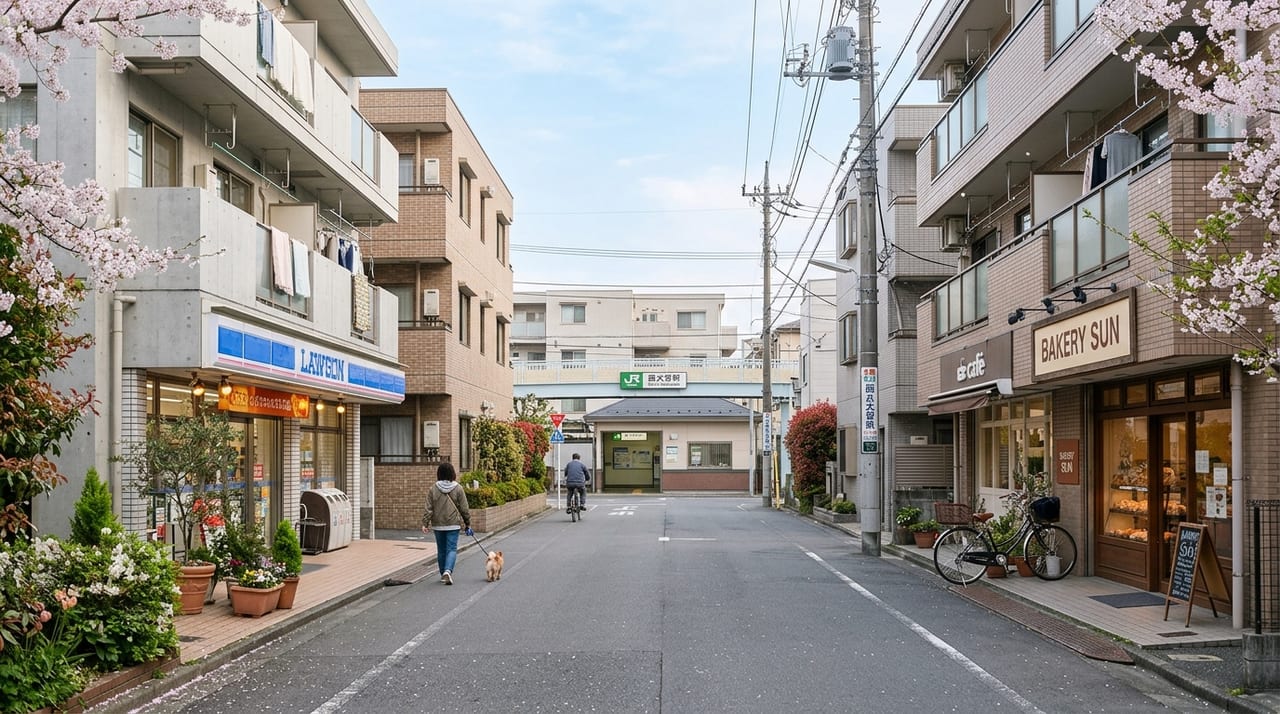
Real estate advertisements often feature the terms "station-connected" and "1-minute walk from station," which hold special appeal. The benefits are straightforward and compelling: you can commute without getting wet in the rain, and you can work until just before the last train departs. However, after actually moving in, many residents encounter unexpected drawbacks. This article provides a thorough explanation of the true value of station-nearby properties and how to think about costs.
In real estate advertisements, "walking minutes" are calculated according to regulations set by the Real Estate Fair Trading Council as "80 meters = 1 minute."
| Classification | Typical Distance | Perception |
|---|---|---|
| Station-connected | 0–50m | Connected via indoor passage |
| 1–2-minute walk | 80–160m | Essentially at the station |
| 3–5-minute walk | 240–400m | Close (excluding wait times at traffic signals) |
| 6–10-minute walk | 480–800m | Average to slightly far |
| 11+ minute walk | 880m+ | Far (generally not considered "station-nearby") |
Note that walking time does not include waiting at traffic signals, crossing railroad tracks, or walking up slopes, so in most cases it takes longer than the stated time.
You can travel even in bad weather without an umbrella, and time spent getting home after the last train is minimized, improving daily life efficiency. This time value is particularly significant for those with long commutes or jobs with frequent overtime.
Station areas typically have a concentration of supermarkets, convenience stores, restaurants, and drugstores, making it easy to run errands on the way home.
Even in rental markets, "station-adjacent properties are easier to find tenants for," offering stability. When moving in the future, property value is more likely to be maintained even for room sharing or subletting (where permitted by the lease).
Being near a station makes it easy to use not just trains but also bus stops, taxi ranks, and bike-sharing services, expanding your transportation choices.
The biggest drawback is rent. Generally, comparing a 1-minute walk to a 10-minute walk, you may see a difference of ¥5,000 to ¥20,000+ per month for properties of the same grade.
Sample Calculation (23 Wards of Tokyo · 1K · 32㎡)
Over 5 years of residence, the difference between a 1-minute walk and a 10-minute walk totals ¥1.2 million.
Station areas have people passing through even late at night, with constant restaurant noise, train sounds, and taxi engine noise. Properties "under elevated tracks" or "upper floors of station buildings" in particular can experience train vibrations.
Station-area properties surrounded by high-rise buildings or commercial facilities tend to have restricted sunlight and ventilation. Properties on the 1st to 3rd floors, in particular, can be dimly lit even during the day.
Busy station areas with heavy foot traffic mean that rooms on lower floors may be difficult to use with curtains open.
If rent is the same, the choice between "a small room near the station" and "a spacious room far from the station" depends on your lifestyle.
Cases where station-nearby should be prioritized:
Cases where distance and space should be prioritized:
When viewing station-adjacent properties, in addition to standard checks, pay special attention to the following:
The rent premium for station-connected or station-nearby properties is by no means wasteful, but its value is fully realized for "people who use public transportation daily" and "people who need to commute regardless of weather."
Now that remote work is widespread, if you "only use the station a few times a week," the value of being station-nearby is relatively diminished. It is wise to calmly calculate the cumulative cost of the rent difference against the actual convenience gained, and choose a property at a distance that truly suits your needs.
不動産ネットワーク
投資物件・賃貸住宅・テナント・運営会社をつなぐ不動産4サイト連携。
Compare danchi and standard rental apartments across rent, facilities, management, and community. Learn the unique advantages and disadvantages of danchi, and discover whether it's the right choice for you.
床スラブ厚と上階の足音問題——賃貸で「ドン」という衝撃音が響く構造的な理由と物件選びのポイント
前橋・群馬の賃貸エリアガイド【2026年版】——主要エリア別家賃相場と住みやすさを徹底比較
Making the Most of Protruding Beams and Columns in Rental Apartments — Smart Furniture Placement Strategies
Mito & Ibaraki Rental Area Guide [2026] — Comprehensive Explanation of Rental Rates and Livability by Major Area
Uncovering Property Issues by Asking Previous Tenants About Their Departure—Questions to Ask During Viewings and How to Interpret Answers
