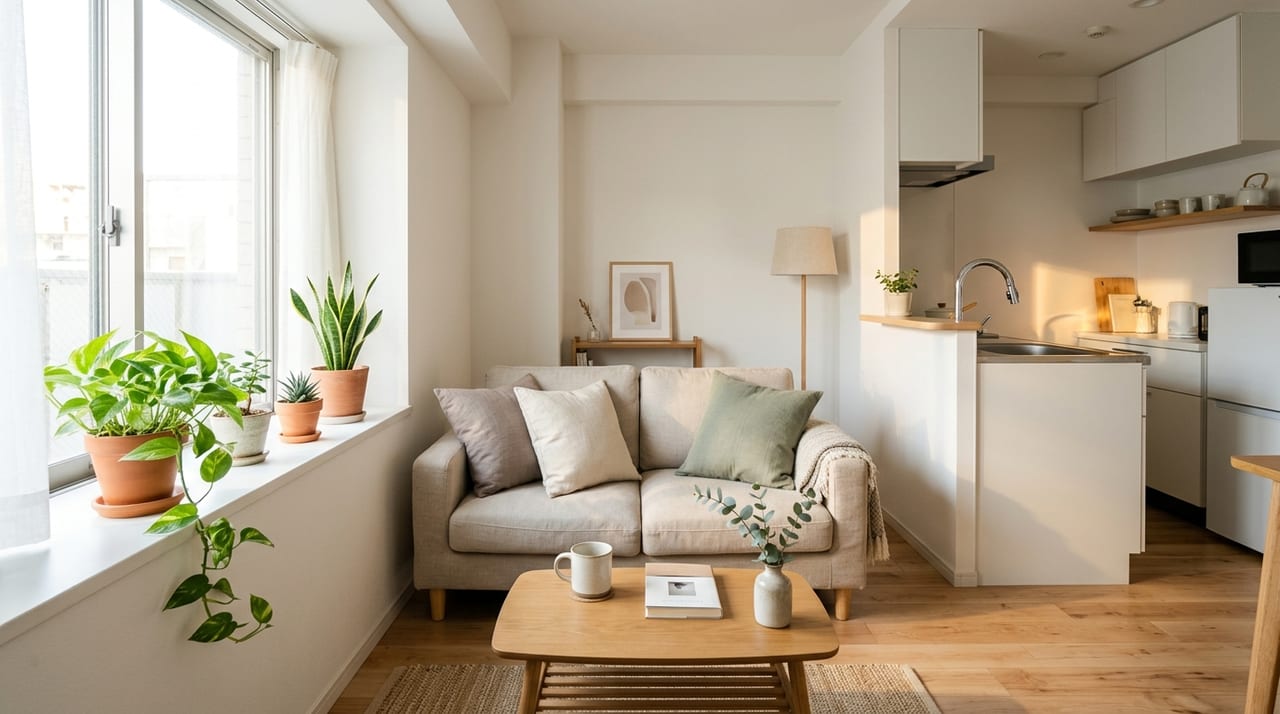
Complete Guide to Your First Solo Living Experience — From Finding a Property to Moving In
A comprehensive guide to help you avoid common pitfalls as you start living alone for the first time. It covers everything from how to begin your property search, through the lease process, moving, and setting up your life after move-in, presented as a practical step-by-step workflow.
Every year, many people embark on living alone for the first time, often prompted by advancing to higher education or starting a new job. When you move out on your own, you become responsible for managing everything that was taken for granted at home—housework, utilities, food costs, and relationships with neighbors. It's completely natural to feel anxious alongside the excitement. This article is designed for those experiencing solo living for the first time, guiding you through the practical steps from preparing to search for a property all the way to establishing your life after move-in.
Schedule for Solo Living Preparation — Work Backwards
The most important first step is deciding when to begin. If your new life starts in April, the ideal timeline is to begin your property search by early February at the latest, though December of the previous year would be even better. March marks peak season in the rental market—good properties move extremely fast, and desirable units get leased within days of listing. Conversely, if you shift your timeline and start looking in May or later, competition becomes much lighter, and you'll have better success negotiating rent.
As a general guideline, allocate 2–4 weeks for property searching, 1–2 weeks for lease procedures, 2 weeks for moving preparations, and 1 week for post-move administrative tasks. By working backwards from this 8–10 week window, you can start your new life without unnecessary stress.
Budget Planning — Don't Judge by Rent Alone
A common budgeting mistake for first-time solo renters is focusing solely on the listed rent amount. Your actual monthly expenses will include rent plus common service fees and maintenance fees, utilities (electricity, gas, water), communications (internet and mobile service), food, daily necessities, and transportation. Combined, these typically add 50,000–80,000 yen per month beyond your rent.
A common guideline is to keep rent within one-third of your take-home monthly income, but for your first solo living, keeping it to one-quarter or less will give you greater financial breathing room. Additionally, initial move-in costs typically run 4–6 months' worth of rent and include your security deposit, key money, agency fee, advance rent payment, fire insurance, guarantor company fee, and key replacement costs. For a 70,000 yen apartment, expect initial costs around 300,000–400,000 yen. You'll also need to budget separately for moving expenses and furniture/appliances, so plan for approximately 500,000–700,000 yen in total initial funds.
Finding a Property — Choose Based on Your Lifestyle
When selecting a property, go beyond obvious factors like distance to the station or building age and consider whether it genuinely fits your daily life. If you wake up early, proximity to the station is valuable, but if you spend most of your time at home, a slightly farther location with a quieter, more spacious unit may bring you greater satisfaction.
During your property viewing, always verify these points: mobile phone signal quality, cleanliness of common areas, condition of the trash disposal area, audibility of noise from neighboring units and upstairs residents, number and position of electrical outlets, washing machine placement and dimensions, natural light and air circulation. These details can't be assessed from photos or floor plans alone—you need to visit in person.
The surrounding neighborhood matters equally. Walk to nearby supermarkets, convenience stores, drugstores, post offices, and hospitals to gauge distances firsthand. If you're searching for properties in the Sendai area, using Sorou to cross-reference listings will help you understand market rates and regional characteristics.
Signing a Lease and Moving In — Review Documents and Equipment Carefully
At the contract stage, ensure you fully understand the property's important details before you sign. Four critical points to verify: any special terms, whether a renewal fee applies, the rules for restoration to original condition at move-out, and the notice period required for cancellation (typically one month). Don't hesitate to ask questions if anything is unclear, and only sign once you're confident in your understanding.
On move-in day, carefully inspect the room's condition and photograph any pre-existing damage or stains along with timestamps. This documentation will prevent disputes over restoration costs when you eventually move out. If you want the assurance of a well-managed property, consider units managed by experienced management companies like M-Assets.
Setting Up Life — What to Do in Your First Week
Your first week after move-in involves several concentrated tasks. Priority items include opening utilities (electricity, gas, water—note that gas setup requires an in-person appointment), applying for internet service, registering your new address at your municipal office, submitting a mail forwarding request, updating your address with your bank, and notifying your employer or school. Work through these systematically in order of priority.
You don't need to purchase all your furniture and appliances immediately. A refrigerator, washing machine, microwave, bedding, curtains, and lighting fixtures are enough to establish basic living conditions. Once you're actually living there, you can gradually purchase additional items as you recognize a genuine need, which will help you avoid wasteful spending.
Enjoying Solo Living — Create a Sustainable Routine
Many first-time solo renters burn themselves out by trying too hard. Attempting to cook every meal or maintain a perfectly spotless apartment can turn what should be about "becoming independent" into an overwhelming burden.
The key is establishing a routine that doesn't strain you. Doing laundry twice a week, cleaning only on weekends, cooking 3–4 days a week with takeout or prepared meals filling the gaps—this level of flexibility works perfectly well. As long as you're paying your rent and utilities on time, you can build your lifestyle at your own pace.
Your first solo living experience is a life milestone where you gain both freedom and responsibility. Prepare thoroughly, and gradually construct a life that feels authentically yours.
How Much Does It Cost to Live Alone? Breakdown for ¥120,000–¥180,000/Month + Take-Home Pay Simulations [2026 Edition]
Concrete simulations for living expenses of ¥120,000, ¥150,000, and ¥180,000 per month. This guide breaks down actual costs by category—rent at ¥50,000–¥70,000, food at ¥30,000, utilities at ¥10,000, and more—plus ideal rent ranges based on take-home pay of ¥180,000, ¥220,000, and ¥250,000, and initial costs (3–5 months' rent). Your pre-move budget plan is instantly clear.