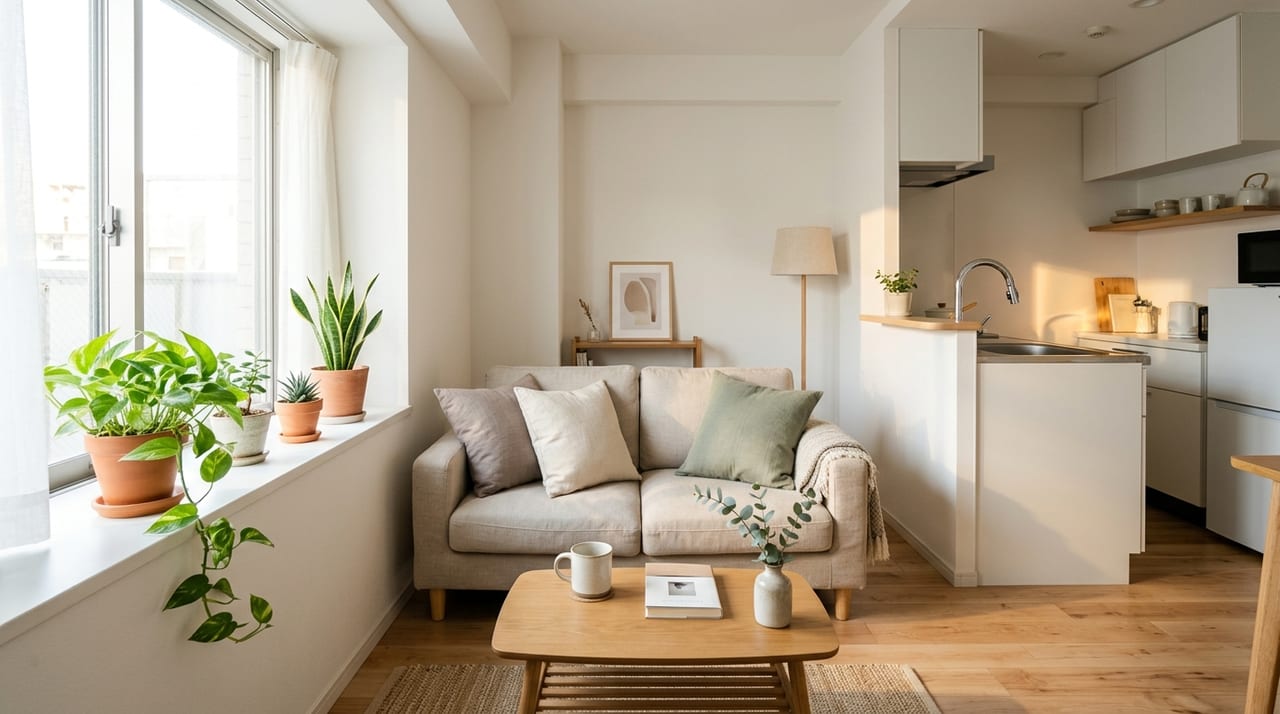
Share Houses as an Option—Benefits, Drawbacks, and How to Choose for Foreigners
For foreigners searching for housing in Japan, share houses are an attractive option with low upfront costs and easy entry even for those not fluent in Japanese. However, shared living comes with its own rules and cultural differences. This article provides a clear explanation of share house benefits and drawbacks, along with practical tips on how to choose one.
A share house is a residential style where multiple people live in one building, sharing common spaces such as the living room, kitchen, and bathroom, while each person has their own private room. Share houses became popular in Japan from the 2000s onward and are now a highly sought-after living arrangement for foreigners as well.
A key difference from typical rental apartments is that many share house units come furnished and include utilities. This allows you to start living immediately after moving in, making it particularly convenient for foreigners who have just arrived in Japan. Since the property is managed by the operating company or owner, disputes between residents are handled relatively smoothly.
With typical rental properties, initial costs can amount to 4 to 6 months of monthly rent when combined (security deposit, key money, agency fee, advance rent, etc.). In contrast, share houses often require no security deposit or key money—or perhaps just one month's equivalent—allowing upfront costs to be kept to around ¥100,000–200,000. For those newly arrived in Japan with limited funds, this difference is substantial.
Lower Japanese Language Barrier
Standard rental contracts require high Japanese language proficiency for guarantor company screening and contract review. However, most share houses welcome foreign residents, and more operating companies now have English-speaking staff. It is not uncommon to find properties where inquiries and contract procedures can be handled in English, Chinese, Korean, and other languages.
Naturally Learn Japanese Lifestyle and Customs
Living under the same roof as Japanese residents allows you to naturally learn waste sorting methods, proper neighborhood etiquette, and how to use the bathhouse. Daily life provides ample opportunities to practice Japanese, enhancing your language skills. Many Japanese residents also enjoy cross-cultural exchange, making share houses great for building friendships.
Furniture, Appliances, and Utilities Often Included
Common spaces typically include furniture such as beds, desks, and storage units, as well as appliances like washing machines, refrigerators, and microwaves. Internet access is usually provided, keeping additional expenses down. When utilities are included in the monthly rent, your monthly budget becomes more predictable.
Drawbacks and Considerations of Share Houses
Privacy Can Be Difficult to Secure
While you have a private room, contact with other residents in the living room and hallways is unavoidable. Noise issues—such as late-night conversations, footsteps, and cooking sounds—can disturb your sleep. In larger share houses, residents often have different daily schedules, making them unsuitable for those who prioritize a quiet environment.
Shared Spaces Have Usage Rules
Kitchens and bathrooms can be crowded at certain times. Many share houses have detailed rules governing refrigerator use, food storage, and cleaning schedules that residents must follow. It may take time to adjust to these rules. Cultural differences in values can lead to different interpretations of rules, occasionally creating friction.
Can Become Expensive for Long-Term Stays
Share house monthly rent typically ranges from ¥30,000 to ¥70,000 in urban areas. While this may seem reasonable, even with utilities and internet included, long-term stays can become more expensive than standard rental apartments. If you plan to stay for more than one to two years, it is important to compare overall costs.
How to Choose a Share House—Key Points to Consider
Check Location and Commute/School Travel Time
Even if the rent is low, a commute of over one hour to work or school will add significant stress to your daily life. Check the distance to the nearest station, access to major transit lines, and nighttime safety beforehand. During a property viewing, we recommend actually walking from the nearest station to get a feel for the area.
Confirm Support for Foreign Residents
It is important to verify in advance whether English-speaking staff are available, if English-language contracts are provided, and what communication channels exist for resolving issues. Properties with higher rates of foreign residents likely offer a multicultural environment and are easier to adapt to, even for your first experience living in Japan.
Check Resident Atmosphere During Viewings
If possible, try to talk with residents during your viewing. Understanding the occupations, ages, and nationalities of people living there helps you avoid lifestyle mismatches beforehand. The cleanliness and organization of shared spaces are also important indicators of residents' standards and behaviors.
Always Read Contract Terms and Move-Out Rules
Minimum lease terms (typically 1 to 3 months), notice periods for move-out (generally one month), and security deposit refund conditions vary by property. If you cannot read Japanese, request translation assistance from the operating company or ask a trusted person to help you review the terms.
Summary—Who Share Houses Are Best For
Share houses are particularly well-suited for those who have just arrived in Japan and want to minimize upfront costs, those not confident in their Japanese language skills, those seeking to deepen friendships with Japanese and international residents, and those planning a short- to medium-term stay. Conversely, if you prioritize a quiet environment and strong privacy, or seek long-term housing stability, consider transitioning to a standard rental once you've settled in.
Every housing option has its advantages and disadvantages. Choosing the best option that matches your lifestyle, budget, length of stay, and goals is the first step to enriching your life in Japan. As one option among many, share houses continue to provide foreign residents with a fresh start in their new Japanese life.
Joint guarantors are typically required for rental contracts in Japan. Learn how foreign residents can overcome this challenge, and understand how guarantor companies work.