Blackouts and water outages are emergency situations that can happen to anyone. This guide systematically explains the procedures for contacting your management company, emergency measures, and practical living strategies until utilities are restored.
Reviewed by: Nobuyuki MoriPresident, M-Assets Co., Ltd. / Licensed Real Estate Transaction Specialist (Miyagi #018212)
A practical guide to protecting your rental home from flooding caused by typhoons and heavy rain. We cover advance preparation, evacuation decision-making, what to do when damage occurs, and insurance claims—all essential knowledge for residents of lower floors and flood-risk areas.
When living in a rental apartment, is earthquake insurance truly necessary? This article explains the differences between earthquake and fire insurance, what earthquake insurance covers and its limitations, and how to prepare appropriately as a tenant.
Approximately 80% of heatstroke deaths occur indoors each year. This article explains in detail how to prevent heatstroke in rental properties—from choosing air conditioning to ventilation and temperature management—and emergency response procedures.
Natural disasters, aging building equipment, and nearby construction work—there are various reasons why utilities can be interrupted in rental housing. While you might think "my apartment won't be affected," power outages from typhoons and heavy rain are increasing year after year, and in 2025, many households nationwide have experienced utility disruptions.
In rental housing, building equipment is primarily managed by the property management company or landlord, so it's important to know in advance what you can handle on your own and what requires professional help. Before panic sets in, familiarize yourself with clear procedures so you can act calmly when an emergency occurs.
It's surprisingly common for only your unit to lose power while the rest of the building remains unaffected—your circuit breaker may simply have tripped. Excessive electrical usage (such as running the air conditioner, microwave, and hair dryer simultaneously) can cause the breaker to shut down.
Steps to follow:
If the lights in shared areas (hallways and entrance) are off, the entire building has lost power. If neighboring buildings and street lights are also dark, the outage may be affecting the entire region.
Timing for contacting your management company:
You can confirm the outage area and estimated restoration time through your electrical company's customer service center or official app.
Refrigerators maintain internal temperature for approximately 2–4 hours after a blackout (freezers for 24–48 hours). Minimizing door openings is critical.
Elevators stop immediately during a blackout. If you live on a higher floor, use the emergency lighting to navigate the stairs. If you become trapped in an elevator, press the emergency call button to contact the building management or management company.
The response differs depending on whether only one tap is affected or if the entire unit has lost water service.
| Situation | Possible Cause | Response |
|---|---|---|
| Water only out at one tap | Tap or shutoff valve issue | Check the shutoff valve and contact your management company |
| No water throughout the unit | Water meter problem or piping issue | Contact your management company immediately |
| No water in the entire building | Water tank failure or pipe rupture | Contact your management company and water utility |
| No water in the region | Planned water shutoff by municipality or main line rupture | Contact your water utility or municipality |
Securing drinking water: It's recommended to stock drinking water in advance at a rate of 3 liters per person per day (minimum 3 days' supply). If a water outage is announced in advance, filling your bathtub provides water for essential uses like flushing toilets and cleaning.
Toilet usage: If you have a tank-fed toilet system (one with a water tank you fill manually), you can continue using it by refilling the tank with buckets of water. Direct-pressure toilets (tankless) cannot be used during outages, so check with your management company.
Cooking and hygiene: Use paper plates and disposable utensils, and rely on wet wipes and hand sanitizer instead of water when possible.
When you contact your management company in an emergency, providing the following information will ensure a faster response:
Your management company's emergency contact number is listed in the "move-in handbook" distributed with your lease and keys. Save it to your phone or post it somewhere visible for easy access.
Here's a checklist of preparations to minimize the impact of blackouts and water outages:
Daily habits:
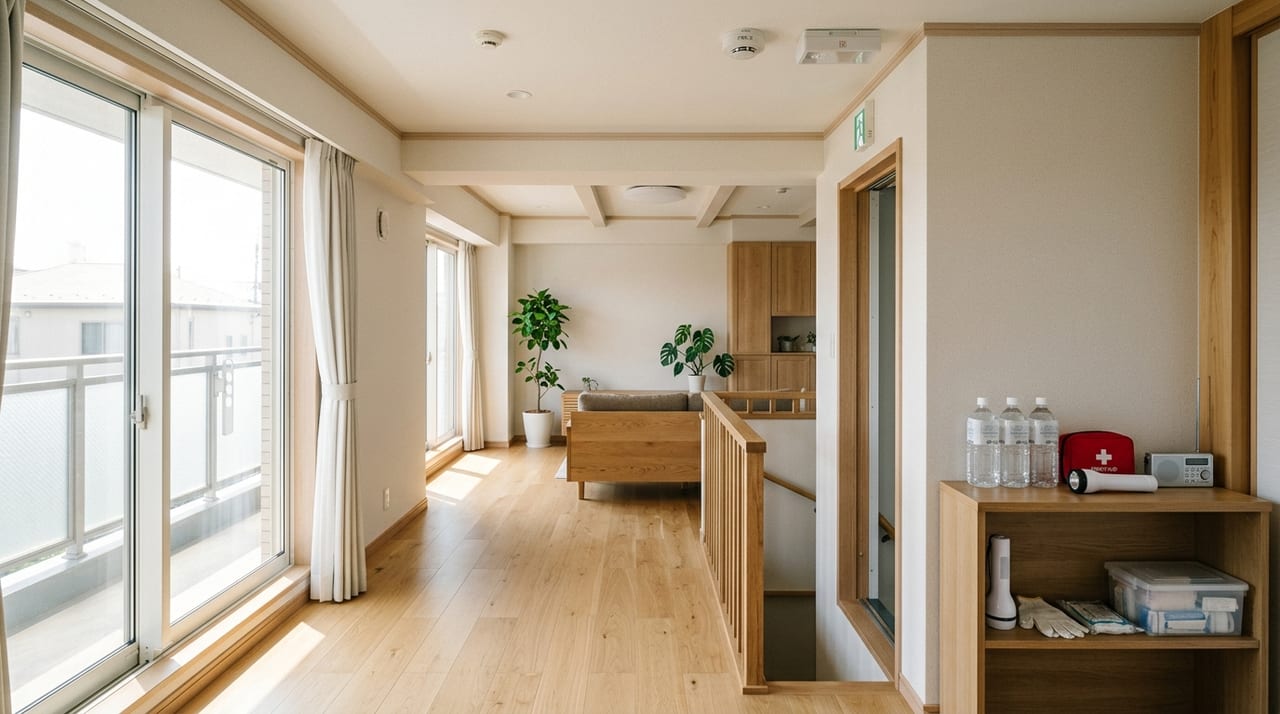
Items to always keep on hand:
Organize management company information:
There's a significant difference in how much hardship people experience during blackouts and water outages depending on their level of preparation. In rental housing, building equipment issues must be handled by your management company, but how you handle things in your own unit, how you notify the company, and your everyday preparations are within your control.
Use the procedures and supplies introduced in this guide to develop an action plan now for when emergencies strike. Being able to respond calmly when a crisis hits is the strongest defense for maintaining a safe and comfortable rental living situation.
Colorless and odorless carbon monoxide poses a life-threatening danger you may not notice. This guide explains CO poisoning risks in rental homes, types of CO alarms, where to install them, and how to choose the right one.
引越し後の車庫証明変更申請ガイド——手続きの流れ・必要書類・期限を徹底解説
鳥取の賃貸エリアガイド【2026年版】——家賃相場・住みやすさ・移住事情を徹底解説
甲府・山梨の賃貸エリアガイド【2026年版】——家賃相場・住みやすさ・移住支援を徹底解説
Floor Slab Thickness and Upstairs Noise Problems—Structural Reasons Why "Thump" Impact Sounds Resonate in Rental Apartments and Tips for Choosing Properties
Maebashi & Gunma Rental Area Guide [2026 Edition]—Complete Comparison of Average Rents and Livability by District
