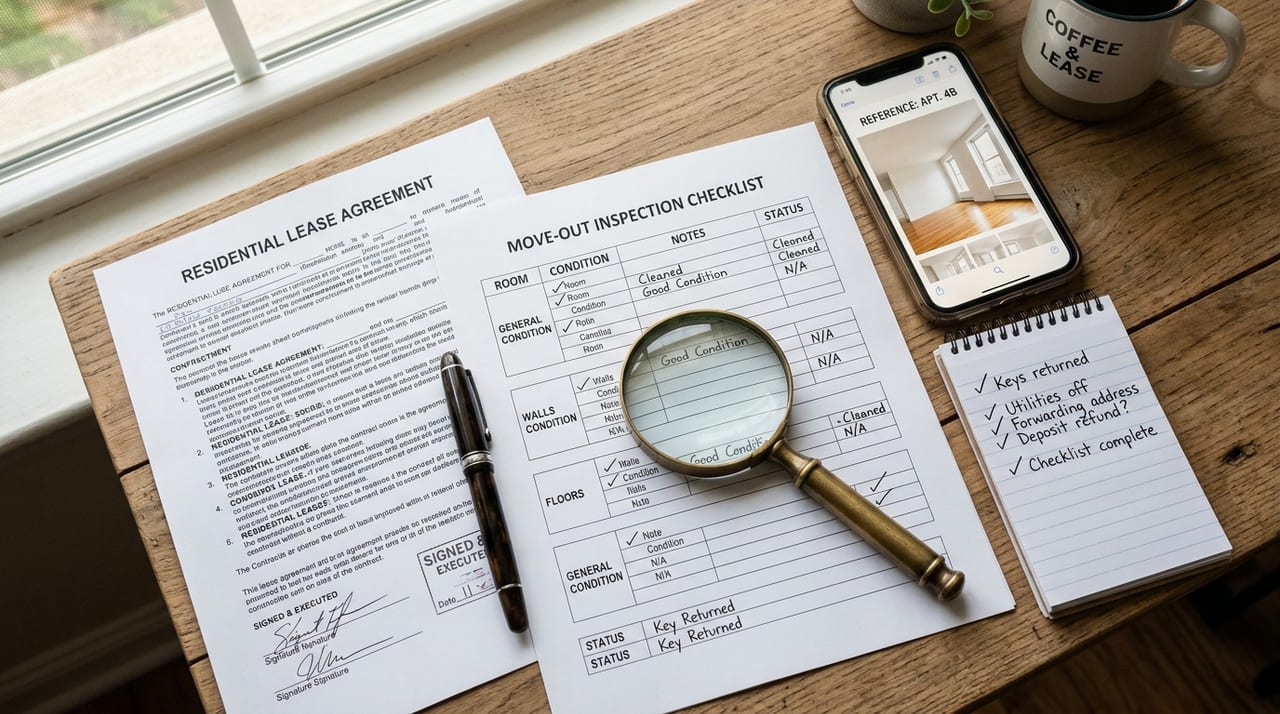
Complete Guide to Key Replacement Costs and Procedures for Rental Apartments
Key replacement is an essential security procedure when moving into a rental property. However, without understanding cost responsibility and market rates, you may face unfair charges. This article provides a comprehensive explanation of costs by key type, legal interpretations, and negotiation strategies.
When moving into a rental property, many tenants overlook the importance of key replacement. There's no way for real estate agencies or landlords to know how many copies of the key the previous tenant made. The risk of duplicate keys remaining in other people's hands is more serious than most people imagine.
There have been actual cases where acquaintances, partners, or ex-partners of the previous tenant left with duplicate keys and later made unauthorized entries into the new tenant's apartment. Additionally, there have been instances where master keys used by management companies or contractors have been leaked to outsiders.
Immediately after moving in, the apartment's condition is easily visible from outside due to furniture being moved, making it an easier time for potential intruders to act. Key replacement should not be seen as merely a precautionary measure, but rather as a fundamental security practice to protect yourself as the tenant.
Key Replacement Costs by Cylinder Type
The cost of key replacement varies significantly depending on the type of cylinder (internal lock mechanism) used. Let's examine the characteristics and typical costs of the three main types.
Disk Cylinders
The oldest type of lock mechanism, commonly found in older buildings and budget rental properties. Due to its structure being susceptible to lock-picking tools, it is considered to have low security. The replacement cost, including labor, is typically ¥8,000–¥15,000.
Rotary Disk Cylinders
An improved mid-range lock mechanism based on disk cylinders, currently the most widely used in rental properties. It offers greater resistance to lock picking than disk cylinders and represents a well-balanced option. The replacement cost, including labor, typically ranges from ¥12,000–¥25,000.
Dimple Keys (Dimple Cylinders)
This type features multiple indentations (dimples) on the key's surface, offering high security with difficult-to-replicate designs. Commonly used in apartment building auto-lock systems and premium rental properties, it excels in providing peace of mind. However, the cost is higher at around ¥20,000–¥40,000.
All figures above are estimates for cylinder replacement plus labor and may vary depending on the contractor and region. When obtaining quotes, it is recommended to verify the cylinder grade and labor costs separately.
Who Should Pay for Key Replacement: Tenant or Landlord? Interpretation of MLIT Guidelines
The question of who pays for key replacement is one of the most contentious issues in rental disputes.
In the Ministry of Land, Infrastructure, Transport and Tourism's (MLIT) published "Guidelines for Disputes and Restoration to Original Condition," the following interpretation is provided regarding key replacement at move-in:
Key replacement is a property management issue arising from tenant turnover, and it is reasonable to consider that the landlord, who bears responsibility for the property, should bear this cost.
In essence, the fundamental interpretation is that the landlord (or management company) should bear this cost. Preparing for a new tenant is the landlord's responsibility, and key replacement to eliminate security risks is considered part of this duty.
However, in practice, many lease agreements include a special clause stating "the tenant shall bear the cost of key replacement at move-in." Such clauses are considered valid only when the tenant has understood the terms fully and agreed to them.
Conditions for a special clause to be considered valid generally include the following:
•The special clause is explicitly stated in the lease agreement
•The tenant has agreed after receiving sufficient explanation
•The cost does not exceed a reasonable amount and is not excessively high
Before resigning yourself to "I signed it, so there's nothing I can do," it is important to verify the special clause's contents in the agreement and whether proper explanation was provided.
Practical Tips for Negotiating and Reducing Key Replacement Costs
When you have concerns about key replacement costs, you have the right to negotiate or request a review. The following methods have proven effective in practice.
Pre-Contract Negotiation
The period after applying but before signing the lease is your best opportunity to negotiate. When you directly ask, "Could the landlord cover the key replacement cost?", you may receive a positive response depending on the property's vacancy situation. Negotiations tend to be more successful for long-vacant properties or during off-peak moving seasons.
Arranging Your Own Contractor
Key replacement arranged through a management company can sometimes be more expensive. Obtaining quotes from a trusted locksmith and proposing this option to the management company if you can achieve the same quality at a lower cost can be effective. However, if the landlord or management company stipulates "only approved contractors," you must verify this in advance.
Request an Itemized Invoice
If the invoice shows "Key Replacement Cost: ¥XX" as a lump sum, request an itemized breakdown including the cylinder model, grade, and labor costs. This helps prevent unjustified overcharges.
Replace the Key Yourself After Move-In
Unless prohibited in the lease agreement, it is your right as a tenant to replace the cylinder at your own expense after moving in. In this case, you should clarify in advance whether you need to restore the lock to its original condition when you move out.
Costs and Precautions for Upgrading to Auto-Lock and Electronic Locks
In recent years, with growing security consciousness, an increasing number of tenants wish to upgrade their existing locks to auto-lock or electronic systems. As of 2026, smart lock adoption is accelerating, expanding the available options.
Upgrading to Auto-Lock Compatible Cylinders
Replacing the cylinder with one compatible with the building's auto-lock system requires system-wide setting changes and always requires permission from the management company or landlord. Costs can reach ¥30,000–¥80,000 or more, and construction expenses are typically borne by the tenant.
Installing Electronic Locks or Smart Locks
Retrofit-type smart locks (installed directly on the door without construction) can be purchased and installed for around ¥10,000 depending on the product. However, types that modify the existing lock require management company approval. You should also clarify restoration obligations upon move-out.
In any case, unauthorized modifications may constitute a breach of contract and could result in penalties. If you wish to upgrade, the rule is to first submit a written request to the landlord or management company, obtain approval, and only then proceed.
Summary: Key Replacement Is an "Investment," Not Just a Cost
While key replacement may seem like an expense of several tens of thousands of yen, it is a necessary investment in protecting the safety of yourself and your family. Regarding cost responsibility, negotiation before move-in may be possible based on MLIT guidelines. Understand the cylinder types, typical costs, and your lease's special clauses before proceeding in a way that satisfies you.
Always clarify any unclear points before signing the lease, and ensure that agreements are documented in writing rather than verbally—this prevents future disputes. From property selection through post-move-in security, prioritize creating an environment where you can live with peace of mind.