Rental properties offer multiple parking types including mechanical, self-parking, and ground-level options. This guide explains the pros and cons of each type, vehicle size restrictions, and cost estimates to help you choose a parking solution that meets your needs.
Reviewed by: Nobuyuki MoriPresident, M-Assets Co., Ltd. / Licensed Real Estate Transaction Specialist (Miyagi #018212)
This guide covers parking fees for car owners in rental properties, cost comparisons of car-free living with carsharing, and how to find nearby coin parking. Use it as a reference for making comprehensive decisions about properties with parking and calculating total maintenance costs.
When searching for rental properties in Nagoya City, it's essential to understand the rent prices and living convenience for each area. This guide explains the characteristics of major areas and the latest rent trends as of 2026, from around Nagoya Station to suburban regions.
When renting an apartment in Kyoto, unique customs that differ from national standards exist. By understanding Kyoto's rental market characteristics—including security deposit deductions, renewal fees, and key money rates—you can make an informed decision and avoid regrets.
Noise troubles are a common concern for those living in rental apartments. This guide covers everything from managing everyday sounds from units above and neighboring units to external noise, and the proper steps to take when issues occur.
When choosing a rental property, securing a parking space is an important consideration for vehicle owners. However, even if a listing says "parking available," the usability and costs can vary significantly depending on the type. This article explains the characteristics of each parking type for rental properties and summarizes key points you must confirm before moving in.
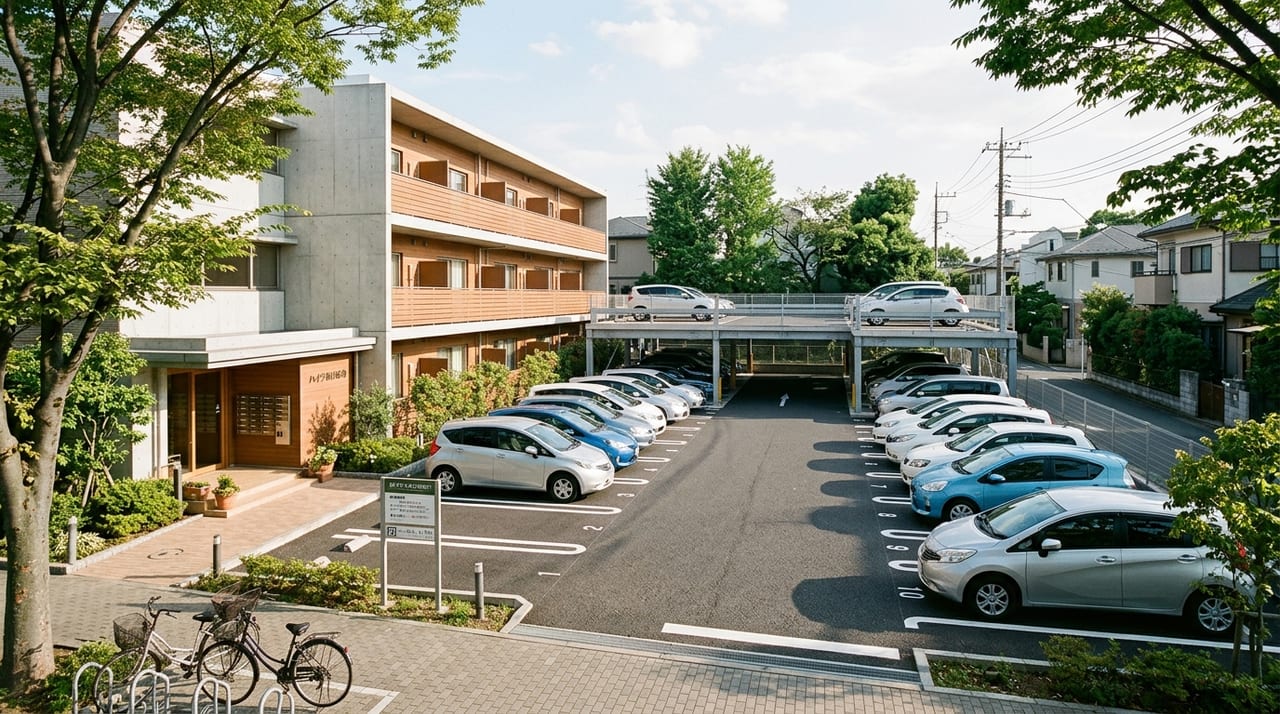
Rental apartment and condominium parking falls into the following categories:
The simplest type of parking, with marked spaces on the ground.
Advantages
Disadvantages
Estimated Monthly Cost: Urban areas: ¥5,000–¥15,000; Suburban areas: ¥3,000–¥8,000
This type uses mechanical equipment to store vehicles and is commonly found in urban rental apartments. The main types are as follows:
Two-Tier Type (Multi-Tier): Vehicles are mechanically raised and lowered between ground level and basement (or two ground levels). This is the most common type.
Tower Type (Vertical Circulation/Elevator Type): Multiple vehicles are stacked vertically and accessed via elevator. Accommodates many vehicles in a compact space.
Advantages of Mechanical Parking
Disadvantages of Mechanical Parking
Estimated Monthly Cost: Urban areas: ¥10,000–¥30,000; Suburban areas: ¥8,000–¥15,000
In this type, you drive your vehicle to upper floors or basement levels. Commonly found in shopping malls and large apartment complexes.
Advantages
Disadvantages
Estimated Monthly Cost: ¥8,000–¥20,000
Parking located in the basement of a building.
Advantages
Disadvantages
The most important consideration for mechanical parking is "vehicle size restrictions." Vehicles exceeding these limits cannot be parked.
| Item | Two-Tier (Lower Level) | Two-Tier (Upper Level) | Tower Type |
|---|---|---|---|
| Length | 5.0m or less | 5.0m or less | 5.0m or less |
| Width | 1.9m or less | 1.85m or less | 1.9m or less |
| Height | 1.55–2.0m | 1.55m or less | 1.55–1.8m |
| Weight | 2.0 tons or less | 2.0 tons or less | 2.0 tons or less |
*These vary by property; always confirm with the management company.
The following vehicle types may exceed mechanical parking restrictions:
When considering a property, be sure to confirm the following:
Rental property parking falls into two categories:
Included in Rent/Common Service Fee: The monthly rent remains the same, but parking costs are essentially built into it.
Separate Contract (Additional Parking Fee): The property and parking are contracted separately. You can opt out during months you don't use parking (however, spaces may become unavailable).
For separate contracts, express your parking preference at move-in; if a space is available, you can contract for it. Popular properties may have no available parking, so check parking availability when you apply for the property.
When searching for properties, listings like "¥XX,000 with parking" differ from "Rent ¥XX,000 + Parking ¥XX,000 separate," even if the total cost is the same. Compare total costs carefully.
If the property's parking is full, expensive, or unsuitable for your vehicle, consider renting a monthly parking space nearby. Check whether a monthly parking space is available within a 5–10 minute walk from the property.
If you own an electric vehicle (EV) or plug-in hybrid vehicle (PHEV), verify charging equipment availability. Mechanical parking spaces often make it difficult to run charging cables. Properties with EV charging–compatible parking remain limited, and as of 2026, you must check each property individually.
Choosing parking for a rental property should consider three factors: vehicle size, usage frequency, and cost. Especially for mechanical parking, always confirm in advance that your vehicle will fit. Neglecting to contact the management company and verify actual dimensions at a site visit could result in the problem of "my car won't fit" after moving in. Compare total costs including parking fees, not just rent, and choose a home that supports a comfortable driving lifestyle.
不動産ネットワーク
投資物件・賃貸住宅・テナント・運営会社をつなぐ不動産4サイト連携。
床スラブ厚と上階の足音問題——賃貸で「ドン」という衝撃音が響く構造的な理由と物件選びのポイント
前橋・群馬の賃貸エリアガイド【2026年版】——主要エリア別家賃相場と住みやすさを徹底比較
Making the Most of Protruding Beams and Columns in Rental Apartments — Smart Furniture Placement Strategies
Mito & Ibaraki Rental Area Guide [2026] — Comprehensive Explanation of Rental Rates and Livability by Major Area
Uncovering Property Issues by Asking Previous Tenants About Their Departure—Questions to Ask During Viewings and How to Interpret Answers