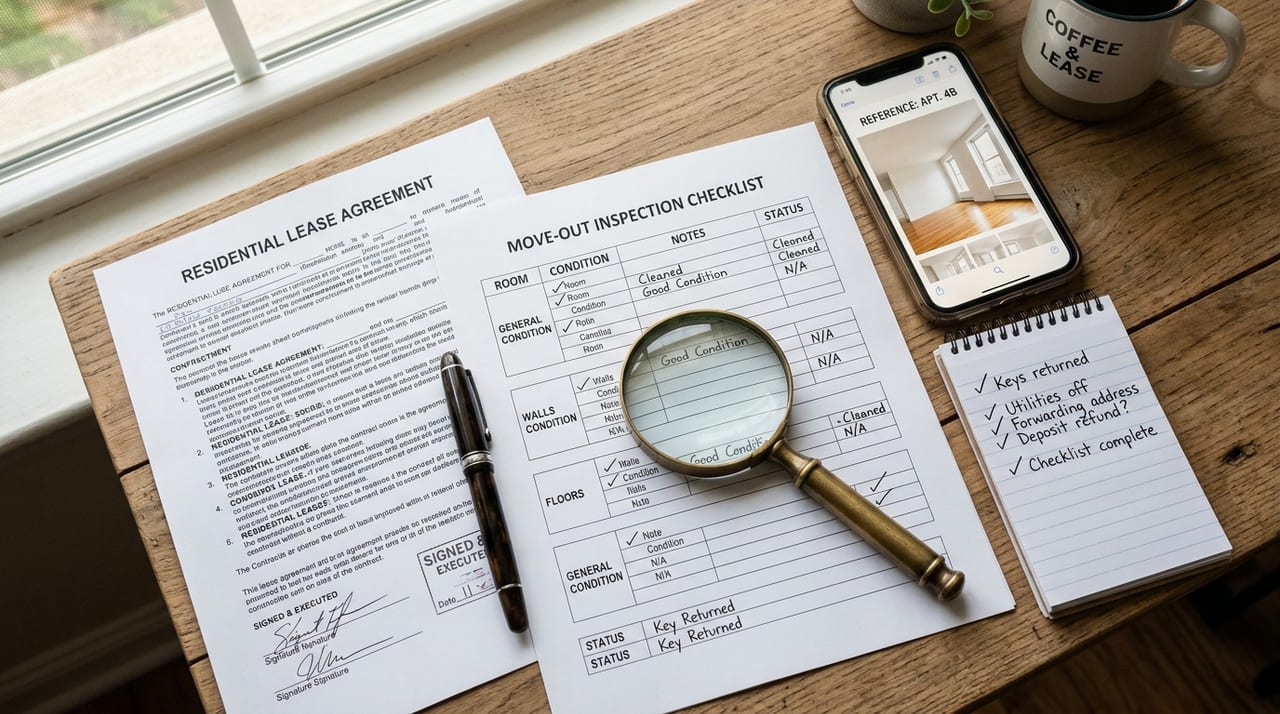
Complete Guide to Rental Application Documents — Required Documents, Key Points for Filling Them Out, and Common Mistakes Explained
A guide to the types of documents required for rental applications and how to fill them out accurately. Covers key points for entering employer information, income verification, and number of occupants, plus special considerations for foreigners and self-employed individuals.
After finding a rental property you like, the next step is to "apply for occupancy." If you make mistakes in filling out the application documents or fail to prepare the required documents, the screening process may be delayed or you may lose out on your desired property. In this article, we'll explain in detail the types of documents needed for a rental application and the key points for filling them out accurately.
Types of Documents Required for a Rental Application
The documents required for a rental application vary by real estate agency and property, but generally the following are required.
•Identity verification documents (driver's license, My Number Card, passport, etc.)
•Income verification documents (3 months of pay stubs, Certificate of Withholding Tax, tax return, etc.)
If you have a joint guarantor
•Resident registration certificate or seal registration certificate of the joint guarantor
•Income verification documents for the joint guarantor
If using a guarantor company
•Guarantor company application form
•Identity verification documents as specified by the guarantor company
For foreign nationals
•Residence card (copies of both sides)
•Passport
•Employment verification certificate from employer (having a Japanese translation makes screening smoother)
In recent years, the use of guarantor companies has become standard, and an increasing number of properties allow occupancy without a joint guarantor. Be sure to confirm the guarantee structure of the property in advance.
Application Form Items and Points to Note
Rental applications have many items to fill in. Errors or blank spaces can raise doubts, so it's important to fill them out carefully and accurately.
Name/Furigana: Be sure to write your full legal name (name on your family register). Write out the furigana phonetic guide in full—don't abbreviate. Nicknames or pen names are not acceptable.
Current Address/Contact Information: Write your current address using the same notation as your resident registration. If you haven't moved yet, you can write your current address and add a note in parentheses such as "Moving to: ○○."
Employer Information: Fill in the company name, address, phone number, years of employment, and employment type (full-time, contract employee, part-time, etc.). If you've been employed for less than a year, write the specific number of months. If you've recently changed jobs, attaching a copy of your job offer letter or employment contract can make the screening process smoother.
Annual/Monthly Income: Write the amount to match the figures on your withholding tax certificate or pay stub. It's standard to write "gross income" rather than take-home pay. If you have supplementary income, add it together and clearly identify the income sources.
Number of Occupants/Relationship: Write the names, dates of birth, and relationships of all people living with you. If additional residents move in without permission after you move in, it constitutes a breach of contract, so it's important to fill this in accurately.
Move-in Date: Write your desired move-in date. However, the move-in date is often confirmed again after the screening results and contract are finalized, so writing something like "early ○month preferred" with some flexibility is often acceptable.
Previous Address/Current Rent: Write your reason for moving and your current rent. It's best to state the reason for moving in specific, positive terms, such as "looking for a property closer to my workplace" or "getting married."
Selecting Income Verification Documents
The income verification documents you submit with your application depend on your employment type.
Employment Type
Primary Income Verification Documents
Full-time employee
Certificate of Withholding Tax or 3 months of pay stubs
Contract employee / Temporary worker
3 months of pay stubs + employment contract
Self-employed / Freelancer
Tax return (most recent 2-3 years)
Unemployed / Student
Parent's income verification + proof of financial support
Freelancers and self-employed individuals are often viewed as having unstable income, so preparing 2-3 years of tax returns can make your application more favorable.
Application Process and Screening Period
After submitting your application documents, you'll typically receive screening results in 2-5 business days. If a guarantor company is involved in the screening, it may take 1-3 days; if a credit information agency check is needed, it could take up to about a week.
During the screening period, you may be asked to submit additional documents. Respond promptly to any contact from the real estate agency. Since you may be competing with other applicants during the screening period, it's important to prepare your documents quickly.
Common Filling Errors and How to Prevent Them
•Income entry omissions: Even if you have supplementary income, add it to the total and note it (though income not listed on your withholding tax certificate should be annotated)
•Entering only the direct number instead of the main company phone number: The real estate agency's employment verification call may come to the main number. Include the main number as well.
•Leaving current rent blank: If you live with your family, clearly state "0 yen due to living with family"
•Guarantor's address is outdated: Confirm the guarantor's current address and fill it in
•Insufficient review after filling: Make it a habit to double-check all items before submitting
Summary
Rental application documents are the "introduction" through which the screener first learns about you. Filling them out accurately, carefully, and promptly and preparing all required documents without omission is the first step to passing the screening. If you prepare the required documents in advance before applying, you'll be ready to apply immediately after a viewing, putting you ahead of competing applicants. Document deficiencies directly lead to screening delays or losing out on properties, so create a checklist and address everything without gaps.
A detailed explanation of challenges and solutions when single-parent households and single mothers search for rental properties. From how to utilize rent assistance and public support systems to tips for passing occupancy screening and selecting the right property type, rental experts provide practical information presented in an easy-to-understand format.