A detailed guide on how to terminate a rental lease early. Learn about penalty fee conditions, correct notice period calculations, optimal moving timing, and special procedures for foreign residents returning to their home countries.
Reviewed by: Nobuyuki MoriPresident, M-Assets Co., Ltd. / Licensed Real Estate Transaction Specialist (Miyagi #018212)
The timing and method of notifying your landlord about moving out significantly affect your risk of paying double rent and incurring penalty charges. This guide explains everything from how notice periods work to how to properly write your notification letter, and walks you through the entire move-out process including final inspections and settlement.
When you've submitted a rental application or received the written disclosure of important information and start having second thoughts, how far can you actually cancel? This guide explains the scope of cooling-off rights, the correct procedures for application withdrawal, and when cancellation fees and penalties apply—all from a legal perspective in easy-to-understand terms.
When you've missed the required notice period (typically 1–2 months before moving out) or forgotten to submit notice altogether, this guide explains the financial risks that may arise and strategies to minimize your losses through negotiation with property management.
"Early lease termination" refers to vacating a rental property before the end of the lease term (typically 2 years). Under a standard (indefinite) lease in Japan, tenants can vacate at any time, but a specified notice period is required.
The notice period is stated in the "Termination Clause" of your rental agreement. Common provisions include:
Example calculation: If the notice period is 1 month and you want to move out on March 31, you must provide termination notice by February 28 (or 29).
A "short-term termination penalty" is charged when you vacate within a certain period after move-in (typically within 1-2 years).
Where to find it: "Special Provisions" section of your rental agreement
Common penalty examples:
Important for foreign residents: Even if you terminate your lease due to repatriation, job transfer, or career change, you remain liable for short-term termination penalties if stated in your contract. Confirm any special provisions at move-in, and if you anticipate relocating within a short timeframe, we recommend choosing a property without penalty clauses.
First, review the termination and move-out provisions in your rental agreement.
Inform the management company of your intention to vacate before the notice period begins (1-2 months in advance).
Notification method: Unless specified in the contract, notification can be by phone or in writing, but email or written notice is recommended for future reference.
Sample notification: "I hereby provide notice that I will vacate the property on [Date]. Please contact me to schedule the move-out inspection. (Name, Room Number, Contact Information)"
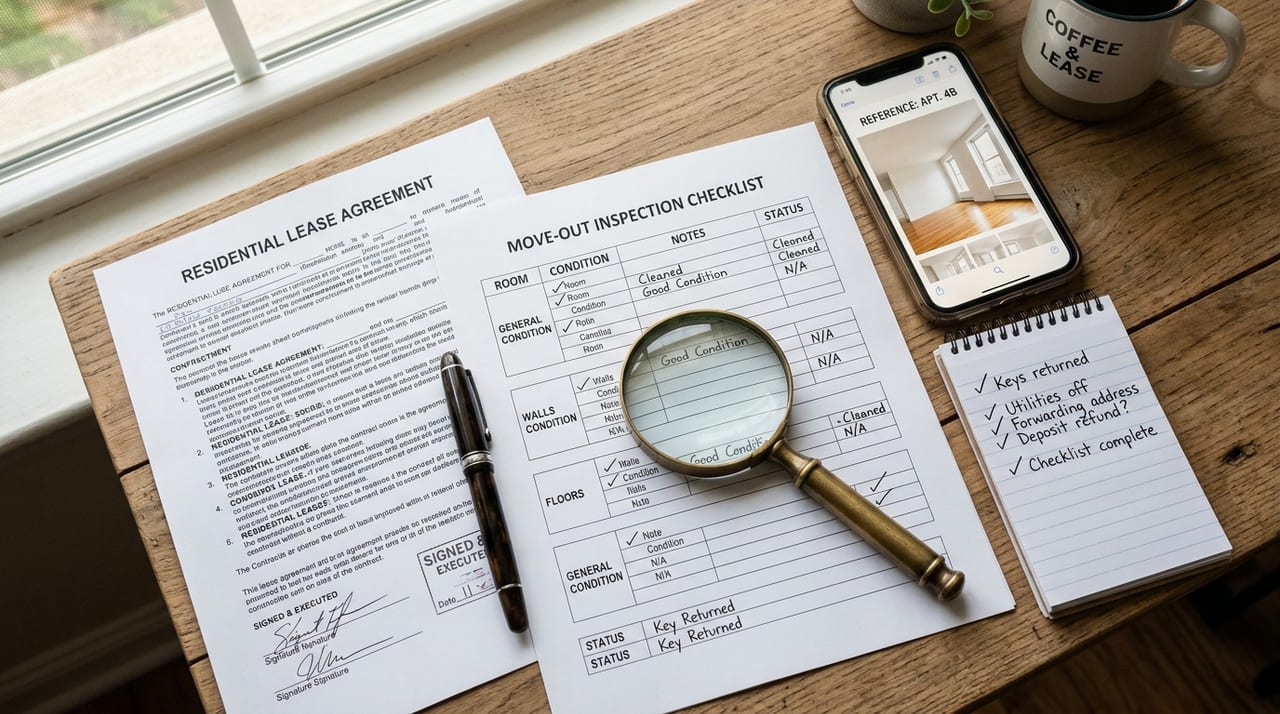
The management company will conduct a "move-out inspection" (property condition check) around your move-out date. Coordinate the inspection date and time.
What is checked: Wall and floor damage or stains, equipment condition, key return (quantity verification), comparison with initial move-in checklist.
You may receive a verbal estimate of move-out costs during the inspection. Even if asked, it is important not to sign on the spot. Review the written documentation later, and you may negotiate if you disagree with the charges.
Remove all belongings and return the keys on your move-out date. Complete gas, electricity, and water disconnection on the move-out date or the day before.
You will receive a security deposit settlement statement within 1-2 months after move-out. For details, see the "Security Deposit Return Guide."
If you are terminating your lease to return home, the following are required in addition to standard cancellation procedures.
Notification of Move Abroad: Submit an "Overseas Move Notification" at your municipal office before departure (this removes your residential registration). You can submit this from 14 days before your departure date until the day of departure.
Return of Residence Card: Return your residence card at the airport (Immigration Services Agency window) upon departure.
Bank Account Handling: We recommend closing Japanese bank accounts you won't use after returning home. If you keep an account open, update the contact address and protect against unauthorized use.
Mail Forwarding: If needed, register a forwarding address (such as a friend's address in Japan) with the post office. Japan Post generally does not forward mail overseas.
Utility Settlement: Notify your electricity, gas, and water companies of your move-out date and specify where to send the final bill. If your domestic bank account will be closed, arrange payment by cash or bank transfer.
When moving out of a rental property, failing to follow proper procedures can result in penalty fees or additional rent charges. This guide explains everything you need to know about early lease termination, from cancellation notice periods and how to write notification documents to security deposit settlement.
床スラブ厚と上階の足音問題——賃貸で「ドン」という衝撃音が響く構造的な理由と物件選びのポイント
前橋・群馬の賃貸エリアガイド【2026年版】——主要エリア別家賃相場と住みやすさを徹底比較
Making the Most of Protruding Beams and Columns in Rental Apartments — Smart Furniture Placement Strategies
Mito & Ibaraki Rental Area Guide [2026] — Comprehensive Explanation of Rental Rates and Livability by Major Area
Uncovering Property Issues by Asking Previous Tenants About Their Departure—Questions to Ask During Viewings and How to Interpret Answers
