Explaining how "walking distance to the nearest station" affects rental prices in rental properties. A rental real estate professional provides detailed guidance on the reality of rent differences at 10, 15, and 20 minutes' walk, conditions where longer walking distances can offer benefits, and strategies for identifying hidden gem neighborhoods.
Reviewed by: Nobuyuki MoriPresident, M-Assets Co., Ltd. / Licensed Real Estate Transaction Specialist (Miyagi #018212)
When searching for rentals in Nagoya, choosing the right area is crucial. From Sakae and Meieki areas to suburban neighborhoods, real estate experts provide a comprehensive breakdown of rental prices, accessibility, and living environments by station.
What's the rent difference between a "10-minute walk to the station" property and a "5-minute walk" property? Based on real estate industry standards and actual data from different cities, we explain how to choose a rental property by balancing station distance and rent without regrets.
When searching for rental properties in Hokkaido's Sapporo, understanding the rent levels and living conditions of each area is essential. From Chuo-ku to Nishi-ku, Kita-ku, and Toyohira-ku, we thoroughly explain the characteristics of major areas from a professional rental perspective.
Compare rent prices, commute times, and daily convenience across different areas based on the convenience of Sendai's Namboku and Tōzai subway lines and bus routes. A practical guide for choosing properties during transfers, moves for study, or relocations.
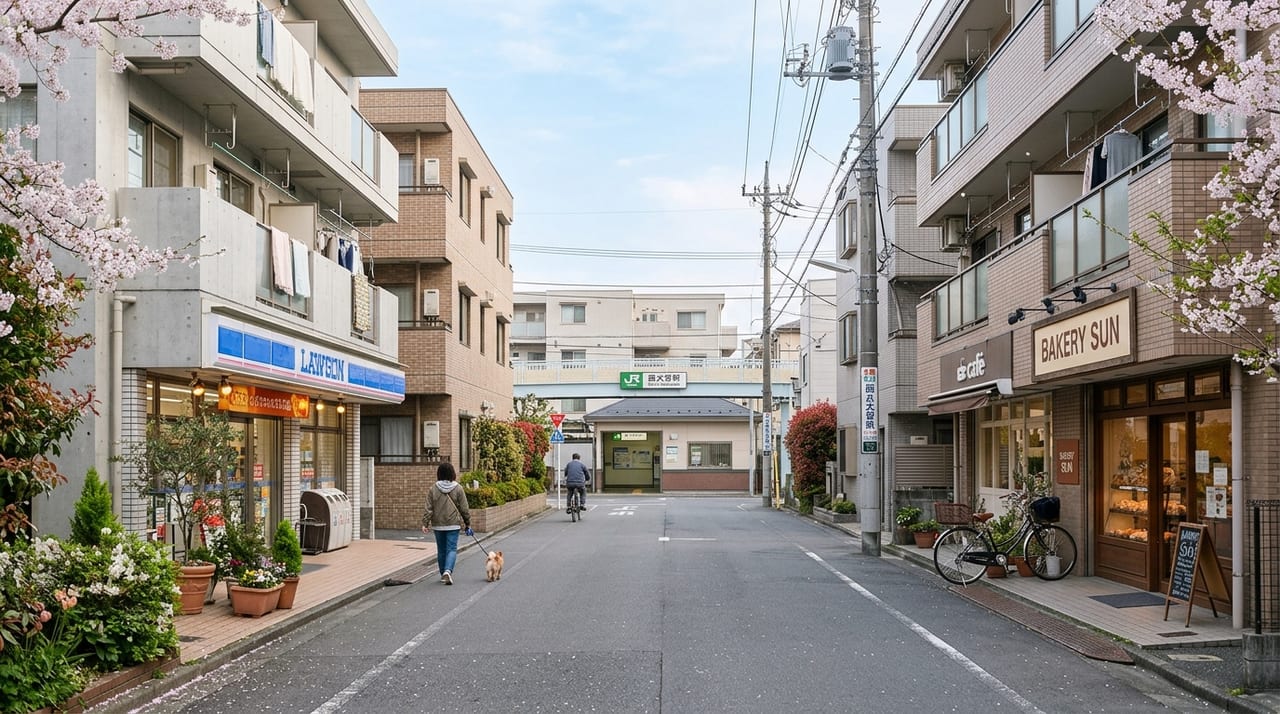
Among the factors determining rental prices for properties, "walking time to the nearest station" has a major impact alongside location and railway line. Generally, the longer the walking time, the lower the rent tends to be, but the difference varies significantly depending on the railway line, area, and property type.
As of 2026, with the shift away from "station proximity at all costs" toward "prioritizing living environment" due to the establishment of remote work, more tenants are reassessing their priorities. Understanding the relationship between walking distance and rent correctly has become key to selecting a property.
The real estate industry uses "1 minute's walk = 80 meters" as the standard for calculation. Since fractional parts are rounded up, a "10-minute walk" refers to properties up to 800m away.
| Walking Time | Approximate Distance |
|---|---|
| Within 5 minutes' walk | ~400m |
| Within 10 minutes' walk | ~800m |
| Within 15 minutes' walk | ~1,200m |
| Within 20 minutes' walk | ~1,600m |
In urban areas (Tokyo, Osaka, Nagoya, etc.), moving from a 10-minute walk to a 15-minute walk to the station can result in rent drops of 5-15%. When the walk extends beyond 20 minutes, differences of around 3,000-8,000 yen per month in one-room studio rent are not uncommon under otherwise identical conditions.
In suburban and regional cities, walking distance to the station has less impact on rent compared to urban areas. In some cases, there's almost no rent difference between a 20-minute walk property and a 5-minute walk property. As of 2026, this trend is particularly pronounced in areas with high telework percentages.
It's premature to judge a property based solely on walking time. When the following conditions are met, properties with a 10-15+ minute walk can still offer excellent value.
Even for a property with a 15-20 minute walk, if the nearest station is just 5 minutes by bicycle, the practical convenience is no different from a "station-adjacent" property.
Points to Check:
Station-adjacent properties have a "location premium" added to their rent, so when comparing at the same price point, the interior is often smaller, amenities are older, or sunlight is limited.
Examples of benefits from a 15-minute walk:
When your workplace is far from the nearest station, a property closer to your workplace than to the station can actually result in shorter total commute time. In suburban areas where driving is the norm, a property closer to your workplace than to the station often makes daily life more convenient.
Station-adjacent areas tend to be noisy with heavy foot traffic, while properties a bit further from the station often offer quiet surroundings and better living environments.
Stations adjacent to popular stations (Shibuya, Umeda, Nagoya, Tenjin, etc.) — one or two stops away — can offer convenient access while experiencing significant rent reductions.
Search Methods:
Areas with planned redevelopment typically see rent increases after completion. Areas slightly outside the center of redevelopment are currently cheaper and allow you to move in before accessibility improves.
Confirmation Methods:
Even with a 20+ minute walk to the station, if the bus stop is within 3-5 minutes' walk and the bus reaches the nearest station in about 10 minutes, actual accessibility is quite good. Bus-served properties often have lower rent.
Points to Note:
While walking distance to the station is a major factor in determining rental prices, when alternative transportation by bicycle or bus is available, or when interior conditions and living environment benefits outweigh the distance, properties with a 15-20 minute walk can become "cost-effective choices." In 2026, with the establishment of remote work, the trend toward prioritizing living environment is strengthening. Actively checking "next stations near popular stations," "areas around redevelopment zones," and "favorable bus-served properties" is an effective strategy for finding hidden gems. Not being constrained by station distance alone and choosing properties that match your lifestyle is key to achieving long-term satisfaction.
床スラブ厚と上階の足音問題——賃貸で「ドン」という衝撃音が響く構造的な理由と物件選びのポイント
前橋・群馬の賃貸エリアガイド【2026年版】——主要エリア別家賃相場と住みやすさを徹底比較
Making the Most of Protruding Beams and Columns in Rental Apartments — Smart Furniture Placement Strategies
Mito & Ibaraki Rental Area Guide [2026] — Comprehensive Explanation of Rental Rates and Livability by Major Area
Uncovering Property Issues by Asking Previous Tenants About Their Departure—Questions to Ask During Viewings and How to Interpret Answers
