When choosing a rental property, deciding based only on layout and rent often leads to regret. The quality of the surrounding neighborhood—which supports your daily life—is what truly makes the difference in your living experience. Experts thoroughly explain 6 key points you should verify by visiting the area in person.
Reviewed by: Nobuyuki MoriPresident, M-Assets Co., Ltd. / Licensed Real Estate Transaction Specialist (Miyagi #018212)
Noise is one of the most common issues in rental living. To avoid regret after moving in, this expert guide covers everything from building structure and neighborhood selection to interior viewing tips and how to handle problems if they arise.
Is a rental property "just a 1-minute walk from a convenience store" really convenient and comfortable? This guide explains both the benefits—24/7 shopping convenience and utility access—and the drawbacks: nighttime noise, round-the-clock lighting, and garbage collection issues. Learn the ideal distance from supermarkets, key points to check during apartment viewings, and expert criteria for choosing a rental without regret.
Fukuoka is one of the most livable cities in Japan for single women. However, to live safely and comfortably, a woman's perspective is essential—particularly regarding location choice, security features, and application strategies. This article explains practical tips for choosing a rental property in Fukuoka for women starting out on their own.
When choosing a rental property, it's easy to focus on room size and amenities. However, many people discover only after moving in that "shopping is inconvenient," "the roads are scary at night," or "there are too many hills to use a bike."
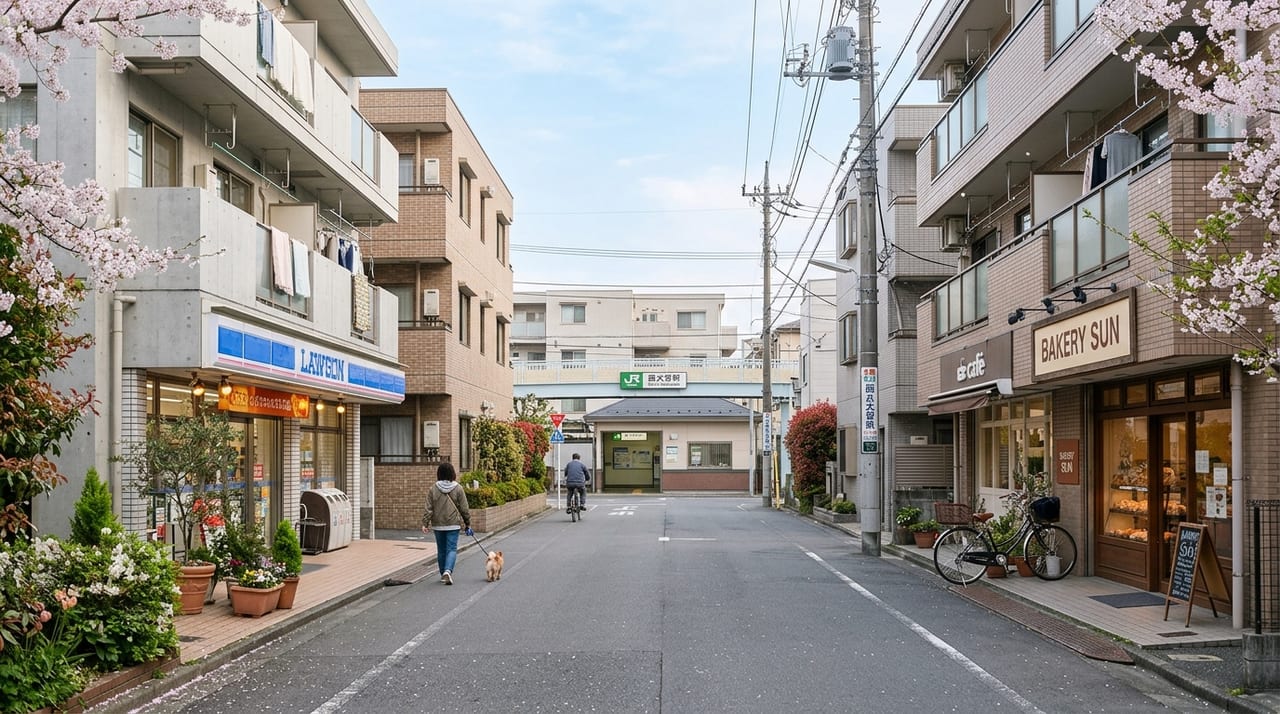
A property's quality isn't determined by the room alone; the neighborhood's livability accounts for most of your comfort. We strongly recommend that during your property viewing, you always walk the area in person and carefully check each of the following points.
For daily groceries and household items, a supermarket within a 10-minute walk from your property is the comfortable standard. Even if you use a bicycle, 15–20 minutes is the general guideline.
A convenience store within a 5-minute walk is convenient for quick purchases and late-night meals. Drugstores offer medicines, household items, and food all in one place, so check their location in relation to your nearest supermarket.
On-Site Checklist
Having multiple shops nearby creates competition, which can help reduce your living costs.
Healthcare reassurance is essential for long-term comfort. Make sure a primary care physician or family doctor is nearby to handle everyday fevers and minor illnesses.
| Medical Facility | Distance Guideline | Use |
|---|---|---|
| Primary Care / Family Doctor | Within 15-min walk | Fever, cold, chronic conditions |
| Dental Clinic | Within 10-min bike ride | Regular checkups, sudden pain |
| Large Hospital / Emergency Hospital | Within 30 min by car/train | Emergency, specialized care |
| Pharmacy | Near clinic | Prescription pickup |
Families with children should prioritize pediatrics; those with elderly parents should focus on orthopedic and internal medicine availability.
Verification Method: Search Google Maps for "primary care + [area name]," and check reviews and business hours for peace of mind. Research which clinics are open at night and on holidays.
Property listings show the distance to the nearest station, but surprisingly few people check train frequency and transfer convenience.
Train Frequency During Commute Hours Some lines run only every 5–10 minutes even during rush hour. Long wait times if you miss a train can become daily stress. Check actual schedules on transfer apps like Yahoo! Transit or Google Maps.
Last Train and First Train Times If you work late or enjoy dining and entertainment, always check the last train time. It's wise to budget for taxi fare if you miss it.
Bus Routes Available If you're far from the station, bus routes become important. However, buses are prone to traffic delays, so research their actual schedules.
On-Site Check: Try walking to the station during your actual commute time. Map estimates don't account for traffic lights or luggage, so the actual distance may feel longer.
A daytime viewing alone won't reveal nighttime safety. We strongly recommend visiting the area at night (around 7–10 PM) if possible.
Street Lighting: Quantity and Brightness Check that your route from your property to the nearest station and supermarket is well-lit. Look for dark alleys or blind spots.
Foot Traffic An area with decent foot traffic during evening commute hours feels safer. Conversely, too-quiet streets can make it hard to get help if you need it.
Distance from Entertainment Districts While close to the station is convenient, areas with many intoxicated customers at night may have noise and safety concerns. Balance quiet and convenience to suit your lifestyle.
Reference: Many police departments publish crime data in map format (e.g., Tokyo's "Crime Information Map"). Search online for "[prefecture] crime map" to access this.
It's common to discover that a place that looks close on a map is actually on a steep hill, making daily commutes exhausting.
Verification Method: Use Google Maps' terrain view or the Geospatial Information Authority's map to check elevation changes. Walking from your property to nearby facilities gives the most reliable sense of hills and steps.
Awareness of natural disaster risks—flooding, landslides, earthquakes—is growing each year. Checking hazard maps is essential when choosing a rental.
Flood and Inundation Risk The Ministry of Land, Infrastructure, Transport and Tourism's "Hazard Map Portal Site" lets you check flooding, landslide, and storm surge risks nationwide. Properties near rivers or in low-lying areas need special attention.
Landslide Risk For properties on mountainsides or hills, check whether they're in designated landslide hazard zones. Watch for "Landslide Caution Areas" and "Landslide Special Alert Areas."
Ground Stability Earthquake vulnerability (liquefaction risk, etc.) can be verified through ground maps published by local authorities and the Ministry's hazard maps.
Verification Steps
Real estate agents are required by law to explain a property's position on flood hazard maps in high-risk areas (effective August 2020). Be sure to confirm this during your mandatory disclosure briefing.
Verifying livability online has limits. Walking the actual neighborhood reveals information maps and photos cannot.
During your viewing, don't just check the room—spend 30 minutes walking the neighborhood. If possible, visit twice at different times and days to see weekday vs. weekend and day vs. night differences.
Rentals are your home for an extended period. Use the 6 key points we've covered to choose an area where you'll be comfortable every day.
When choosing a rental property, the "real living experience" of the surrounding area is often overlooked. This guide explains specific points you should verify by walking around—slopes, noise, nighttime atmosphere, and more—details that floor plans and photos cannot reveal. Visiting at different times, not just on viewing day, significantly improves your accuracy in choosing the right property.
床スラブ厚と上階の足音問題——賃貸で「ドン」という衝撃音が響く構造的な理由と物件選びのポイント
前橋・群馬の賃貸エリアガイド【2026年版】——主要エリア別家賃相場と住みやすさを徹底比較
Making the Most of Protruding Beams and Columns in Rental Apartments — Smart Furniture Placement Strategies
Mito & Ibaraki Rental Area Guide [2026] — Comprehensive Explanation of Rental Rates and Livability by Major Area
Uncovering Property Issues by Asking Previous Tenants About Their Departure—Questions to Ask During Viewings and How to Interpret Answers
