Explaining tenant-side risks when renting properties through sublease (subletting) or master lease arrangements. This article covers common risks including confusion with rent guarantee companies, contract succession when ownership changes, and eviction negotiations—practical solutions learned from real-world trouble cases.
Reviewed by: Nobuyuki MoriPresident, M-Assets Co., Ltd. / Licensed Real Estate Transaction Specialist (Miyagi #018212)
An explanation of risks and precautions when moving into a sublease property. We provide detailed coverage of the impact if a master lease company goes bankrupt, documents to verify when moving in, and common issues specific to sublease contracts.
Explains the common obstacles seniors face when renting—including approval barriers, guarantor issues, and contractual considerations. Also introduces available programs: the housing safety net system, premium rental housing for seniors, and monitored housing services.
Sublease properties involve a complex contract structure with three parties: the owner, management company, and tenant. This guide clarifies key issues that foreign renters should understand beforehand—from confusion about points of contact when problems arise, to unclear responsibility in move-out settlements, to risks if the management company fails—from an industry practice perspective.
When renting a property, it's increasingly common for the contract counterparty to be a property management company rather than the owner. This arrangement is called a sublease (sublet) or master lease structure.
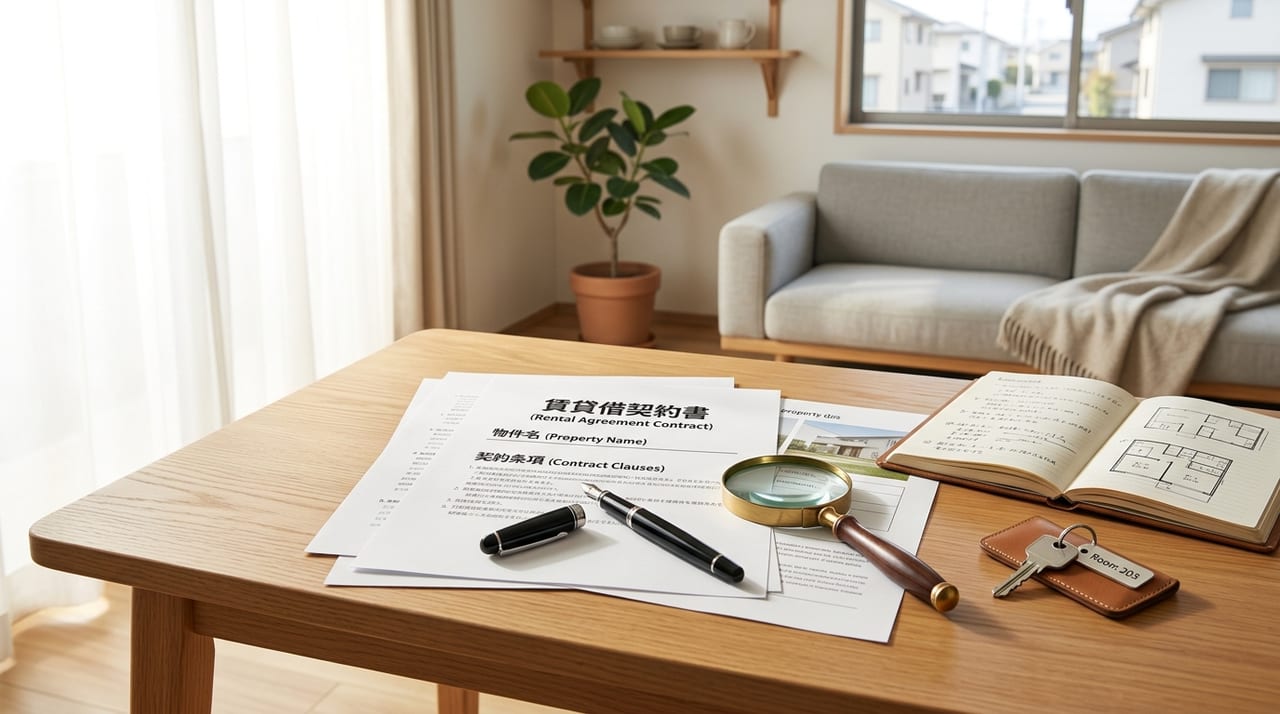
A master lease is a contract in which an owner leases a property to a property management company (the sublessor). The management company leases the property from the owner and then leases it to occupants (subtenants). The contract entered into by the tenant (occupant) is a "sublease agreement" and differs in legal character from an ordinary lease agreement made directly with the owner.
In recent years, "rent guarantee" schemes through sublease operators have received attention from owner-side concerns. However, this article focuses on the tenant (occupant) side, explaining the key risks and protective measures you should know about.
What happens to a subtenant's position if a master lease contract between the owner and management company is terminated or expires?
Civil Code Article 613(3) stipulates that even if a master lease is terminated or expires, tenants cannot be immediately ordered to vacate. Subtenants are entitled to a "reasonable grace period" and cannot be evicted without legitimate grounds. However, if the management company becomes insolvent or the contract is voided, negotiations may become complex.
Protective Strategy: Check whether your contract includes "master lease termination notification obligations" and "transition period clauses."
If a management company downscales operations or becomes insolvent, tenants may become uncertain about where to pay rent. Continuing to pay the previous management company can result in double payment or non-payment issues.
Protective Strategy: You have the right to request written notification (by mail or email) of management company changes and to withhold payment until you confirm the new account details.
In a master lease structure, the involvement of three parties—tenant → management company → owner—can cause maintenance requests to be delayed through miscommunication. Particularly when a management company's finances deteriorate, cases have been reported where repair costs are deferred.
Protective Strategy: Make maintenance requests in writing (email, LINE, etc.) and establish the habit of specifying response deadlines (e.g., within 7 days).
Before entering into a sublease agreement, confirm the following points:
| Point to Verify | Details |
|---|---|
| Sublease Authorization | Is the owner's written approval for the management company's sublease documented? |
| Party Identification | Are the sublessor's (management company) company name, representative name, and address accurate? |
| Original Lease Term | Does the master lease term adequately cover your intended occupancy period? |
| Termination Notification Conditions | What is the management company's termination notice period? (ideally 6 months or more) |
In a sublease agreement, the security deposit you pay is held by the management company. If the management company becomes insolvent, the deposit may be treated as a general claim against the company's assets, and you may not recover the full amount.
Protective Strategy: Minimize the security deposit (negotiate for zero) if possible, or verify the management company's financial status beforehand (incorporation date, capital, online reputation).
The "Act on Proper Management of Rental Housing Management Operations" (Sublease Business Act), which took effect in December 2020, strengthened regulations on sublease operators. The key amendments include:
Tenants can verify whether their management company is registered under the Sublease Business Act by checking the Ministry of Land, Infrastructure, Transport and Tourism's public registry (see the "Rental Housing Management Business Registration System" search page on the MLIT website).
A rental through a sublease arrangement isn't necessarily disadvantageous. With proper verification and contract review, you can move in with the same peace of mind as with a standard lease. Asking questions in writing before move-in and keeping written responses is your best defense.
What should you do if you fall behind on rent for the first time? This comprehensive guide covers the process of overdue payment notices, how to contact your property management company, strategies for negotiating payment extensions, how guarantor company subrogation works, and the legal procedures that follow prolonged nonpayment (including registered mail demands and eviction lawsuits)—all explained from the tenant's perspective.
引越し後の車庫証明変更申請ガイド——手続きの流れ・必要書類・期限を徹底解説
鳥取の賃貸エリアガイド【2026年版】——家賃相場・住みやすさ・移住事情を徹底解説
甲府・山梨の賃貸エリアガイド【2026年版】——家賃相場・住みやすさ・移住支援を徹底解説
Floor Slab Thickness and Upstairs Noise Problems—Structural Reasons Why "Thump" Impact Sounds Resonate in Rental Apartments and Tips for Choosing Properties
Maebashi & Gunma Rental Area Guide [2026 Edition]—Complete Comparison of Average Rents and Livability by District
