Initial rental costs for apartments include security deposits, key money, agency fees, and more, often totaling 3–6 months' rent. An industry expert with over 20 years of experience explains the meaning and market rates for each item, plus negotiation tips to reduce costs.
Reviewed by: Nobuyuki MoriPresident, M-Assets Co., Ltd. / Licensed Real Estate Transaction Specialist (Miyagi #018212)
A complete breakdown of upfront costs for rental contracts, including market rates. Learn how to calculate security deposits, key money, agency fees, prepaid rent, fire insurance, and key replacement costs—plus legal negotiation tactics to reduce your initial expenses.
Moving to a rental property involves much more than just rent—you'll encounter initial costs such as security deposits, key money, and agency fees. The total often reaches 4–6 months' worth of rent. This article breaks down all the expenses and explains the key money-saving tips you should know.
## All Initial Cost Items Required for Apartment Rental Contracts and Average Rates Renting an apartment requires more than just monthly rent. The "initial costs" paid upfront at the time of contract typically amount to three to five months of rent, making up a large portion of your moving budget. However, many renters proceed with contracts without a clear understanding of how these initial costs break down
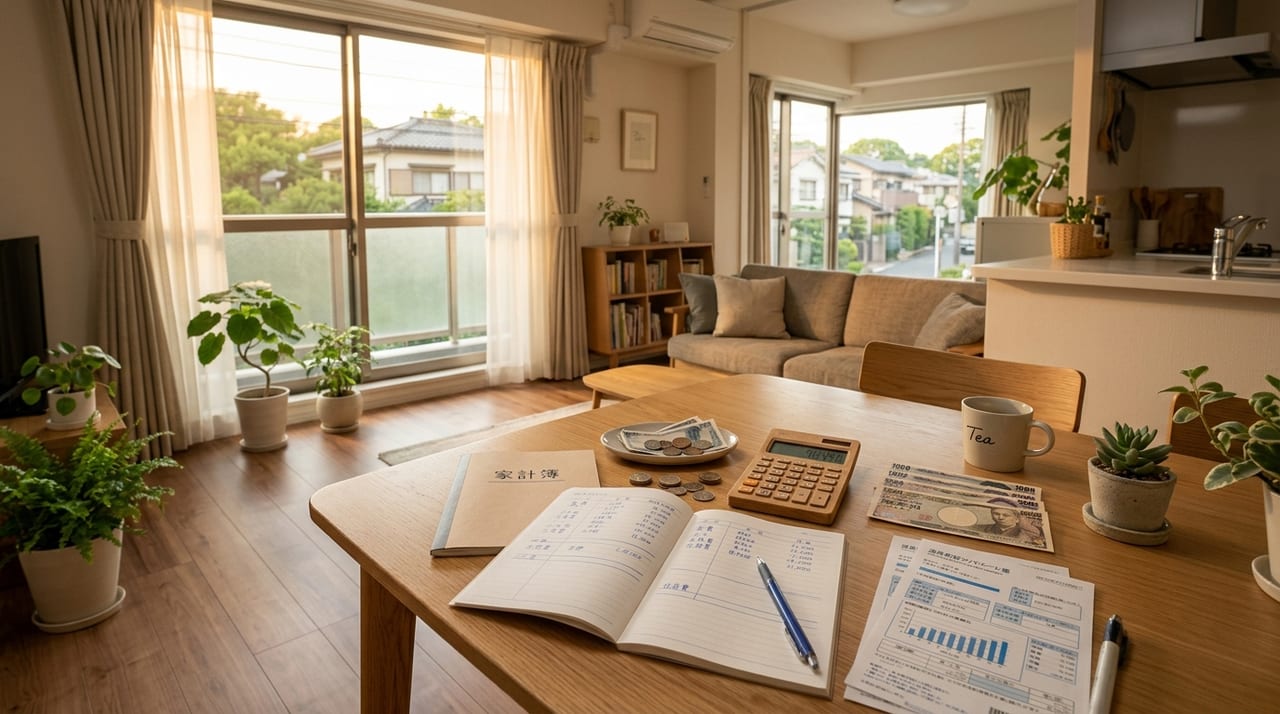
When signing a rental lease, many people are surprised by how expensive initial costs are. The typical range is 3–6 months' rent. For a property with ¥80,000 monthly rent, you'd need ¥240,000–480,000.
Why such a wide range? Because the breakdown varies significantly depending on lease terms, regional differences, and property-specific conditions. The first step to saving money is understanding what each item means and its typical cost.
A deposit held in case of restoration costs at move-out or unpaid rent. It's refunded at move-out after settling any damages. In the Tokyo metropolitan area, 1–2 months is standard; in the Kansai region, properties may charge 3–6 months as "guarantee money." Zero-deposit units are becoming more common, but watch out—move-out settlements can be stricter in those cases.
A customary gift to the landlord that is not refunded. It has little legal basis, and zero-key-money units are increasingly common. Even in Tokyo, one month is becoming standard, with fewer two-month units available. This is one of the easiest items to negotiate down.
Payment to the real estate brokerage. By law, the combined fee to landlord and tenant cannot exceed one month's rent plus consumption tax. Tenants can be charged up to one month only "with consent," though in practice one month is standard. Agencies advertising "zero agency fees" earn their commission from the landlord instead.
The fee for using a guarantor company instead of a co-signer. You can choose between upfront payment (0.5–1 month's rent) or a monthly option (1–2% of rent). Most properties require guarantor company approval as a condition of tenancy, often leaving no choice.
The cost of household insurance (including tenant liability coverage) that renters must carry. Two-year policies typically run ¥15,000–20,000. Many don't realize you can choose your own insurer—the agency's option is often pricey, so shopping for a cheaper plan saves money.
The cost to replace locks for security, since the previous tenant's keys are no longer kept. Although many properties charge this, the law is unclear on whether tenants must pay the full amount. Japan's Ministry of Land, Infrastructure, Transport and Tourism notes that tenant payment is "reasonable" but not required—there's room to negotiate.
You pay pro-rata rent from move-in to month-end, plus the following month's rent upfront. Entering early in the month costs more, so choosing a move-in date closer to month-end saves money.
When signing, you'll receive a cost itemization. Here's what to check.
Checklist:
Don't sign off on anything you don't understand. Real estate agents have a legal duty to explain; answering your questions is part of the job.
Initial costs are not fixed. Several items are open to negotiation.
Vacant properties and off-season periods (outside April–August) are easier to negotiate. Making a specific offer like "If you waive the key money, I'll sign immediately" works well.
You can argue "Shouldn't the landlord replace locks when the previous tenant leaves?" Some landlords will split the cost or cover it entirely.
The legal limit is one month, but some agencies charge only 0.5 months. Comparing fees across agencies for the same property and applying through the cheaper one helps. However, you may need to go through the listing agent to negotiate.
The agency cannot force you to use their insurance. Saying "I'll arrange my own policy" saves ¥3,000–10,000.
Golden rule: Negotiate *before* applying. Once you've applied or been approved, your leverage drops. Bring up conditions during viewings or before submitting the application.
Major sites (SUUMO, HOME'S) let you filter by "zero key money" and "zero deposit." But watch out—zero key money doesn't mean cheap overall if maintenance or guarantor fees are high. Compare total costs.
More agencies now offer installment plans for initial costs—useful if you lack cash upfront. Always confirm whether there are installment fees or interest charges.
Free-rent properties waive 1–3 months of rent after move-in. The upfront cost stays the same, but you recoup it during the free period. Common for long-vacant units.
January–March is high season with little negotiation room. June–August and November–December see more vacancies and flexible landlords. Viewing off-season saves you money if you're not in a rush.
With the right knowledge, you can save tens of thousands of yen. Rather than blindly paying what you're quoted, understanding the reasoning behind each cost leads to smarter choices and a better rental experience.
Rental initial fees typically amount to 4–6 months' rent and represent a major expense before moving. By understanding the breakdown of security deposits, key money, agency fees, and other costs, and by mastering the timing and techniques for negotiation, you can legally reduce initial fees to just 2–3 months' rent—and it's entirely achievable.
床スラブ厚と上階の足音問題——賃貸で「ドン」という衝撃音が響く構造的な理由と物件選びのポイント
前橋・群馬の賃貸エリアガイド【2026年版】——主要エリア別家賃相場と住みやすさを徹底比較
Making the Most of Protruding Beams and Columns in Rental Apartments — Smart Furniture Placement Strategies
Mito & Ibaraki Rental Area Guide [2026] — Comprehensive Explanation of Rental Rates and Livability by Major Area
Uncovering Property Issues by Asking Previous Tenants About Their Departure—Questions to Ask During Viewings and How to Interpret Answers
