Skip to content
SUMUIEスムイエ
PropertiesMoving GuideQuiz
Articles
ColumnsContracts & ProceduresMoving InDaily LifeArea & EnvironmentCosts & FinancesSafety & Disaster Prevention
AboutContact Us
JAEN
SUMUIEスムイエ

Search and compare rental properties across Japan.

Navigation

  • Home
  • Properties
  • Moving Guide
  • Move-in cost calculator
  • About
  • Articles
  • Contact Us
  • FAQ

Member menu

  • My page
  • Member sign-up (free)

Company menu

  • List your properties
  • Company admin
  • Company sign-up (free)

Articles

  • Contracts & Procedures
  • Moving In
  • Daily Life
  • Area & Environment
  • Costs & Finances
  • Safety & Disaster Prevention

About us

  • Company
  • Privacy policy
  • Terms of use

Search by area

HokkaidoTohokuKantoChubuKansaiChugokuShikokuKyushu & Okinawa

Popular prefectures

TokyoKanagawaOsakaAichiFukuokaHokkaidoMiyagiHyogoView all areas →

Sister sites

Shueki JPInvestment properties & yield insightsSenkyakuCommercial & retail tenant brokerage

© 2026 SUMUIE. All rights reserved.

HomePropertiesFavoritesContact Us
  1. Home
  2. Columns
  3. Daily Life
  4. Complete Guide to Rainy Season and High Humidity Management in Rental Apartments—Practical Strategies to Protect Your Room from Mold, Condensation, and Moisture
Daily Life

Complete Guide to Rainy Season and High Humidity Management in Rental Apartments—Practical Strategies to Protect Your Room from Mold, Condensation, and Moisture

2026-05-02

A practical guide to preventing mold, condensation, and moisture problems in rental apartments during the rainy season and high humidity months. Rental real estate experts explain everything from humidity management basics to choosing a dehumidifier, location-specific strategies for closets, bathrooms, and kitchens, and how these issues affect restoration costs upon move-out.
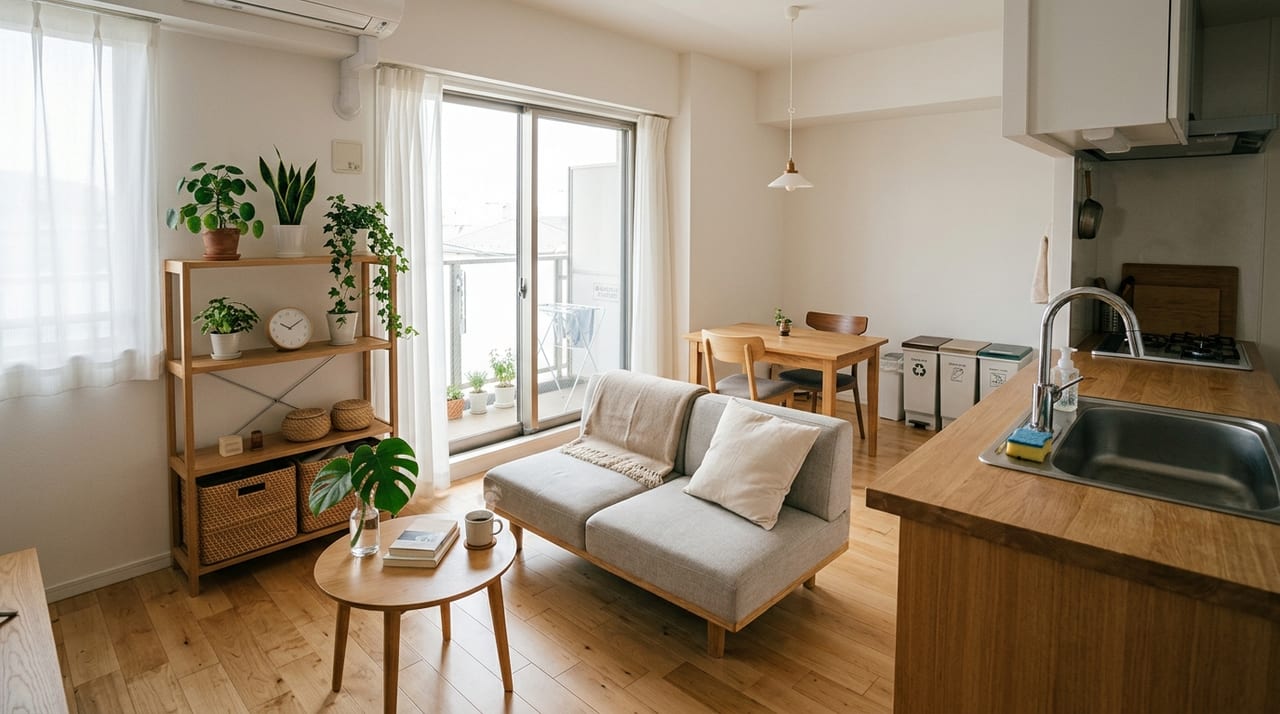
Complete Guide to Rainy Season and High Humidity Management in Rental Apartments—Practical Strategies to Protect Your Room from Mold, Condensation, and Moisture
#Rainy Season#Humidity#Humidity Control#Mold Prevention#Dehumidification
森

Reviewed by: Nobuyuki MoriPresident, M-Assets Co., Ltd. / Licensed Real Estate Transaction Specialist (Miyagi #018212)

Table of contents

  1. 01How the Rainy Season Affects Rental Apartments
  2. 02Ideal Humidity Levels and How to Measure Them
  3. 03Choosing a Dehumidification Method: Air Conditioning, Dehumidifiers, and Moisture Absorbers
  4. 04Air Conditioner "Dry Mode"
  5. 05Using a Dehumidifier
  6. 06Using Moisture Absorbers and Desiccants
  7. 07Humidity and Mold Prevention by Room
  8. 08Bathroom
  9. 09Kitchen
Related

Other columns

Humidity Control and Condensation Prevention in Rental Apartments — Practical Techniques to Prevent Mold Growth

Humidity and condensation problems plague rental apartments during the rainy season and winter months. If left unaddressed, mold develops, leading to health hazards and increased restoration costs at move-out. This article covers practical solutions, from identifying causes to daily care methods and choosing the right products.

A Guide to Comfortable Humidity Management in Rental Apartments — Seasonal Humidifying and Dehumidifying Care for Health and Comfort

Humidity control in rental apartments is essential for preventing mold, condensation, dryness, and health issues. This guide explains the recommended humidity levels for each season and practical care methods combining humidifiers, dehumidifiers, and air conditioning dehumidification.

Complete Guide to Condensation Prevention in Rental Housing | Understanding Mold and Move-Out Cost Risks

Condensation in rental apartments and condominiums is troublesome and can lead to mold and high move-out costs if left unaddressed. Real estate experts provide a thorough explanation from the mechanisms behind condensation to practical solutions you can implement immediately and how it relates to restoration to original condition.

Condensation and Mold Prevention Guide—Moisture Control for Comfortable Living in Japanese Rental Properties

Back to columns
10
Closets and Storage Shelves
  • 11Windows and Window Frames
  • 12Walls and Ceilings
  • 13How Mold Affects Move-Out Costs: Is the Tenant Responsible?
  • 14Pre-Rainy Season Preparation Checklist
  • How the Rainy Season Affects Rental Apartments

    Japan's rainy season (tsuyu), spanning June to July, brings monthly rainfall exceeding 200–400 mm, with indoor relative humidity often reaching 80–90% or higher. For rental apartments, this high-humidity period presents the following risks:

    • •Mold growth: Mold begins to spread when humidity stays above 60% for 48–72 hours continuously
    • •Worsening condensation: Water droplets form on windows and walls where temperature differences exist, creating a breeding ground for mold
    • •Swelling of wood and fixtures: Flooring and door frames absorb moisture, causing warping and squeaking
    • •Damage to clothing and bedding: Moisture becomes trapped in closets, causing mold and odors on clothes and fabrics
    • •Move-out cost risk: If a tenant fails to properly manage humidity and mold damage spreads, the tenant may be charged a portion of restoration costs to original condition

    Most of these problems can be prevented by taking steps before the rainy season begins.

    Ideal Humidity Levels and How to Measure Them

    The ideal indoor humidity for comfort is 40–60%. Once humidity exceeds 70%, mold becomes more likely to spread; above 80%, food, books, and clothing in the room begin to suffer damage.

    Choosing and Placing a Humidity Meter

    It's recommended to get one digital temperature and humidity meter (¥1,000–¥3,000) and place it in the following locations:

    • •Center of living room or bedroom (to monitor overall humidity)
    • •Inside the closet (to check the risk to clothing)
    • •On a wall near the bathroom (to monitor how moisture spreads from the bathroom)

    As a guideline, when the humidity meter exceeds 60%, that's your signal to start dehumidifying.

    Choosing a Dehumidification Method: Air Conditioning, Dehumidifiers, and Moisture Absorbers

    Air Conditioner "Dry Mode"

    This is the easiest and most effective dehumidification method. AC dry modes come in two types: "weak cooling dehumidification" and "reheat dehumidification."

    Dehumidification methodCharacteristicsApproximate electricity cost
    Weak cooling dehumidificationRemoves humidity while lowering room temperature. Economical.Low
    Reheat dehumidificationRemoves humidity while maintaining room temperature. No chilling sensation.Slightly higher

    During the rainy season, room temperature is relatively high, so weak cooling dehumidification is usually sufficient. Running for one hour typically removes around 500–800 ml of moisture.

    Using a Dehumidifier

    For rooms without AC, dressing areas, closets, and storage spaces, a dehumidifier is effective for localized moisture control.

    Key points for selecting a dehumidifier

    • •Compressor type: Effective during the rainy season and summer. Suited to June–July temperatures (20–30°C)
    • •Desiccant (zeolite) type: Effective in winter and cold environments. Not suitable for the rainy season
    • •Hybrid type: Works year-round. Pricier option

    In rental apartments, you're limited to where an extension cord can reach, so check the cord length before purchasing.

    Using Moisture Absorbers and Desiccants

    For electrical outlet-free spaces like closets, storage shelves, and shoe boxes, commercial moisture absorbers (such as Dry Pet or Mizu-tori Zousan) are effective. Replacement frequency varies by product, but during the rainy season expect to change them 2–3 times more often than usual.

    Humidity and Mold Prevention by Room

    Bathroom

    The bathroom is the place most prone to mold growth.

    After every bath

    1. Rinse the entire bathroom with cold water from the shower to lower the temperature (this inhibits mold growth)
    2. Use a squeegee (water blade) to remove water droplets from walls and floors
    3. Run the exhaust fan for 2–3 hours (at least 1 hour immediately after use is mandatory)

    Once a week

    • •Use anti-mold fumigant tablets (such as "Look") to prevent mold growth
    • •Clean the hair catcher in the drain

    Check that the bathroom exhaust fan is working properly; if the filter is dirty, ask the management company to clean it or clean it yourself.

    Kitchen

    Steam from cooking increases humidity.

    • •Always run the exhaust fan while cooking
    • •Dry dishes before putting them away after washing
    • •Place moisture absorbers in the storage area under the sink

    Closets and Storage Shelves

    Moisture easily becomes trapped in enclosed spaces.

    • •Open the door regularly for ventilation (open fully on sunny days)
    • •Avoid overloading with clothes (maintain airflow)
    • •Place a slatted board at the bottom (to create airflow and allow moisture to escape)
    • •Place moisture absorbers in the back and near the floor

    Windows and Window Frames

    This is where condensation is most likely to form.

    • •Apply anti-condensation film to window glass (available at 100-yen shops)
    • •Make it a habit to wipe away condensation every morning (leaving it can lead to mold)
    • •The rubber sealing strips on window frames and sashes are especially prone to mold (check them regularly)

    Walls and Ceilings

    North-facing walls and the interior walls of storage spaces are especially susceptible to mold.

    • •Place furniture 5–10 cm away from walls to ensure airflow
    • •Use anti-mold products regularly (such as rubber seal-specific sprays)
    • •If you notice white mold-like spots appearing, wipe them away with a cloth dampened with 70% ethanol

    How Mold Affects Move-Out Costs: Is the Tenant Responsible?

    According to the Ministry of Land, Infrastructure, Transport and Tourism's "Guidelines on Disputes and Restoration to Original Condition," responsibility for mold damage costs is as follows:

    Mold situationWho pays
    Mold that develops despite proper ventilation and maintenanceLandlord (treated as normal wear and tear)
    Mold caused by failure to ventilate or manage humidityTenant
    Mold left untreated until it penetrates the substrate (drywall, etc.)Tenant (additional damage)

    Proper ventilation and dehumidification during the rainy season, along with promptly addressing any mold you discover, are critical to minimizing move-out costs.

    Pre-Rainy Season Preparation Checklist

    Complete the following preparations 2–3 weeks before the rainy season begins (early June):

    • •[ ] Clean exhaust fan filters (check for blockages)
    • •[ ] Clean dehumidifier and AC filters
    • •[ ] Purchase and place moisture absorbers in closets and storage shelves
    • •[ ] Apply anti-condensation film to windows
    • •[ ] Use anti-mold fumigant tablets in the bathroom and kitchen
    • •[ ] Check the distance between furniture and walls, ensuring at least 5 cm gap
    • •[ ] Install a humidity meter and check the current levels

    While high humidity during the rainy season is the enemy of rental apartments, consistent daily habits can prevent major problems. Start preparing before the rainy season begins and maintain a comfortable, safe rental living environment.

    Related Columns

    • 収益JP

      不動産投資家のためのAIツール

      投資判断を支援するAI活用

    • 収益JP

      2026年金利戦略

      不動産投資家向けの金利動向と戦略

    • 収益JP

      仙台不動産市場の2026年課題

      仙台エリアの投資マーケット分析

    Categories

    • Contracts & Procedures215
    • Moving In129
    • Daily Life288
    • Area & Environment111
    • Costs & Finances118
    • Safety & Disaster Prevention72

    Popular tags

    #Move-out Restoration85#Property Selection70#Solo Living67#Average Rent

    Many foreign residents of Japanese rental properties struggle with winter condensation and rainy season mold. Neglecting condensation and mold can result in repair costs being charged at the time of move-out, so proper knowledge and daily care are essential. This guide explains the causes and specific countermeasures in an easy-to-understand manner.

    Storage Space Mastery for Rental Homes——A Practical Organization Guide for Living Clutter-Free in Small Spaces

    Even with limited storage space in a rental home, you can create a comfortable living environment with the right strategies. This article offers a practical organization guide—from storage fundamentals to techniques for maximizing your space.

    The Complete Guide to Preventing and Removing Condensation and Mold in Apartments — From Causes to Prevention and Removal

    Condensation that forms on windows and walls during winter can lead to mold if left unchecked, harming both your health and the building. This guide thoroughly explains how condensation occurs, along with prevention and removal methods you can practice even in rental apartments.

    Sister sites

    Shueki JP

    Investment properties & yield insights

    Senkyaku

    Commercial & retail tenant brokerage

    62
    #Foreigners60
    #Rental Contracts59
    #Initial Costs51
    #Property Viewing50
    #Rentals47
    #Guarantor Company36
    #Area Selection36
    #Tenant Screening36
    #Cost Savings32
    #Moving31
    #Property Management31
    #Move-Out Costs30

    Columns

    • 床スラブ厚と上階の足音問題——賃貸で「ドン」という衝撃音が響く構造的な理由と物件選びのポイント

    • 前橋・群馬の賃貸エリアガイド【2026年版】——主要エリア別家賃相場と住みやすさを徹底比較

    • Making the Most of Protruding Beams and Columns in Rental Apartments — Smart Furniture Placement Strategies

    • Mito & Ibaraki Rental Area Guide [2026] — Comprehensive Explanation of Rental Rates and Livability by Major Area

    • Uncovering Property Issues by Asking Previous Tenants About Their Departure—Questions to Ask During Viewings and How to Interpret Answers

    Previous article

    ← Renting as an Unmarried Couple—Passing Screening, Understanding Your Rights, and Finding the Right Apartment

    Next article

    Air Purifier and Pollen/PM2.5 Prevention Guide for Rental Homes—How to Choose, Where to Place, and How to Use Effectively →