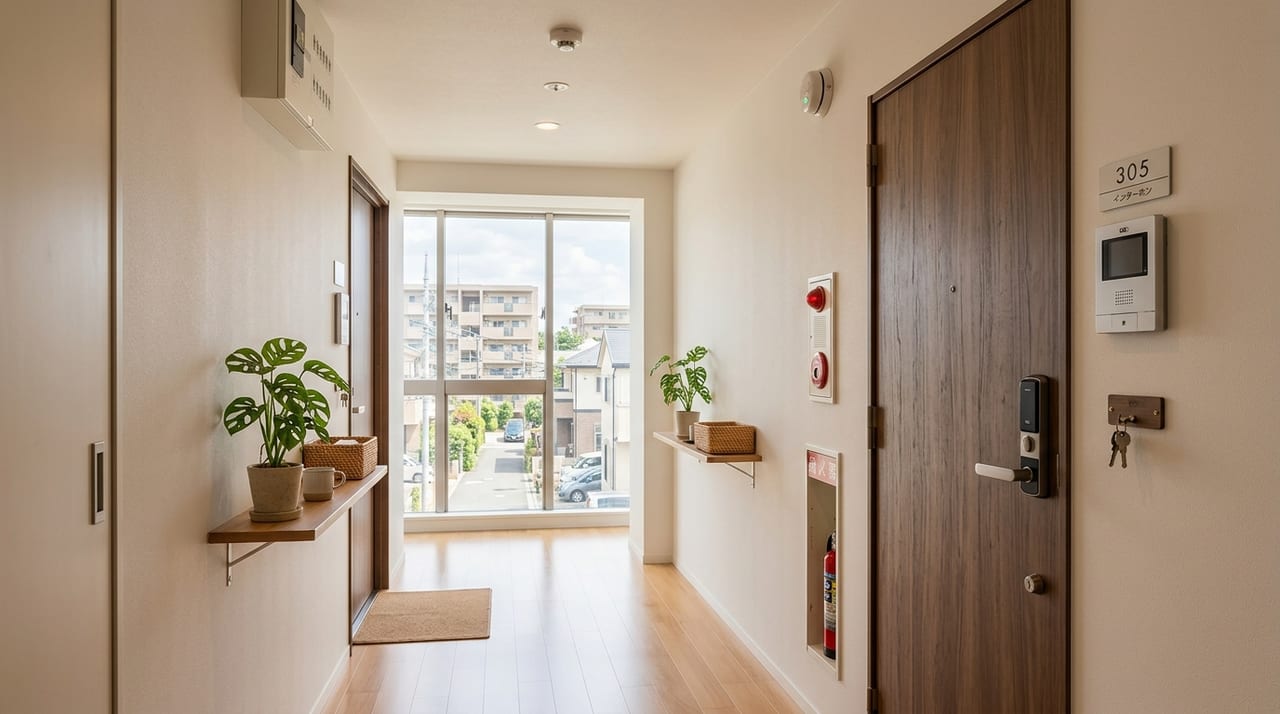
Complete Guide to Rental Housing for Seniors | From Passing Approval to Property Selection
The primary obstacles seniors face in renting apartments are approval challenges and landlord concerns about solitary death. This article explains how to choose accessible properties, leverage UR rental housing and public housing options, and employ practical strategies for passing approval—guidance for anyone helping elderly parents find suitable housing.
"My parents are looking to rent, but we keep getting turned away"—such concerns are becoming increasingly common in the real estate industry. There are two main reasons why seniors struggle with rental approval.
① Concerns About Income Instability
While pension income is stable and regular, many landlords and property management companies view retirees as having unstable or insufficient income simply because they're not working. Typically, rental approval considers rent to be no more than one-third of monthly income, which can significantly narrow the pool of available properties for those living on pensions.
② Concerns About Solitary Death Risk
Landlords' primary concern is the risk of high restoration costs and extended vacancy periods following a tenant's death at home. For single elderly tenants especially, delayed discovery can result in enormous costs, which is why some landlords still refuse applications.
However, these barriers can be overcome with proper preparation. The sections below outline concrete strategies.
Checklist for Accessible Properties
When choosing a property where an elderly person can live safely for years to come, be sure to check the following points during your viewing.
Thresholds in Entrances, Hallways, and Bathrooms
Most falls occur within the home. Check for dangerous thresholds at the entryway, bathroom entrance, and between hallways and rooms. Even in rental properties, you may be able to install a ramp with the landlord's permission.
Handrails: Presence and Positioning
Check whether handrails are available in the toilet, bathroom, and hallway. Also confirm whether additional handrails can be installed. Under the Housing for the Elderly Act, a certification system (quality rental housing for seniors) establishes certain accessibility standards.
Elevator Availability
For properties on the second floor or higher, an elevator is essential. To account for future mobility challenges, it's wise to avoid properties without elevators.
Emergency Response Systems
Also verify whether management staff or a caretaker is on-site and whether an emergency call system is installed.
Senior-Friendly Housing Options: UR Rental Housing and Public Housing
If private rentals are difficult to secure, public housing options are worth considering.
UR Rental Housing (Urban Renaissance Agency)
The standout feature of UR rental housing is that neither a joint guarantor nor a guarantor company is required. While there is an income threshold, pension income qualifies, and there is also a "savings standard" that can be met based on savings amount. With no key money or renewal fees, it's well-suited for long-term residence. Properties are available nationwide, and many developments now offer monitoring services for seniors.
Public Housing (Municipal and Prefectural)
For those with lower incomes, public housing is highly advantageous because rent is based on income level—a significant benefit for pensioners. However, admission is by lottery, and popular areas may have waiting periods. Some municipalities offer priority slots for seniors, so contact your local housing office to inquire.
Service-Enhanced Senior Housing
Service-enhanced senior housing is an option when care becomes necessary. Health check-in and life counseling services are mandatory, and you can enter under a standard rental contract (some use a use-rights agreement). Costs vary by property, but typically range from ¥150,000 to ¥300,000 per month.
Monitoring Services in Rental Properties: Reality and Costs
In recent years, private landlords and property management companies increasingly offer rental properties with integrated monitoring services to address concerns about solitary death.
Main Types of Monitoring Services
•Sensor-based: Detects activity via electric kettle and lighting on/off patterns or door openings. If no activity is detected, family or management is notified.
•Regular check-in: Management staff or partner companies conduct periodic phone calls or visits to check on the resident.
•Emergency button: A system where the resident can press a button to call for help if needed.
Typical Costs
Costs vary by service, but typically range from ¥1,000 to ¥5,000 per month. At some properties, the cost is included in the rent. Some properties also offer solitary death insurance (a product provided by guarantor companies), which helps reduce landlord risk and may make approval easier.
Important Considerations When an Adult Child Rents on Behalf of Elderly Parents
Having an adult child serve as the contract holder to rent a property for elderly parents is an effective way to pass approval. However, there are several important considerations.
Discrepancy Between Contract Holder and Resident
When the contract holder (child) differs from the actual resident (parent), you must obtain prior written approval from the landlord and property management. To avoid the risk of being considered unauthorized subletting, ensure that the contract explicitly states that the actual resident is the parent.
Emergency Contact Information and Key Sharing
If the adult child is the emergency contact, share this information with the property and management company to ensure rapid response in an emergency.
Assessing Whether Parents Can Continue Living Independently
While parents may be independent at the time of contract, they may require care within a few years. One option is to choose a shorter fixed-term lease with an eye toward future transitions to service-enhanced senior housing or care facilities.
Practical Tips for Passing Approval
① Use Pension Payment Notifications as Income Proof
Pension income qualifies as "regular income" for approval. Prepare your annual "Pension Payment Notification" from the Japan Pension Service, and clearly showing the monthly benefit amount will make explaining your financial situation to reviewers much smoother.
② Prepare a Bank Certificate of Savings Balance
For properties like UR rental housing that have a "savings standard," bank statements or a bank-issued certificate of savings balance are valid approval documents. Even with modest pension income, having substantial savings may allow you to pass approval.
③ Appoint an Adult Child or Relative as Joint Guarantor
Having an adult child or relative with stable income serve as a joint guarantor significantly reduces landlord concerns. If the guarantor lives nearby, this is often viewed favorably from the perspective of emergency response capability.
④ Actively Use a Guarantor Company
In recent years, the use of guarantor companies has become standard in place of requiring a joint guarantor. More companies now offer guarantor plans for seniors, with fees typically ranging from 0.5 to 1 month's rent. Since this provides landlords with risk protection, proposing a guarantor company can sometimes help move the approval process forward.
⑤ Find Landlords Who Understand Renting to Seniors
Be direct with your real estate agent: ask them to introduce you to landlords and property managers with experience renting to seniors. Some real estate companies have networks of properties and landlords specifically experienced with senior tenants. Additionally, your local social welfare council or housing support council may offer consultation services for housing searches—don't hesitate to use them.
Finding rental housing as a senior does present challenges, but combining strategies such as using public housing, establishing guarantor systems, and using monitoring services can resolve most issues. Starting early and comparing multiple options is the surest path to finding satisfactory housing.