Skip to content
SUMUIEスムイエ
PropertiesMoving GuideQuiz
Articles
ColumnsContracts & ProceduresMoving InDaily LifeArea & EnvironmentCosts & FinancesSafety & Disaster Prevention
AboutContact Us
JAEN
SUMUIEスムイエ

Search and compare rental properties across Japan.

Navigation

  • Home
  • Properties
  • Moving Guide
  • Move-in cost calculator
  • About
  • Articles
  • Contact Us
  • FAQ

Member menu

  • My page
  • Member sign-up (free)

Company menu

  • List your properties
  • Company admin
  • Company sign-up (free)

Articles

  • Contracts & Procedures
  • Moving In
  • Daily Life
  • Area & Environment
  • Costs & Finances
  • Safety & Disaster Prevention

About us

  • Company
  • Privacy policy
  • Terms of use

Search by area

HokkaidoTohokuKantoChubuKansaiChugokuShikokuKyushu & Okinawa

Popular prefectures

TokyoKanagawaOsakaAichiFukuokaHokkaidoMiyagiHyogoView all areas →

Sister sites

Shueki JPInvestment properties & yield insightsSenkyakuCommercial & retail tenant brokerage

© 2026 SUMUIE. All rights reserved.

HomePropertiesFavoritesContact Us
  1. Home
  2. Columns
  3. Costs & Finances
  4. Money Management Tips: What's the Right Percentage of Take-Home Pay for Rent? — A Practical Guide for Families and Singles
Costs & Finances

Money Management Tips: What's the Right Percentage of Take-Home Pay for Rent? — A Practical Guide for Families and Singles

2026-04-23

Explains appropriate benchmarks for rent as a percentage of take-home pay for both family and single households. Introduces practical budgeting methods using household budget trackers to reduce fixed expenses and manage variable expenses, along with concrete strategies for balancing rent and living costs.
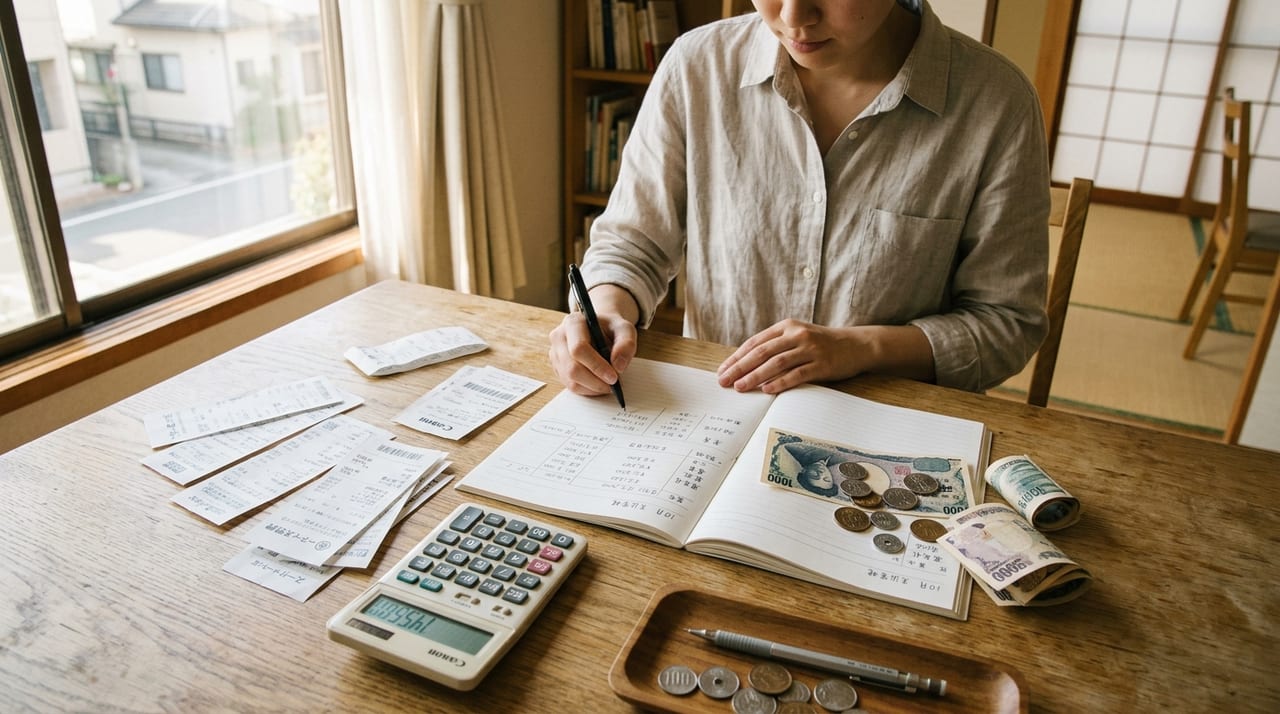
Money Management Tips: What's the Right Percentage of Take-Home Pay for Rent? — A Practical Guide for Families and Singles
#Budget Management#Rent-Income Ratio#Take-Home Pay#Budget Management#Fixed Cost Reduction
森

Reviewed by: Nobuyuki MoriPresident, M-Assets Co., Ltd. / Licensed Real Estate Transaction Specialist (Miyagi #018212)

Table of contents

  1. 01Is Rent Really 30% of Take-Home Pay or Less?
  2. 02Basic Concepts of Rent as a Percentage of Take-Home Income
  3. 03Background of the "30% Rule"
  4. 04What Does the Data Show? (Based on Statistics Bureau Data)
  5. 05Appropriate Rent Percentage by Household Type
  6. 06Single Households
  7. 07Family Households (Dual Income)
  8. 08Family Households (Single Income)
  9. 09Practical Rent Management Using Household Budget Trackers
Related

Other columns

Is 30% of Take-Home Pay the Right Rent Budget? A Complete Guide to Balancing Income and Rent

Is the common wisdom of "keep rent to 30% of income" really correct? Based on actual household budget simulations, we'll explain how to calculate appropriate rent based on your annual income and lifestyle.

How Much of Your Net Income Can Go to Rent: Complete Guide with Living Expense Simulation

Is the common rule "keep rent to one-third of your net income or less" actually correct? This guide explains how to determine the right rent for your situation based on net income and city-specific rent limits, with real-life living expense simulations.

Complete Practical Guide to Budget Management and Living Cost Savings for Rental Housing—How to Cut Monthly Expenses by ¥30,000–50,000 Through Fixed and Variable Cost Reviews

This guide explains the fundamentals of budget management for rental housing—whether you're living alone, as a couple, or as a family—and provides practical methods with concrete figures for reducing major expenses like rent, utilities, phone bills, and food costs.

How to Negotiate Renewal Fee Waivers or Reductions: Proven Negotiation Strategies and Key Precautions

A comprehensive guide to negotiating renewal fee waivers and reductions for rental leases. We cover the ideal timing, reasons for higher success rates, and practical guidance on risks to consider.

Back to columns
  • 10Separating Fixed and Variable Expenses
  • 11Incorporating Savings-First Budgeting
  • 12Using Digital Budget Management Tools
  • 13What to Do If Rent Is Squeezing Your Household Budget
  • 14Quick Solutions (Short-term)
  • 15Medium to Long-term Solutions
  • 16Summary
  • Is Rent Really 30% of Take-Home Pay or Less?

    "Rent should be kept to no more than 30% of take-home pay" is widely known household finance wisdom, but in reality this percentage varies greatly depending on family composition, location, and lifestyle.

    This article explains rent and household budget management strategies tailored to the actual situations of both family and single households, rather than relying on simple percentages alone.

    Basic Concepts of Rent as a Percentage of Take-Home Income

    Background of the "30% Rule"

    The rule that rent should be no more than 30% of take-home pay originated from U.S. housing policy guidelines (1960s–70s). In Japan, it spread as an empirical rule stating "life becomes difficult if rent exceeds 30% of salary," but this is merely a guideline at best.

    What Does the Data Show? (Based on Statistics Bureau Data)

    According to the Statistics Bureau's household survey, the percentage of rent and land charges for Japanese working households is approximately 14–20% of take-home income as housing expenses (including mortgage payments for homeowners). However, when limited to rental households in urban areas, cases in the 20–30% range are not uncommon.

    Appropriate Rent Percentage by Household Type

    Single Households

    Single people must cover most of their living expenses alone, so fixed expenses (rent, communication fees, insurance, etc.) tend to take up a relatively high proportion.

    Single Household Guidelines (by Monthly Take-Home Income)

    Monthly Take-HomeRecommended Rent Limit (25%)Somewhat Acceptable Range (30%)
    ¥150,000¥37,500¥45,000
    ¥200,000¥50,000¥60,000
    ¥250,000¥62,500¥75,000
    ¥300,000¥75,000¥90,000

    For single occupants, the next heaviest fixed expenses after rent are typically "food and dining out," "communication fees," and "hobbies and entertainment." By keeping rent at 25–28% of income, it becomes easier to create room for savings and investment.

    Family Households (Dual Income)

    For dual-income families, while household income increases, the addition of childcare and education expenses makes it important to set a lower rent percentage.

    Dual-Income Family Household Guidelines (by Monthly Household Take-Home Income)

    Monthly Household Take-HomeRecommended Rent Limit (20%)Caution Line (Over 25%)
    ¥300,000¥60,000Over ¥75,000 requires attention
    ¥400,000¥80,000Over ¥100,000 requires attention
    ¥500,000¥100,000Over ¥125,000 requires attention
    ¥600,000¥120,000Over ¥150,000 requires attention

    Even for dual-income households, considering temporary income reduction due to parental leave, maternity leave, or illness, the ideal is a rent level where "one income alone can cover the rent."

    Family Households (Single Income)

    Single-income families require more careful rent management since income is concentrated in one source.

    Single-Income Family Household Guidelines

    Monthly Take-HomeRecommended Rent Limit (20–22%)
    ¥200,000¥40,000–¥44,000
    ¥250,000¥50,000–¥55,000
    ¥300,000¥60,000–¥66,000
    ¥350,000¥70,000–¥77,000

    For single-income households with children, there is risk of sudden increases in education and medical expenses, so we strongly recommend aiming to set rent at around 20% of take-home pay.

    Practical Rent Management Using Household Budget Trackers

    Separating Fixed and Variable Expenses

    The foundation of household budget management is separating "fixed expenses" from "variable expenses."

    Fixed Expenses (approximately constant each month)

    • •Rent and maintenance fees
    • •Communication expenses (smartphone and internet)
    • •Insurance premiums (life insurance, medical insurance, etc.)
    • •Subscription services
    • •Utilities (gas and water base charges)

    Variable Expenses (fluctuate month to month)

    • •Food and dining out
    • •Clothing expenses
    • •Entertainment and social expenses
    • •Medical expenses
    • •Daily necessities

    When fixed expenses including rent exceed 50% of take-home income, improving the household budget becomes difficult with variable expense adjustments alone. The ideal is to keep total fixed expenses within 45% of take-home income.

    Incorporating Savings-First Budgeting

    The key to successful household budget management is not "saving what's left over" but rather "securing savings first" (savings-first budgeting).

    Sample allocation (¥250,000 monthly take-home, single person example)

    • •Rent and maintenance fees: ¥65,000 (26%)
    • •Utilities and communication: ¥20,000 (8%)
    • •Food: ¥40,000 (16%)
    • •Savings-first allocation: ¥30,000 (12%)
    • •Daily necessities and clothing: ¥15,000 (6%)
    • •Social and hobby expenses: ¥20,000 (8%)
    • •Medical and insurance: ¥15,000 (6%)
    • •Emergency fund and other: ¥45,000 (18%)

    Using Digital Budget Management Tools

    Smartphone household budget management apps (Money Forward ME, Zaim, au Kabucom Securities Budget Tracker, etc.) can automatically record income and expenses by linking with bank accounts and credit cards. Visualization tools are particularly effective for constantly understanding "what percentage is rent?" and tracking your finances.

    What to Do If Rent Is Squeezing Your Household Budget

    Quick Solutions (Short-term)

    1. Attempt to negotiate rent: If you have a long-term tenancy and a good relationship with the management company, rent reduction negotiation may be possible at renewal time
    2. Review communication expenses: Switching to a budget carrier (MVNO) can sometimes reduce monthly costs by ¥3,000–¥5,000
    3. Cancel unnecessary subscriptions: Identify unused services and save hundreds of yen monthly

    Medium to Long-term Solutions

    1. Consider relocating: Reducing rent by ¥10,000 saves ¥120,000 annually. Even if commute costs increase, the net savings may be positive
    2. Increase income: Side work, salary negotiation, or career change. Increasing income is the most direct way to lower your rent percentage.

    Summary

    While "rent should be no more than 30% of take-home pay" is a common guideline, family households (especially those with children) should aim for 20–22%, and single occupants should be conscious of 25–28% as benchmarks more aligned with reality. By using household budget trackers to keep total fixed expenses within 45% of take-home income and incorporating savings-first budgeting, you can balance daily life with preparation for the future without strain.

    Related Columns

    • 収益JP

      不動産投資家のためのAIツール

      投資判断を支援するAI活用

    • 収益JP

      2026年金利戦略

      不動産投資家向けの金利動向と戦略

    • 収益JP

      仙台不動産市場の2026年課題

      仙台エリアの投資マーケット分析

    不動産ネットワーク

    投資物件・賃貸住宅・テナント・運営会社をつなぐ不動産4サイト連携。

    収益JP

    収益物件・不動産投資情報

    千客テナント

    テナント・店舗仲介

    M-Assets

    仙台の不動産賃貸・管理

    Categories

    • Contracts & Procedures215
    • Moving In129
    • Daily Life288
    • Area & Environment111
    • Costs & Finances118
    • Safety & Disaster Prevention72

    Popular tags

    #Move-out Restoration85#Property Selection70#Solo Living67#Average Rent

    Single Living Cost Simulation [2026 Edition] — Monthly Overview of Rent, Food, Utilities, and Communications

    A comprehensive simulation of monthly living costs for solo living. Breaks down typical amounts for rent, food, utilities, communications, entertainment, and savings by city size, plus practical money-saving strategies to reduce your expenses.

    Understanding Shikibikinaseido: Kansai's Unique Security Deposit Deduction Practice and Your Negotiation Guide

    Discover the shikibikinaseido system, a rental practice deeply rooted in the Kansai region. This guide explains how it differs from standard security deposits, the legal validity of shikibikinaseido clauses, how to identify recoverable fees, and practical negotiation strategies for securing returns at move-out.

    Sister sites

    Shueki JP

    Investment properties & yield insights

    Senkyaku

    Commercial & retail tenant brokerage

    62
    #Foreigners60
    #Rental Contracts59
    #Initial Costs51
    #Property Viewing50
    #Rentals47
    #Guarantor Company36
    #Area Selection36
    #Tenant Screening36
    #Cost Savings32
    #Moving31
    #Property Management31
    #Move-Out Costs30

    Columns

    • 床スラブ厚と上階の足音問題——賃貸で「ドン」という衝撃音が響く構造的な理由と物件選びのポイント

    • 前橋・群馬の賃貸エリアガイド【2026年版】——主要エリア別家賃相場と住みやすさを徹底比較

    • Making the Most of Protruding Beams and Columns in Rental Apartments — Smart Furniture Placement Strategies

    • Mito & Ibaraki Rental Area Guide [2026] — Comprehensive Explanation of Rental Rates and Livability by Major Area

    • Uncovering Property Issues by Asking Previous Tenants About Their Departure—Questions to Ask During Viewings and How to Interpret Answers

    Previous article

    ← Sakashita-dori vs Koutoudai Park: Sendai's Literary Walking Routes and Livability

    Next article

    Resolving Security Deposit Disputes: Attorney Consultation vs. Small Claims Court Comparison →