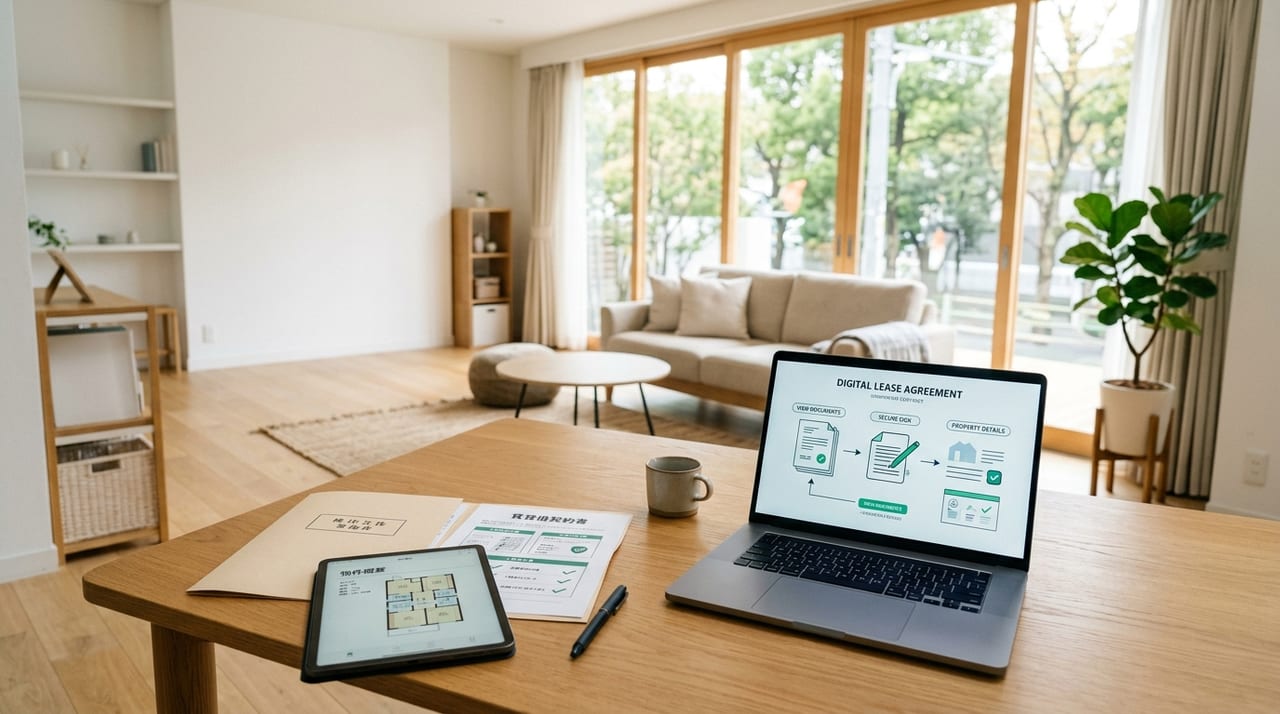
Complete Guide to E-Contracts for Rental Housing——How to Complete Everything Online from Signing to Key Handover with CloudSign
The 2022 legal revision legalized electronic rental contracts. This guide explains the CloudSign and IT-explanation process, benefits, precautions, and the complete step-by-step procedures for fully online contract completion through key handover.
The 2022 revision to the Real Estate Brokerage Law formally authorized the execution of rental lease agreements (including Property Transaction Records explaining key matters) online. Previously, signing with a seal on paper was mandatory, but now by combining electronic signatures with electronic Property Transaction Records (IT explanations), it has become possible to complete a rental contract without ever visiting a real estate agency. As of 2026, nearly all major brokerage chains support electronic contracts, and adoption among regional small and medium-sized operators is steadily advancing.
Platforms such as CloudSign, GMO Sign, DocuSign, and Adobe Sign are widely used to support electronic contracts. Which service is adopted varies by brokerage company, but CloudSign and GMO Sign adoption is particularly advanced for properties listed through major portals. Users do not need to create special accounts; they simply click a URL sent via email to complete identity verification and signing, and the process is finished. It has become common for all steps to be completed using only a smartphone.
Benefits of Electronic Contracts
Freedom from time and location constraints. Since all three processes—visiting in person, affixing a seal, and mail—become unnecessary, the benefits are especially significant for those too busy to visit a real estate agency on weekdays or those relocating from a distance. Cases where the entire contract signing is completed on a smartphone alone are becoming increasingly common.
No risk of document loss. Paper contracts must be kept with each move, but with electronic contracts, signed PDFs are stored in the cloud. Being able to quickly reference past contract terms when handling move-out disputes or renegotiating renewal is a major advantage. In addition to lease agreements, Property Transaction Records and move-in checklists are also stored electronically, making centralized management easier.
Faster turnaround from approval to contract. With traditional paper contracts, the process from document creation and mailing through signed return could take several days to over a week. Electronic contracts can be signed the same day, making them easier to accommodate even when the desired move-in date is approaching. Especially during the busy moving season (February–March), choosing a broker that supports electronic contracts becomes increasingly advantageous in the competitive race to secure properties quickly.
Important Precautions for Electronic Contracts
Some brokers support e-contracts, others do not. Whether electronic contracts are available depends on the brokerage handling the property; some regional small and medium-sized operators still support only paper contracts. Confirming whether e-contracts are possible at the property viewing booking stage can prevent later issues. Some property portal sites also offer filtering options for "e-contract compatible" properties.
Understanding the validity of electronic signatures is necessary. Platforms like CloudSign provide services based on the Electronic Signature Law, with two types of proof mechanisms: "witness-type" and "party-type." Rental contracts typically use the witness-type, but it is advisable to understand the legal strength of these signatures in case of disputes.
Property Transaction Record explanations (IT explanations) require real-time interaction. IT explanations, which are a prerequisite for electronic contracts, require real-time video and audio connection with a Licensed Real Estate Agent online. Since recorded playback or document-only explanation is not permitted, schedule coordination is still necessary, just as with traditional in-person visits. It is important to confirm a stable video call environment (WiFi and sufficient internet speed) in advance.
Process Flow (for Electronic Contracts)
Application and approval: Submit the property application form online or via email. After passing approval, you will receive electronic contract instructions.
Schedule IT explanation: Set a date and time to connect with the brokerage representative via Zoom or similar. You will need a device with a microphone and camera, plus an internet connection.
Conduct IT explanation: The Licensed Real Estate Agent will explain the Property Transaction Record while screen-sharing. You can ask questions on the spot. Confirming any doubts prevents trouble later.
Perform electronic signature: After the explanation, the brokerage will send you a signing request email. Access the URL, review the content, and execute the electronic signature. A confirmation email arrives immediately, and a signature completion record is saved.
Receive signed contract PDF: Save the completed PDF signed by both parties. This PDF becomes the official contract. It is stored in the cloud, but it is recommended to also save it to your own email or storage.
How Are Keys Handed Over?
Even with widespread e-contracts, key handover on move-in day is still typically in person. However, contactless key delivery using smart locks or key boxes is growing. When a key box is secured with a PIN, the management company sends you the code and you retrieve the key yourself—making it possible to move in entirely remotely without visiting in person. Confirming the key handover method in advance helps prevent confusion on moving day.
Frequently Asked Questions
Can I receive a printed copy after the electronic contract? The electronic data is the official version in principle, but printed documents can sometimes be provided separately upon request. It is best to consult with the brokerage company in advance.
Can foreign nationals use it? Electronic contracts can be used regardless of nationality. However, Property Transaction Record explanations are typically conducted in Japanese, so if you have difficulty understanding, it is important to use translation services or ask the representative for clarification.
Summary
Electronic contracts offer benefits to renters in both time efficiency and document management. As of 2026, many major brokerages support them, but not all brokers and properties do—so caution is necessary. Confirming early whether your desired property's brokerage supports electronic contracts and planning your schedule with the IT explanation date in mind is the shortest path to smooth contract execution. Taking a moment to confirm whether e-contracts are available during the property viewing makes all the subsequent procedures much easier.
With IT-based important matter disclosure (leveraging technology for required explanations) and online contracts, rental agreements can now be completed entirely remotely. Real estate professionals explain everything from how these systems work to key usage tips and important precautions.