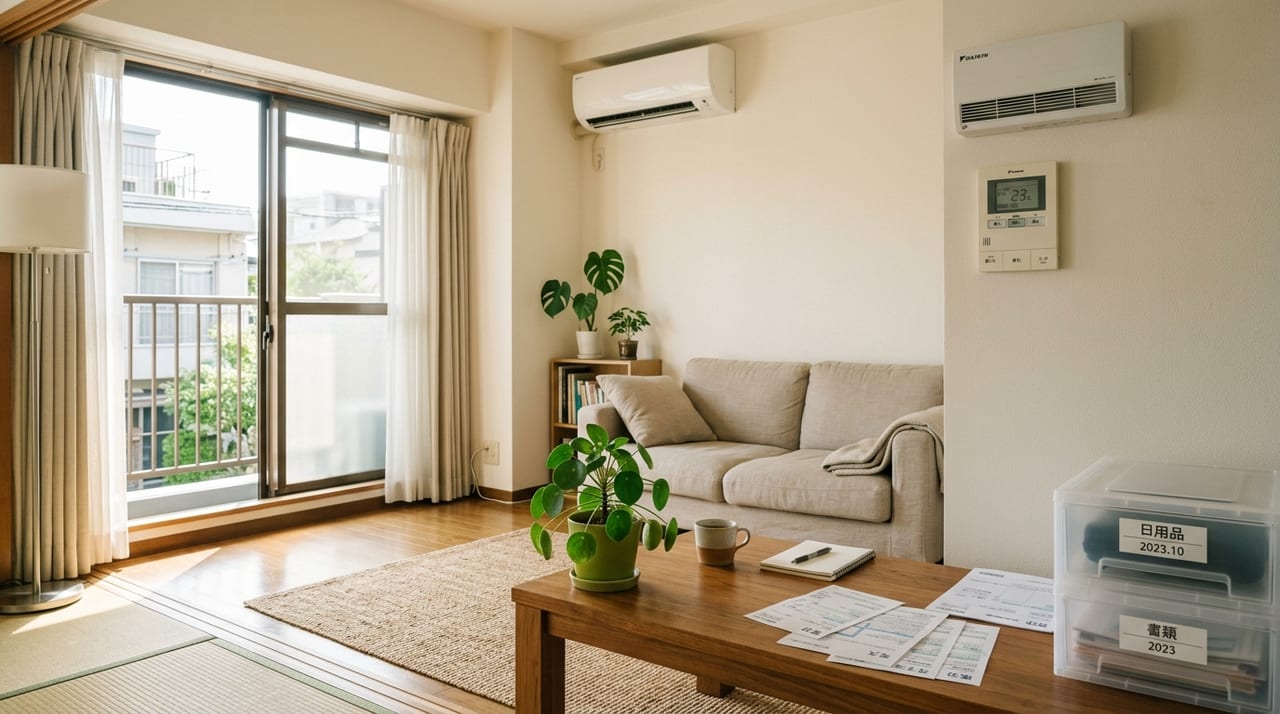
Saving Electricity in the Age of Rising Rates: Practical Ways to Cut Monthly Utility Bills by ¥10,000 or More
As electricity rates continue to climb, this guide offers a thorough explanation of energy-saving measures you can take in a rental apartment. From optimizing your air conditioner usage and choosing energy-efficient appliances to leveraging government subsidies, we've compiled practical strategies to reliably reduce your monthly electricity costs.
Since 2023, electricity rates have continued to rise. With increases in fuel cost adjustment charges and renewable energy surcharges, many people find their bills climbing by thousands of yen each month, even when their usage patterns remain unchanged. Unlike homeowners, renters face limitations on equipment modifications—but that doesn't mean you can't significantly reduce your electricity costs with some strategic thinking. In this article, we'll introduce specific energy-saving measures that renters can realistically implement.
Many of you have likely looked at your electricity bill and thought, "I haven't changed my usage, so why is it higher?" Electricity rates are composed primarily of three components:
Fixed charge: A flat fee based on your contracted amperage
Usage-based charge: A variable fee based on consumption (kWh)
Fuel cost adjustment and surcharges: Charges that fluctuate based on crude oil and LNG market prices
In recent years, the fuel cost adjustment has shifted significantly upward, creating a situation where your bill increases even if your usage doesn't. Under these circumstances, reducing consumption is the most direct solution.
Energy-Saving Basics for Renters: Air Conditioning
Air conditioners account for the largest share of household electricity consumption (roughly 20–30% of annual residential power use). While rental units usually come with built-in air conditioners that can't be freely replaced, you can still reduce power consumption through smarter usage habits.
Adjusting Your Thermostat Settings
Aim for 26–28°C (79–82°F) when cooling and 18–20°C (64–68°F) when heating. A 1°C change can reduce power consumption by around 10%.
Clean Your Filter at Least Once Monthly
When dust clogs the filter, heat exchange efficiency drops, forcing your air conditioner to work harder for the same cooling or heating effect. For rental units, filter cleaning is typically the tenant's responsibility. Data shows that monthly cleaning can cut power consumption by up to 25%.
Pair Your AC with a Circulator
Cool air sinks while warm air rises. Using a circulator fan to redistribute air around your room allows you to raise your thermostat setting without sacrificing comfort—especially helpful in rooms with high ceilings or where the AC unit is far from where you spend most time.
Reduce Your Fixed Charge by Reviewing Your Amperage Contract
In some rental apartments, the amperage contract is simply carried over from the previous tenant. If your contracted amperage is higher than what you actually need, you'll be paying unnecessary fixed charges month after month.
As a general guideline, a single person in a 1K or 1DK apartment typically needs 20–30A, while a couple in a 1LDK usually requires 30–40A. You can request a change directly from your power company, and in most cases, landlord or property manager approval is not required (the power company handles the internal work). However, if you regularly use multiple high-power appliances simultaneously—such as your air conditioner, microwave, and hair dryer—your circuit breaker may trip. Assess your actual usage patterns before making a change.
Consider Switching to a Different Power Company or Rate Plan
Since the full retail deregulation of electricity in 2016, you have the freedom to choose your power company and rate plan. It's worth examining your current contract and exploring alternative plans that might offer better rates.
When comparing options, look at these factors:
•Fixed charge (varies by amperage tier)
•Usage-based rate (price per kWh)
•Fuel cost adjustment structure (with or without a price cap)
•Off-peak discounts (availability of nighttime or time-of-use rates)
For renters, since the contract is in your name, you can typically switch power companies without landlord permission (provided your unit has an individual meter).
Energy-Saving Subsidies Available to Renters
The national and local governments offer subsidy programs for energy-efficient appliance purchases. If you're buying appliances as a renter—such as air conditioners, refrigerators, washing machines, or LED lighting—you may be eligible for subsidies.
Notable programs include those run annually by Japan's Ministry of the Environment and Ministry of Economy, Trade and Industry related to energy-efficient appliance rebates. Since program availability and details change yearly, check the latest information on the official websites of these ministries and your local government.
Switching to LED lighting is one of the easier energy-saving upgrades renters can make. As long as you plan to restore your original fixtures before moving out (or take them with you), it's usually no problem. LED bulbs use one-seventh to one-tenth the power of incandescent bulbs while providing equivalent brightness.
Track Your Energy Savings
To see how much your energy-saving efforts are actually reducing consumption, keep a monthly record of your power usage (kWh). Since bill amounts fluctuate with fuel cost adjustments, comparing year-over-year usage (kWh) gives you a more accurate picture of your savings.
Most power companies provide past usage data through smartphone apps or online portals. Services like "Denki Kakeibo" (electricity household account book) let you track monthly consumption trends at a glance.
Summary: Cutting ¥10,000 a Month from Utility Bills in a Rental Is Achievable
Even without major equipment upgrades, renters can expect to save several thousand yen to over ¥10,000 monthly by combining the following strategies:
•Clean your AC filter thoroughly (at least monthly)
•Optimize thermostat settings (28°C for cooling, 18–20°C for heating)
•Use a circulator fan for air circulation
•Adjust your amperage contract to avoid overpaying for your fixed charge
•Compare and switch power companies and rate plans
•Replace bulbs with LED lighting
•Take advantage of government energy-saving subsidies (updated annually)
While rising electricity costs can't be solved through personal effort alone, taking these practical steps within your means is a realistic way to protect your household budget.